To fully understand what this all means, one requires an
understanding of the sequential chain of
events, as detailed below.
April 2020:
China’s latest Sky Map or digital maps showed parts of Arunachal Pradesh within
its international borders. Sky Map is operated by Beijing’s National Surveying
and Mapping Geographic Information Bureau. China’s earlier Sky Map was based on
the 1989 edition. Since then China’s external boundaries changed following the
border settlements with Russia and Central Asian countries. The last border
settlement was with Tajikistan in 2011 when China got 1,158 square km east of
the Sarekole Mountains. The area was added into Tashkurgan County in the
Kashgar Prefecture of Xinjiang Province. (Tashkurgan was formally an Indian
territory—a part of Shakgam Valley).

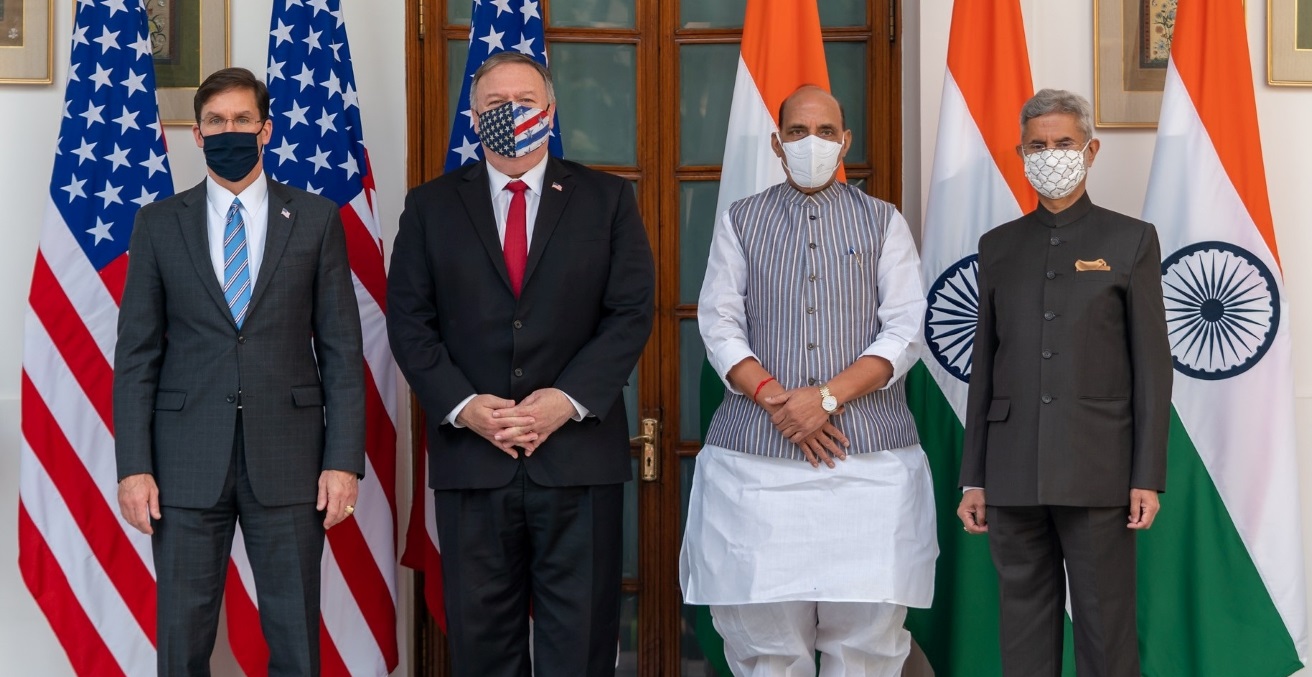
October 28, 2020: The 3rd India-US 2 + 2 Ministerial
Dialogue was held, on the sidelines of which India and the US inked the BECA,
the last of four foundational agreements for strategic ties. BECA stands for
Basic Exchange and Cooperation Agreement for Geo-Spatial Cooperation. BECA,
along with the two agreements signed earlier—the Logistics Exchange Memorandum
of Agreement (LEMOA, signed on August 30, 2016) and the Communications
Compatibility and Security Agreement (COMCASA, inked on September 6, 2018 on
the side-lines of the inaugural India-US 2 + 2 Dialogue)—completes a troika of
“foundational pacts” for deep military cooperation between the two countries.

February 3, 2021: The USAF B-1B's first India turn came, for a
fly-by on the inaugural day of Aero India 2021, escorted by the IAF’s Tejas
Mk.1 L-MRCA, from the USAF’s 8th Air Force & Joint Global Strike Operations Center's 34th Expeditionary Bomb Squadron
out of Ellsworth AFB, South Dakota. The USAF’s bomber forces
integrated and operated with the IAF for the very first time.
May 3, 2021 The US Indo-Pacific Command (US INDOPACOM) unveilled its
Integrated Deterrence Strategy. It includes having the best weapons systems and
the latest technologies that make adversaries think twice. This includes
development of tools that make use of artificial intelligence and quantum
computing, for example. Integrated deterrence also includes new concepts of
operation, the elimination of stovepipes between services and their
capabilities, and coordinated operations on land, in the air, on the sea, in
space and in cyberspace.

October 9, 2021: US Army Gen. James Dickinson, US Space Command
commander, met with Ajay Kumar, India’s Defence Secretary, to discuss advancing
US-India space cooperation in critical topics such as space situational
awareness and responsible behaviour in space. Kumar received briefings on
a variety of topics whilst at Peterson-Schriever Garrison, including current
threats to the space domain by Brig Gen Gregory Gagnon, US SPACECOM Intelligence
Director, and how the US partners with nations globally to develop a common
understanding of the space domain and develop a space warfighting culture by
Master Gunnery Sgt Scott Stalker, US SPACECOM command senior enlisted advisor.
Kumar’s visit was the second recently by an Indian official. Gen. Bipin Rawat,
India's Chief of Defence Staff, met with Lt Gen John Shaw, US SPACECOM Deputy
Commander, on September 30.
December 2021: China's Ministry of Civil Affairs announced
that it had standardised in Mandarin characters, Tibetan and Roman alphabet the
names of 15 places in Zangnan, the Chinese name for Arunachal Pradesh. Compared
with the first batch, the Ministry covered more places this time, including
residential areas, rivers and mountain passes. The eight residential places in
the second batch are Sªngkªzong and Daglungzong in Cona County of Shannan
Prefecture, Mani'gang, Duding and Migpain in Medog County of Nyingchi, Goling, Damba
in Zayu County of Nyingchi, and Mªjag in Lhunze County of Shannan Prefecture.
The four mountains are Wamo Ri, Dªu Ri, Lh¼nzhub Ri and Kunmingxingzª Feng. The
two rivers are Xªnyogmo He and Dulain He, and the mountain pass is named Sª La,
in Cona County.

April 13, 2022: Rajnath Singh reached Hawaii on April 12, 2022
for a visit to the HQ of US INDOPACOM. On his arrival from Washington DC, Singh
was received by Commander, US INDOPACOM Admiral John Aquilino. The US INDOPACOM
and Indian military have wide-ranging engagements, including a number of
military exercises, training events and exchanges. Singh visited the US
INDOPACOM HQ, and the Pacific Fleet and the training facilities in Hawaii on
April 13, 2022, before returning to India. He also laid a wreath at National
Memorial Cemetery of the Pacific and visited the HQs of US Army Pacific and
Pacific Air Forces, during his brief stay in Hawaii. In Washington DC, US
President Joe Biden held a virtual meeting with Prime Minister Shri Narendra
Modi in the presence of Rajnath Singh, External Affairs Minister Dr S
Jaishankar, US Secretary of State Antony Blinken and US Secretary of Defence
Lloyd Austin. Later, the Raksha Mantri and External Affairs Minister had
co-chaired with their US counterparts the 4th India-US Ministerial 2 + 2
Dialogue on April 11, 2022. A Joint Statement was issued after the dialogue.
Before the 2 + 2 Dialogue, Rajnath Singh held a bilateral meeting with the US
Secretary of Defence separately in the Pentagon.

May 19, 2022:
US Special Coordinator for Tibetan Issues Uzra Zeya met the Dalai Lama at his
official residence at McLeod Ganj in Dharamshala. She visited the Central
Tibetan Administration and held discussions with its leadership. She also
visited the Tibetan Parliament-in-Exile.

September 26, 2022: US Secretary of Defense Lloyd J Austin III
welcomed Indian External Affairs Minister Dr S Jaishankar to the Pentagon
today, following the Secretary’s productive phone-call with Rajnath Singh
earlier this month. Secretary Austin and Minister Jaishankar exchanged
perspectives on a range of issues of shared interest, spanning recent developments
in East Asia, the Indian Ocean Region, and the global reverberations of the
Ukraine crisis. Against this backdrop, the two leaders reviewed priority lines
of effort to deepen bilateral defence cooperation, as the US and India progress
toward a more advanced stage in their partnership. Secretary Austin and
Minister Jaishankar committed to expanding information-sharing and logistics
cooperation to drive deeper operational coordination between the US and Indian
militaries, i.e. make India an integral part of the US INDOPACOM’s Integrated
Deterrence Strategy. They also discussed new opportunities for bilateral defence
industrial cooperation in support of India’s contributions as a regional
security provider, including the launch of a new defence dialogue later this
year as the US and India work more closely together across space, cyber,
artificial intelligence, and other technology areas. The two leaders
underscored the value of the deepening collaboration between the US, India,
Australia, Japan, and European partners.

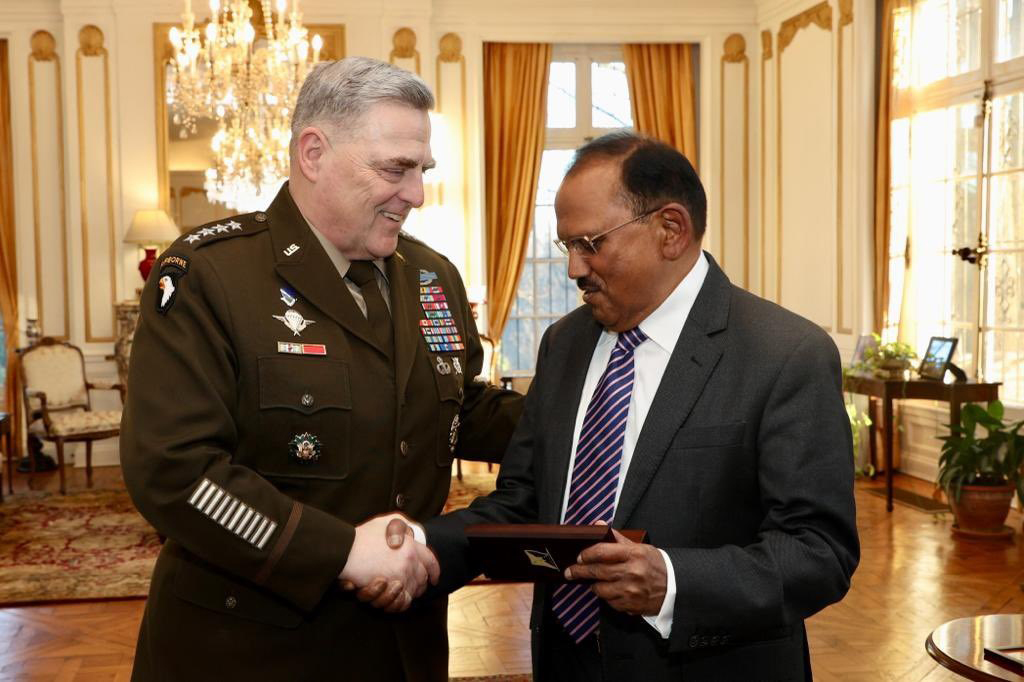
January 30, 2023: in order to launch the next milestone in
the US-India strategic technology and defence collaboration, Indian National
Security Advisor (NSA) Ajit Doval was welcomed by his US counterpart Jake
Sullivan at the White House. Doval arrived in Washington DC to attend the first
formal talks on the Initiative for Critical and Emerging Technologies (iCET).
Doval discussed the iCET with his US counterpart Jake Sullivan at the White
House. The NSA was accompanied by a high-powered delegation that included five
prominent individuals: the Principal Scientific Adviser of India, the Chairman
of ISRO, the Scientific Adviser to the Defence Minister, the Secretary of the
Department of Telecommunications, and the DG, DRDO. Doval and Sullivan formally
launched the iCET in Washington DC. The US and India concluded the US-India
iCET meeting and also decided to launch a new Innovation Bridge. The Indian
Embassy in the US said in a tweet that the iCET reflects India-US convention of
strategic, commercial & scientific approaches in the field of technology.
The White House said in a statement that Innovation Bridge will connect both
countries' defence startups. It said: both countries affirm that the ways in
which technology is designed, developed, governed, and used should be shaped by
our shared democratic values and respect for universal human rights. According
to the statement, the two sides discussed opportunities for greater cooperation
in critical and emerging technologies, co-development and coproduction, and
ways to deepen connectivity across our innovation ecosystems. Also signed was the
Implementation Arrangement between India’s Dept of Science & Tech and the
US National Science Foundation.

What was not revealed was that
Doval and Sullivan had agreed to evolve a ‘NATO + 6’ arrangement under which
India would join the existing ‘Five Eyes’ grouping (that now comprises the US,
Canada, the UK, Australia and New Zealand) that will enable the collection and dissemination
of SIGINT/ELINT data emanating from China in a seamless manner.
To this end, a
chain of SIGINT/ELINT data collection sites will be established in Ladakh,
Uttarakhand and Arunachal Pradesh, with India’s NTRO and the US National Security
Agency (NSA) becoming the principal stakeholders. That was the reason why Ajit Doval had met with Senator Mark Warner and Senator John Cornyn, Chair & Member of the Select
Committee on Intelligence and co-chairs of the India Caucus, at India House in Washington DC.

March 15, 2023: A bipartisan resolution was introduced in the US
Senate to recognise the McMahon Line as the international boundary between
China and Arunachal Pradesh. The bipartisan Senate Resolution sees Arunachal Pradesh as an
integral part of India. It also “commits the US to deepening support and
assistance to the region, alongside like-minded international partners and
donors.” The US Senate commended the Government of India for taking steps to
defend itself against aggression and security threats from China. Some of the
Indian steps mentioned in the resolution include securing the telecommunication
infrastructure, re-examining its procurement processes and supply chains and
expanding its cooperation with Taiwan in public health and other sectors. The
resolution said its purpose was to further strengthen the US-India
bilateral partnership in defence, technology, economics and people-to-people
ties. It also aims to promote US cooperation with India through the Quad, the
East Asia Summit along with ASEAN and other international fora.

April 3 to 5, 2023: Bhutan’s King Jigme Khesar Namgyel
Wangchuk visited India and held formal talks with Indian Prime Minister
Narendra Modi on April 4. India and China had “in 2012 reached an agreement
that the tri-junction boundary points between India, China and third countries
will be finalized in consultation with the concerned countries”. Further, point
12 of the 2012 ‘understanding’ stated that the 1890 convention was the “basis
of alignment” of the India-China border in the Sikkim sector. However, China
interpreted this to mean that the trijunction point had been settled, while
India claimed that the phrase ‘basis of’ meant that the final settlement had
not been reached. Just two years ago, Bhutan and China signed a ‘three-step
roadmap’ for expediting talks to demarcate their land boundary. In his March 25
interview with the Belgian newspaper La Libre, Bhutan PM Lotay Tshering
said that India, China and Bhutan were three “equal” parties to the
negotiations for the trijunction. During that same interview, Tshering had also
significantly said that the talks with China over demarcating the other
sections of its boundary were at an advanced stage and could be finished
soon. Now, Bhutan’s prime minister stated that they were close to
demarcation. “After one or two more meetings, we will probably be able to draw
a line,” he said. Since 1984, the officials of the two sides have held 24
rounds of talks over their disputed border. In the past, the Chinese have
offered 495 sq km of territory in the northern part of the Himalayan nation to
Bhutan. In return, they insisted that Bhutan give China 269 sq km of the
disputed territory in the west—an area of rich grazing pasture, central to the
livelihood of Bhutanese pastoralists. The Chinese have claimed four areas in
western Bhutan: Charithang, Sinchulimpa, the Dramana pasture land and Doklam,
the present bone of contention. Bhutan and China had the 11th Expert Group
Meeting (EGM) on their boundary issues in Kunming, China, from 10 to 13 January
2023. Dasho Letho Tobdhen Tangbi, Secretary of the International Boundaries of
Bhutan, led the Bhutan delegation whilst the Chinese delegation was led by Hong
Liang, Director-General of the Department of Boundary and Ocean Affairs of the
Ministry of Foreign Affairs.

Early April 2023: China released a third set of names in Mandarin,
Tibetan and pinyin characters for Arunachal Pradesh, including two land
areas, two residential areas, five mountain peaks and two rivers.
April 5, 2023: The US reacted after China renamed 11 places in Arunachal Pradesh, which it claims
as Southern Tibet. In a statement, the White House said that the US has
recognised Arunachal Pradesh as an integral part of India and strongly opposes
any unilateral attempts to advance territorial claims by renaming localities. This
was a signal meant for Bhutan and an assurance to Thimpu that the US will be
ready to militarily cooperate with India in repelling any Chinese territorial
aggression against both Bhutan and India.

April 10, 2023: EX Cope India 23, a bilateral Air Exercise between
the IAF and the USAF, commenced at Air Force Stations Arjan Singh (Panagarh),
Kalaikunda and Agra. The exercise aimed to enhance mutual understanding between
the two air forces and share their best practices. The first phase of exercise focussed
on air mobility and involved transport aircraft and special operations forces
assets from both the air forces. The USAF fielded an MC-130J of 1st SOS from
Kadena, as well. The exercise also included the presence of Japanese Air Self-Defence
Force aircrew, who participated in the capacity of observers. USAF
participants included the 374th Airlift Wing’s 374th Operations Group, 374th
Maintenance Group, and the 374th Mission Support Group from Japan’s Yokota air
base.

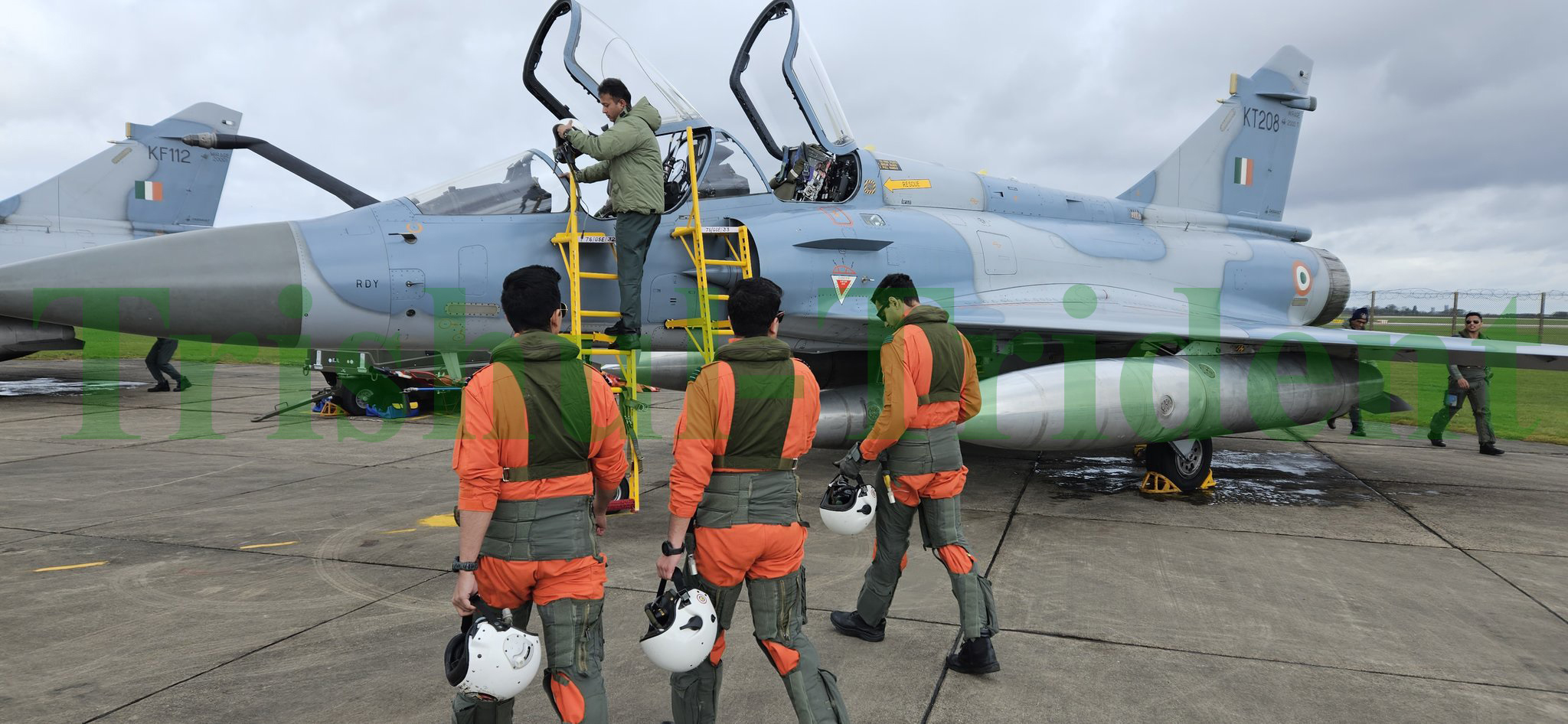
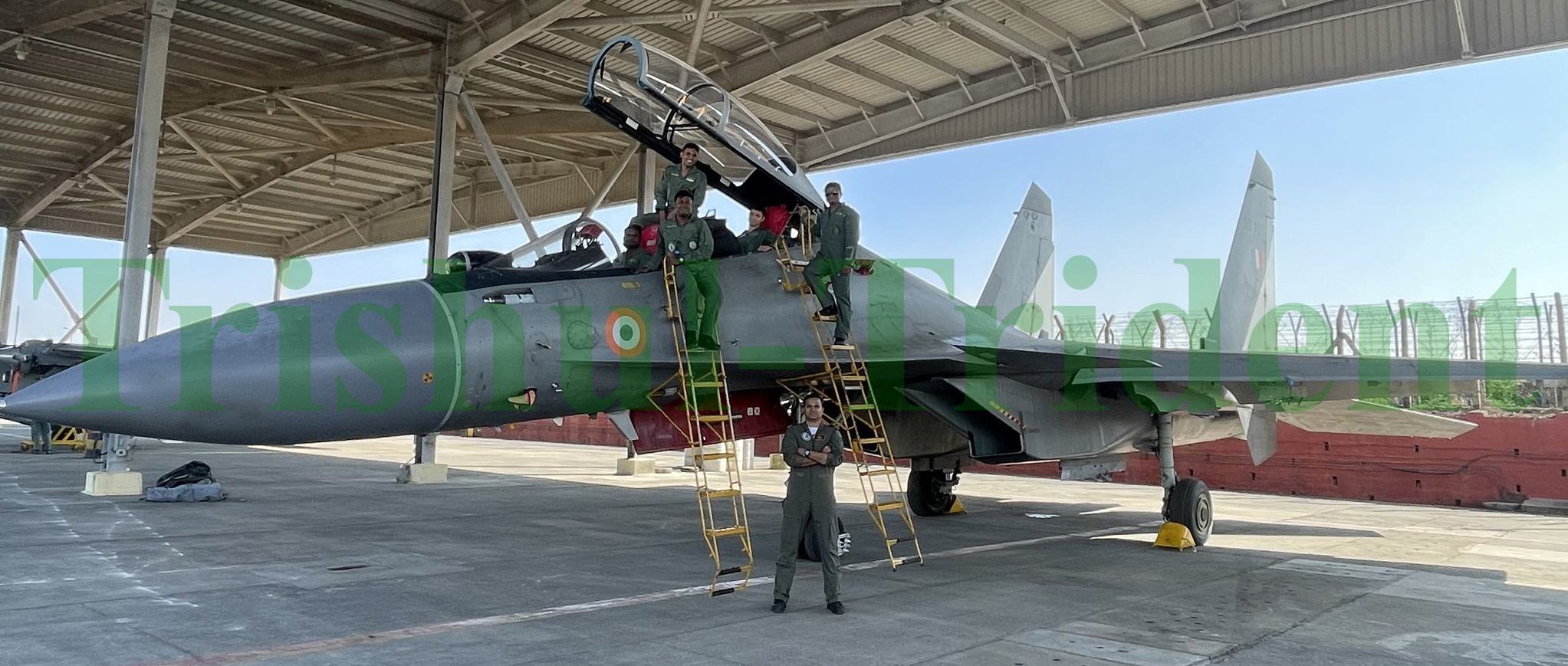
April 13, 2023: The next phase of EX Cope India 23 commenced at Air
Force Station Kalaikunda. This segment of the exercise witnessed the
participation of USAF B-1B bombers of the 28th Bomb Wing’s 34th Bomb Squadron
from the Ellsworth AFB in South Dakota. F-15E Strike Eagles from the 336th
FS from Japan’s Kadena air base joined the exercise subsequently. The IAF
element included Su-30MKIs, Rafale, Tejas Mk.1 and Jaguar IS/DARIN-2 combat aircraft.
The exercise was supported by aerial refuellers and AEW & CS aircraft of
the IAF. The exercise concluded on April 24, 2023. This marked the first time
that a B-1B Lancer has participated in an exercise with India, second time
being in India in the last two months, and third time in two years that the
34th BS has flown and landed in India. The principal aim of this exercise
was to convince Bhutan that the US will be ready to militarily cooperate with
India in repelling any Chinese territorial aggression against both Bhutan and
India.

Late May 2023: In a significant development
ahead of Indian PM Narendra Modi’s visit to the US starting June 22, a powerful
US Congressional Committee has recommended strengthening NATO + by including
India. Currently, the NATO + 5, is a security arrangement that brings together NATO
and five aligned nations—Australia, New Zealand, Japan, Israel, and South Korea—to
boost global defence cooperation. Bringing India on board
would facilitate seamless intelligence-sharing between these countries and
India would also be able to access the latest military technology without much
of a time lag. The House Select Committee on the Strategic Competition
between the US and the Chinese Communist Party (CCP), led by Chairman Mike
Gallagher and Ranking Member Raja Krishnamoorthi, overwhelmingly adopted a
policy proposal to enhance Taiwan’s deterrence, including through strengthening
NATO + to include India. “Winning the strategic competition with the Chinese
Communist Party and ensuring the security of Taiwan demands the United States
strengthen ties to our allies and security partners, including India. Including
India in NATO + security arrangements would build upon the US and India’s close
partnership to strengthen global security and deter the aggression of the
Communist Party of China across the Indo-Pacific region,” the Select Committee
recommended. An initiative of the Republican leadership, the Select Committee
is popularly called the China Committee. Indian-American Ramesh Kapoor, who has
been working on this proposal for the past six years, said this is a
significant development. He hoped that the recommendation would find a place in
the National Defense Authorization Act 2024 and finally end up becoming a law
of the land.
US Secretary of Defense Lloyd J Austin III will visit India in early June to advance discussions
on bilateral defence cooperation. During his visit, he is expected to sign on
to the formal ‘NATO + 6’ agreement under which India would join the
existing ‘Five Eyes’ grouping (that now comprises the US, Canada, the UK,
Australia and New Zealand) that will enable the collection and dissemination of
SIGINT/ELINT data emanating from China in a seamless manner. To this end, a
chain of SIGINT/ELINT data collection sites will be established in Ladakh,
Uttarakhand and Arunachal Pradesh, with India’s NTRO and the US National Security
Agency (NSA) becoming the principal stakeholders.

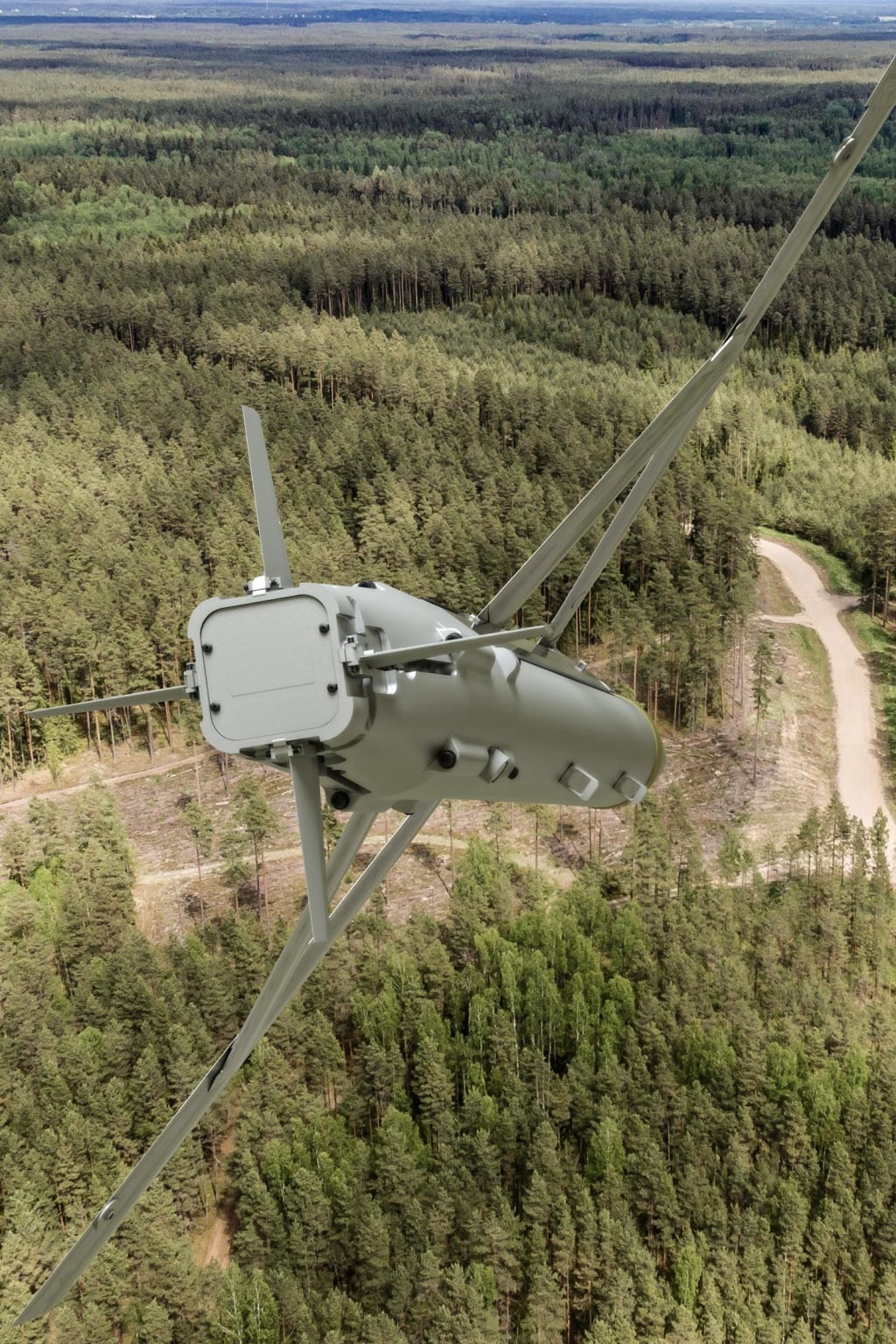
Also expected to be inked is
an agreement between Boeing and India’s Economic Explosives Ltd under which
both companies will co-develop a ‘desi’ version of the 150km-range Boeing/Saab
Ground-Launched Small Diameter Bomb (GLSDB), which will navigate towards the
target with INS navigation that is supported by a highly jamming-resistance GPS
(NavIC receivers to be used). Since the system does not need a ballistic path
toward the target it is possible to launch the GLSDB from a container, and
engage targets 360 degrees without moving the launcher. GLSDB has the ability
to fly non-ballistic trajectories and it manoeuvres to strike targets that
cannot be reached by conventional direct fire weapons, such as reverse slope
engagement.

While in New Delhi on June 5, US
SECDEF Lloyd J Austin III and his Indian counterpart signed off on three
agreements, including one that is an annexe to the LEMOA agreement under which
Indian shipyards like L & T’s Kattupali and Mazagon Dock Shipbuilding &
Engineering will undertake the servicing of US Navy warships serving with both
the US Indo Pacific Command and the US Central Command. This has been a long
process, with many ups and downs since the first modest steps were taken with
the end of the Cold War three decades ago. The 1991 Kicklighter proposals (Lt
Gen Claude Kicklighter was the then Army Commander at the US Pacific Command)
suggested establishing contacts between the three armed services of both to
promote exchanges and explore areas of cooperation. An Agreed Minute on Defence
Cooperation was concluded in 1995 instituting a dialogue at the Defence
Secretary-level together with the setting up of a Technology Group, which had
then suggested that the US Navy make use of Indian shipyards for its warship
repair requirements.

The second agreement was about extending the US
‘Fish Hook Undersea Defense Line’ SOSUS network to both the eastern and
western seaboards of India. Within the IOR, the SOSUS network presently stretches
across the Java Sea from Kalimantan to Java, across the Sunda Strait between
Java and Sumatra, and from the northern tip of Sumatra along the eastern side
of India’s Andaman and Nicobar island chain. Real-time information-sharing
between the US and Japan joins the undersea defence line-up, effectively
drawing a tight arc around Southeast Asia, from the Andaman Sea to Japan. The
latest extension of the SOSUS network will bring vast swathes of the Bay of
Bengal and the southwestern portion of the Indian Ocean under the SOSUS
surveillance envelope.
Under the third agreement, the US Marine Corps and
US Navy will share expertise with the Indian Navy and Indian Army on seaborne
expeditionary warfare tactics and operations through a series of joint
exercises.


US
National Security Advisor Jake Sullivan will arrive in Delhi on June 13 for a
two-day visit to finalise details of the GE-414 turbofan’s co-production by HAL’s
Koraput-based Engine Division and GE Aero Engines, finalise the multilateral
agreement concerning the ‘Six Eyes’ grouping and the NATO + 6 grouping, and finalise
the bilateral agreement concerning the construction of SIGINT/ELINT data
collection sites all along the China-India border areas. Most importantly,
under the auspices of the initiative on critical and emerging technologies
(iCET) and the related Defence Industrial Cooperation roadmap, the US is putting
together a military-industrial grouping of the US, Israel and India that will together
co-develop and series-produce a new-generation solid-fuelled rocket-launched
hypersonic cruise missile capable of both land attack and naval strike.