Total Pageviews

Wednesday, January 18, 2012

China’s HQ-9/HQ-16N LR-SAMs Profiled

China’s People’s Liberation Army (PLA) late last September formally disclosed that the HQ-9 (export designation FD-2000) and HQ-16 new-generation long-range surface-to-air missile (LR-SAM) systems had been inducted into service by the PLA Air Force (PLAAF) and the PLA Navy (PLAN), respectively. Developed by the China Academy of Defence Technology (also known as CASIC’s 2nd Academy), the HQ-9 and HQ-16N have a range of 100km. The HQ-9’s cannisterised missiles are carried in groups of four on the back of wheeled TAS-5380 8 x 8 transport-erector-launcher (TEL). Target prosecution is handled by the HT-233 passive phased-array radar system, mounted on a wheeled 8 x 8 chassis. Firing trials of the HQ-9 were conducted at the Shuangchengzi SAM test range located in north-central China in 2008. The HQ-9’s and HQ-16N’s series-production is presently taking place at a facility located southwest of Beijing. A typical HQ-9 site includes a raised central berm for the HT-233 engagement radar, surrounded by four prepared pads upon which the LR-SAM’s TELs are deployed. A pad is located next to the HT-233’s berm for housing power-generators and command-and-control facilities. A circular path surrounds the main complex, containing the TEL pads and the engagement radar position. A second raised berm is situated outside this circular path to mount a JL-3D-90A early warning radar.
The HQ-9’s two-stage HQF-91 missile is ‘cold-launched’ vertically from a tubular launcher. The missile’s first stage has a diameter of 700mm while the second stage has a diameter of 560mm. The total launch mass is 2 tonnes, while the missile’s length is 9 metres. It is armed with a 180kg HE fragmentation warhead and has a maximum speed of Mach 4.2. Also operational on board the PLA Navy’s two Type 052C guided-missile destroyers (DDG 170 Lanzhou and DDG 171 Haikou, plus six more under construction) as part of the HQ-16N, the HQF-91 has a slant range of 125km and a service ceiling of 30km. The missile’s proximity fuze has an effective range of 35 metres, which goes active when the missile is 35 metres away from its target. A total of 48 HQF-91s are housed in and launched from eight 6-cell vertical launch systems (VLS) on board each of the two DDGs. The HQF-91’s guidance mechanism comprises initial inertial navigation, radio command mid-course correction, and active terminal guidance. When in range for an effective lock-on with the on-board X-band monopulse radar, the terminal guidance phase, lasting 20km, gets underway. The HQF-91 has been developed to specifically counter incoming intermediate-range /tactical ballistic missiles and supersonic anti-ship missiles, and is therefore not cost-effective if deployed to counter only manned combat aircraft. For naval target tracking and engagement, the Jiangsu Province-based Nanjing Research Institute of Electronic Technology (NRIET, but also more commonly known as the 14th Institute) has developed the shipborne Type 348 S-band multi-function passive phased-array radar with four distributed antenna arrays, each of which has a maximum range of 450km, a maximum resolution of 0.5 metres, and can  scan a 0-120-degree arc in azimuth and 0-90 degrees in elevation, with a peak power output on 1mWe.
To reduce the HQ-9’s vulnerability to anti-radiation precision-guided munitions, the China National Precision Machinery Import-Export Corp (CPMIEC) has developed an innovative solution, called FT-2000, which employs a passive homing-all-the-way variant of the HQF-91 LR-SAM, which operates in conjunction with a ground-based DWL-002 passive surveillance system (PSS), which has been developed by CETC International Co Ltd. The FT-2000 is launched from an 8 x 8 TEL carrying four missile tube launchers. The missile can home on the target autonomously at 1,200metres/second while sustaining a 14 G overload. The FT-2000 has a built-in inertial navigation system, so that whenever it has acquired a lock-on, it will continue towards the target even if the emitter is shut down, although the missile's accuracy would seriously degrade in this case. The DWL-002 uses four ground-based ESM sensor posts, each of which are mounted on 6 x 6 wheeled vehicles and can together track 50 airborne targets simultaneously. The ESM sensor posts are deployed at a distance 30km from each other and 80km ahead of a deployed HQ-9 Regiment, while the FT-2000’s missile launchers are deployed near the central ESM sensor station at a distance of 150 metres. The moment a hostile airborne standoff jammer is detected and localised in near-real time by the DWL-002, a single FT-2000 launcher (carrying four vertically-launched HQF-91 LR-SAMs equipped with a passive anti-radiation homing seeker) launches a missile, whose on-board seeker has already been locked-on to the jamming source prior to missile launch. This missile thus acts as a ‘homing all-the-way killer’ and dramatically increases the engagement footprint of a LR-SAM-based air defence network by a factor of 2.5, or 25,000 sq km. Consequently, when employed along with the FT-2000, the HQ-9’s kill probability shoots up to 98% especially if two HQF-91s are ripple-fired against an airborne target (that is, if it survives a direct hit from the FT-2000’s LR-SAMs).
Accompanying the land-mobile HQ-9 LR-SAM SAM batteries are the RWE-1 radio-frequency band active missile approach warning system (MAWS) and CETC-built TS-504 tactical digital troposcatter communications systems. The MAWS is used for protecting LR-SAM batteries from attack by high-speed anti-radiation missiles, and is employed to trigger emitter shutdown and activation of active emitting decoys. The MAWS has a detection range of 40km/21.6nm. DF capability is via amplitude comparison between channels, providing 10-degree DF accuracy, adequate for cueing decoys, or cueing point-defence weapons to acquire, track and engage the inbound missiles. The TS-504 tactical digital troposcatter communication system is deployed extensively to support LR-SAM batteries by providing digital connectivity to the integrated air defence network.
For point-defence of the HQ-9 battery, the Yi Tian wheeled self-propelled very short-range air defence system (VSHORADS) is employed. The system uses the WMZ-551 6 x 6 wheeled armoured fighting vehicle on which there is a mast mounted Type-120 rotating planar-array low-probability-of-intercept (LPI) radar. Against a helicopter or non-stealth attack aircraft the radar provides surveillance out to 18km, tracking at 12km, and engagement at 10km. Against an inbound cruise missile the surveillance range drops to 8km. with the missile firing at 6km from an oncoming target. The eight SAMs are carried by a 4 x 4 vehicle carrying two square quad box launchers each containing a FB-6A short-range missile, plus a fire-control system comprising a CCD day/night sight, thermal imaging sight, and a laser rangefinder. The FB-6A can intercept a target with a maximum speed of 400 metres/second (1,440kph) and the reaction time is given as 8 seconds. A Yi Tian air-defence battalion comprises a battalion headquarters and three self-supporting air defence companies.—Prasun K. Sengupta

Monday, January 16, 2012

China’s Latest MBT Sports 1,500hp Gas Turbine, APS

Bulk production of the 62-tonne ZTZ-99A2 main battle tanks tank (MBT) commenced early last year in China for the People’s Liberation Army (PLA), following three years of user trials.
Developed by the China North Vehicle Research Institute (also known as 201 Institute) of the state-owned China North Industries Corp (NORINCO) since 2005, the ZTZ-99A2 is being built by the Inner-Mongolia First Machinery Group Corp (also known as (617 Factory) in Baotou, Inner Mongolia. The ZTZ-99A2 sports explosive reactive armour (ERA) tiles on the glacis, turret front and turret sides, plus a turret-mounted active protection system (APS). The baseline chassis armour is constructed of steel, to which advanced passive armour has been added over the frontal arc. By adding ERA tiles and APS, the ZTZ-99A2 MBT has been given a very high level of protection against anti-tank weapons fitted with tandem high-explosive anti-tank (HEAT) warheads.
The ZTZ-99A2 will supplement the PLA Army’s existing 800-odd 57-tonne ZTZ-99A1 MBTs, which sport spaced arrow-shaped composite armour tiles on the turret’s front side, plus a turret-mounted laser countermeasures suite. The ZTZ-99A2’s turret, on the other hand, comes fitted with exteriorly changed arrow-shaped ERA armour panels, while its frontal hull is covered by flat ERA armour tiles. Despite of the size of ERA armour-plating, the ZTZ-99A2 seems to have a larger turret with an expanded tail chamber. The turret-mounted APS uses a millimetre-wave radar as its principal sensor.

The commander’s panoramic sight bears a close resemblance to that on French AMX-56 Leclerc MBT. The ZTZ-99A2’s integrated propulsion system includes a 1,500hp transverse-mounted gas turbine, automatic transmission, cooling system and the fuel tank. Suspensions are of the torsion bar-type, while both the commander’s and gunner’s sights make use of COTS-based uncooled thermal imagers.

The main armament is a 55-calibre 125mm smoothbore cannon (firing APFSDS rounds capable of penetrating 950mm of rolled homogenous armour), which is linked to a hull-mounted an auto-loader. The MBT has a  three man crew complement. External dimensions of the MBT include a length of 11 metres (34 feet), width of 3.4 metres (10.5 feet) and a height of 2.2 metres (6.8 feet).—Prasun K. Sengupta

Friday, January 13, 2012

LCH Versus ZW-19

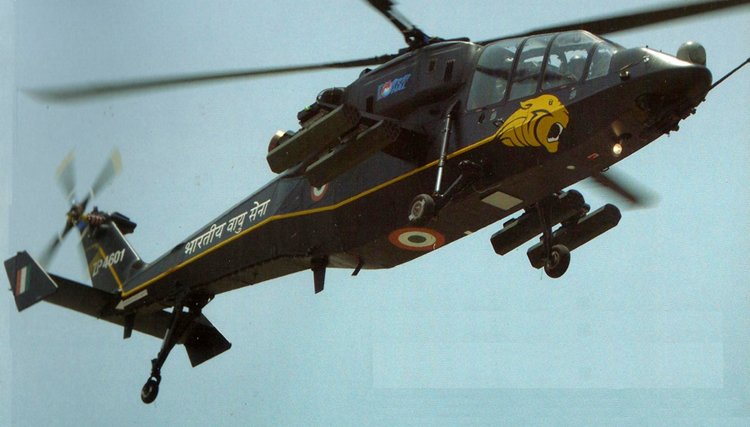
It is not the Ministry of Defence-owned Hindustan Aeronautics Ltd (HAL) that has screwed up, but it is the Indian Air Force (IAF) that has deliberately sabotaged the development of what was originally envisaged as India’s homegrown light attack helicopter (LAH) by, on one hand, vehemently opposing the induction of such a weapons platform by the Indian Army’s Aviation Corps (AAC), and on the other by drafting a ridiculous ASQR that has now permanently changed the helicopter’s design/performance parameters from those of a LAH to those for a Light Combat Helicopter (LCH). The MoD-owned Hindustan Aeronautics Ltd (HAL), which has been associated with the tedious and long-drawn process of designing, developing and series-producing the ‘Dhruv’ advanced light helicopter, had all along believed that the ‘Dhruv’ 5-tonne multi-role light medium twin-engined design does not represent a zero-sum game, that it is possible to wrap a slim, tandem-seat fuselage around the existing twin-engined powerplant, transmission and rotor systems of this proven helicopter and derive two distinct derivatives: a multi-task LAH; and a single-engined armed aeroscout-cum light utility machine (LOH/LUH) capable of operating in the plains (for operating in tandem with fast-moving mechanised and armoured formations) and over jungle terrain in support of special operations forces, and also taking part in combat search-and-rescue operations. Yet, since early 2003, the IAF kept insisting that the AAC’s requirement for LAHs was unjustifiable (since the IAF already operated a fleet of attack helicopters like the Mi-35P and Mi-25) and its views ultimately prevailed over the MoD, which ruled that not only would the LAH option be axed in favour of the LCH, but the AAC’s existing and projected fleets of LOHs would have to synchronise their flight operations with the IAF’s existing and projected attack helicopter fleets. When Army HQ protested to the MoD, a face-saving compromise was arrived at, this being that the AAC was authorised to acquire 76 ‘Dhruv Mk4’/’Rudra’ helicopter gunships that would, in essence, entail the needless modification of the ‘Dhruv’ utility helicopter into an armed machine capable of housing no more than four anti-armour guided-missiles (this being the DRDO HELINA, which remains elusive till this day and may eventually be replaced by either the Spike-ER from RAFAEL of Israel, or the PARS-3LR from MBDA), or an alternate armaments package comprising a chin-mounted 20mm THL-20 cannon supplied by Nexter Systems, twin rocket pods housing 2.75-inch rockets supplied by Belgium’s FZ, and four Mistral ATAM air-to-air missiles from MBDA. Needless to say, the decision to develop the ‘Rudra’ was not only financially unwise, but it is also unlikely to translate into any operational gains for the Army. All this could have been easily avoided had the MoD mandated that both the Army and IAF HQs formulate a joint services staff requirement (JSQR) for HAL to develop two tandem-seat attack helicopter variants: the LAH for the AAC and LCH for the IAF.    
The LCH programme took off on October 3, 2006 when the MoD sanctioned a sum of Rs.376.67 crores for HAL to design and develop the LCH over a 24-month period. Powered by twin Ardiden 1H (1,200shp TM333-2C2 Shakti) engines, the LCH was then envisaged as a 2.5-tonne machine with a service service of 6km (19,685 feet), and which would take off from altitudes of 3km (9,800 feet), loiter and operate at altitudes of up to 5km (16,400 feet), and engage targets like unmanned aerial systems (UAS) that are cruising at altitudes of up to 6.5km (21,300 feet). The ASQR originally prepared by the IAF for the LCH states that the helicopter’s HOGE ought to be 3,500 metres, or 11,482.939 feet when it has an all-up weight of 5 tonnes. The LCH’s first prototype made its maiden flight on March 29, 2010 and two more prototypes have since been fabricated for flight certification purposes. Like the ‘Dhruv’, the LCH too adheres to the following FAR/MILSPEC standards:
·         US Army Aeronautical Design Standard-33E (ADS-33E)
·         Flaw-Tolerant Rotor System: FAR/JAR 29.571, AM 29-28
·         Crashworthy Fuel System: FAR/JAR 29.952, AM 29-35
·        Flaw-Tolerant Drive Train with Over Torque Certification: FAR/JAR 29.952, AM 29-28
·         Turbine Burst Protection: FAR/JAR 29.901, AM 29-36
·         Composite Spar Main & Tail Rotor Blades with Lightning Strike Protection: FAR/JAR 1309(h), AM 29-40
·         Engine Compartment Fire Protection: FAR/JAR 29.1193
·         Redundant Hydraulics & Flaw Tolerant Flight Controls: FAR/JAR 29.571, AM 29-28
·         Aircraft-Wide Bird Strike Protection: FAR/JAR 29.631, AM 29-40
·         Crashworthiness Standard: NATO’s MIL-STD-1290
·         Crashworthy Seats Conforming to MIL-STD-1472B
·         Cockpit Instrumentation Lighting Conforming to MIL-STD-85762A
·         Avionics Databus: MIL-STD-1553B or ARINC-429
·         Autopilot Accuracy: MIL-F-9490D
·         Embedded MIL-STD-188-141B ALE Link Protection
·         Embedded MIL-STD-188-110B data modem
To make the LCH a survivable platform, HAL has designed its own impact absorbing landing gear and will improve on the Dhruv ALH’s ballistic tolerance with up to 100kg of composite-/ceramics-based modular armour, whose positioning is based on an IAF study of the areas most likely to suffer bullet damage. The tandem-seat cockpits will each have twin side-by-side AMLCDs, will be NVG-compatible, will provide NBC protection to the crew, and will have a ‘JedEyes’ helmet-mounted targetting system co-developed by HAL and Israel’s Elbit Systems. The LCH’s armaments suite will comprise a THL-20 chin-mounted turret containing a 20mm Nexter Systems-built M-621 gun firing at a rate of 800 rounds per minute, four stub-wing-mounted Forges de Zeebrugge-built LAU-FZ-231 launchers carrying 2.75-inch rockets, or a combination of four MBDA-built Mistral ATAM air-to-air missiles and twin 2.75-inch rocket launchers, or a combination of twin 2.75-inch rocket launchers and four 6km-range anti-armour guided-missiles (HELINA, or PARS-3LR or Spike-ER). A nose-mounted FLIR pod produced by the MoD-owned Bharat Electronics Ltd will be used for for target acquisition. The LCH’s four-axis auto-hover and digital automatic flight control system have been developed in-house, while the DRDO’s Bangalore-based Defence Avionics Research Establishment (DARE) is developing the defensive aids suite, which includes a combined radar/laser warning system (this being SaabTech’s MILDS AR-60V2) and Bharat Dynamics Ltd-developed countermeasures dispensers. DARE has also developed in-house the digital mission computer and pylon interface boxes. The flight control actuator system has been co-developed by HAL and the UK-based APPH. The SAGEM subsidiary of France’s SAFRAN Group, which has had a presence in India since the 1960s, has supplied the piloting inertial reference system (APIRS), more than 100 of which are already on board the Dhruv ALH. The APIRS uses new-generation inertial technologies like fibre-optic gyroscope (FOG) and silicon accelerometer. Other SAGEM-supplied items on board are the digital autopilot (which is also on the ‘Dhruv’), and the Sigma-95L RLG-INS. SAGEM is also offering its family of integrated cockpit display systems (ICDS) for the LCH.
Elbit Systems, which in May 2007 joined forces with HAL and MerlinHawk Associates Pvt Ltd to create HALBIT Avionics Pvt Ltd (HALBIT) as an India-based joint venture company, is presently proposing four items for the LCH: integrated AMLCD-based glass cockpit, the 25kg C-Music directional infra-red countermeasures (DIRCM) suite, Tadiran SDR-7200AR multi-bandwidth software-defined radio, and the QuadEye panoramic night vision goggle. The IAF has also demanded that the LCH be equipped with anti-missile defence system like BAE Systems’ ‘Boldstroke’, which uses modular open-system architecture and non-proprietary standard interfaces that support interchangeability, technology insertion, and diminishing manufacturing sources resolution. It allows for direct and fibre-coupling between the laser and pointer/tracker, providing installation flexibility to meet the size, weight, and power requirements of both light and heavy rotary-winged platforms. It is much lighter, has fewer moving optical parts and uses mirrors instead of a physical ‘light pipe’ to shoot its laser. The entire unit is housed in one box. A helicopter with ‘Boldstroke’ mounted on either side would have 360 degrees of assured protection from IR-guided anti-aircraft missiles.
Despite all these, as of now, the IAF has made only a verbal commitment to procure 65 LCHs, and no firm contract exists to translate this assurance into reality. This then brings us to the inherent design/performance flaws of the LCH, especially when comparing it with the Harbin ZW-19 attack helicopter. Firstly, there is the issue of optimising the LCH for its primary function, which is to ensure air defence against UAVs and slow-moving aircraft, be it at any altitude. If that’s what the IAF desires, then why employ a twin-engined tandem-seat LCH? Why can’t a single-engined LOH/LUH like Eurocopter’s AS.550C3 Fennec, armed with a THALES-built FLIR turret and a solitary 20mm gun-pod from Nexter Systems, which has already flown to altitudes of 22,000 feet, be tasked with such a mission? Secondly, if the LCH is tasked with a hunter-killer mission, i.e. seeking out and destroying UAVs, then can this be done with only a solitary nose-mounted FLIR sensor? Wouldn’t it be much better if instead of the FLIR sensor, a nose-mounted search radar capable of broad area surveillance was mounted on the LCH’s nose, and the FLIR turret be mast-mounted atop the main rotor hub purely for optronic fire-direction purposes? A nose-mounted search radar is also a prerequisite for the LCH to engage in anti-tank warfare from standoff distances that would keep the LCH away from hostile VSHORADS/MANPADS. In fact, this is exactly what AVIC has achieved with the ZW-19. Then there’s the peculiarly engineered rear landing gear attached midway to the LCH’s tail section, which is outright dangerous when the LCH is flying nap-of-the-earth flight profiles over urban or jungle terrain. Another design compromise concerns the LCH’s twin stub-wing armament booms, each of which can carry only two ATGMs, instead of an appreciable four (totalling eight ATGMs, as is the case with the ZW-19). And last but not the least, the ZW-19 comes equipped with a weight-saving fly-by-wire flight control system, while the LCH does not.  
In conclusion, it does appear that the IAF’s ASQRs were drafted in such a manner that the LCH would be acceptable more as a platform for engaging in aerial combat—and by consequence being IAF-commanded and -operated--than for engaging hostile ground-based armoured/mechanised formations, something the AAC would have loved to get its hands on. Instead, a needless inter-services turf war has ensured that the LCH remains the sole property of the IAF and never morphes into the more-urgently needed LAH, with the AAC being forced to accept an inferior platform—the ‘Rudra’ armed with a mere four ATGMs and devoid of a nose-mounted search radar capable of detecting and engaging hostile armoured/mechanised formations from distances that are beyond the reach of hostile VSHORADS/MANPADS.—Prasun K. Sengupta

Thursday, January 12, 2012

Their’s….And Our’s

Since a picture is worth a thousand words, I leave it to you all to judge for yourselves as to whether it is China or India that has superior ground infrastructure facilities like aircraft shelters for their respective fleets of new-generation combat aircraft and force multipliers like AEW & C platforms.
On another topic, based on what’s happening at Russia’s Gromov Flight-test Centre in Zhukovsky, it appears that the IAF’s upgraded MiG-29UPG M-MRCAs will be capable of firing Kh-35 subsonic anti-ship cruise missiles.
Lastly, below is a photo of a scale-model of the Z-19WG light combat helicopter, developed by China’s AVIC, which is being optimised for warfare at higher altitudes. For those with any eye for details, this photo graphically illustrates what AVIC has done right, and where HAL has gone terribly wrong with its LCH design.

Sunday, January 8, 2012

Alliance Of Convenience

A little-known fact that has gone largely unnoticed since the early 1990s has been the vital role played by Pakistan in the substantial expansion of Beijing-Ankara military-industrial collaboration over the last 17 years. Since 1985, Turkey has sent 18 military delegations comprising some 200 members while 14 Chinese military missions with about 330 representatives have visited Turkey at the same time. Sino-Turkish military-industrial cooperation began in the first half of the 1990s after Ankara’s negotiations with Washington for the joint production and technology transfer of the M-270 multiple launch rocket system (MLRS) failed. The US had then criticised Turkey for using US-supplied weapons for human rights abuses (against the Kurds), subsequently restricting weapons sales and military technology transfers to Turkey, and cutting off grants and loans earlier offered to Turkey for US-origin weapons. It was Pakistan which then informed Turkey that China was ready to fill the void, provided Turkey was willing to cooperate with China in the so-called fight against ‘Eastern Turkestan (Xinjiang)-sponsored terrorism’, namely to restrict, monitor and prevent the activities of Uyghur national organisations and leaders, most of whom were and are still based in Turkey. Consequently, since 1997 the Third Bureau (military attachés) of the People’s Liberation Army’s (PLA) General Staff Second Department (dealing with military intelligence) has been operating in Turkey as one of its most important, and presumably one of the most active, stations. Also in 1997, Turkey for the first time signed a contract with China for the procurement of 24 WS-1 302mm unguided rockets as well as 144 rockets for licenced-assembly in Turkey, to be supplied between 1998 and 2000. Turkey next began licence-producing the TR-300 rockets (or T-302, upgraded from the four-barrel WS-1B MLRS) under under the Turkish designation Kasırga (tornado).

In late 1998, based on a similar contract signed with the state-owned China Precision Machinery Import-Export Corp (CPMIEC), Ankara ordered some 15 of China’s most advanced short-range surface-to-surface battlefield support missiles (SSBSM)--the 150km-range B-611--and under Project J-600T, began license-producing an additional 200 more under a US$300 million deal. The first such missiles—known as Yıldırım (thunderbolt), were deployed as early as 2001. The solid-fuelled Yildirim-2 variant, featuring a 300km-range, was subsequently developed jointly by the defence industries research and development institute of the Scientific and Technological Research Council of Turkey (TUBITAK-SAGE), Mechanical and Chemical Industry Corp (MKEK), and the state-owned China Aerospace Science and Industry Corp (CASIC), while it was series-produced by Roket Sanayii ve Ticaret (Roketsan). Another product jointly developed by TUBITAK and CASIC (and produced by Roketsan) since 2004 is the 70mm (2.75-inch) ‘Cirit’ guided air-to-surface missile, which is derived from the Tianyan TY-90 (Heavenly Swallow) air-to-air missile. The ‘Cirit’ features a semi-active laser homing seeker, Goodrich Corp-built SiIMU-02 inertial measurement unit (IMU) and a 3kg armour-piercing warhead built with Class 5 insensitive munitions. The 14kg, 1.9 metre-long missile has a range of 8km with a high probability of hit on a 3 × 3 metre target at this range.
But perhaps the most noteworthy military-industrial collaboration undertaken thus far between Turkey, China and Pakistan is in the area of precision-guided munitions like air-launched cruise missiles (ALCM), and here again Pakistan has played a crucial role as facilitator. In the early 1990s, Pakistan’s Kamra-based Air Weapons Complex (AERO) sought Denel Aerospace of South Africa’s expertise for developing ALCMs for ground attack as well as a family of air combat missiles. In February 1996, soon after the Pakistan Air Force (PAF) concluded a $50 million deal with Italy’s Galileo Avionica for the supply of 30 Grifo-M3 airborne multi-mode pulse-Doppler radars for the upgraded Mirage IIIEAs, contractual negotiations began on a $160 million contract with Denel Aerospace’s Kentron subsidiary to cover the licenced-production by AERO of the latter’s U-Darter within-visual-range air-to-air missile (a reverse-engineered R550 Magic-2 missile developed by MBDA). Following this, AERO by April 1999 had commenced contractual negotiations with Denel Aerospace for co-development of an ALCM under a project codenamed H-4. Based on Kentron’s MUPSOW-1 design, which was unveilled in 1994, this ALCM was about 4.50 metres long, weighed about 850kg, had a 150km-range, housed an imaging infra-red (IIR) terminal seeker, sported twin dorsal air intakes and fixed horizontal and vertical tailfins, and had a rear-mounted turbojet engine, which was a reverse-engineered Turbomeca/Microturbo TRI 60-30 turbojet producing 5.4kN thrust and featuring a 4-stage-axial compressor. The AERO-built MUPSOW-1 comes armed with high-explosive runway-cratering bomblets. The successful results of this programme were made known to CASIC by 2002, and as expected, the 200km-range YingJi-63 (YJ-63, also known as KD-63) became China’s first land-attack ALCM and entered service with the PLA Air Force in 2005. Developed by the China Haiying Electro-Mechanical Technology Academy (CHETA, also known as 3rd Space Academy), the YJ-63 featured a ventral air intake, and was powered by a FW41-B turbojet, which was a reverse-engineered copy of the TRI 60-30 supplied by AERO to CHETA via CASIC, and which presently powers Pakistan’s MUPSOW-1 and the 350km-range Ra’ad (thunder in Arabic) ALCM; China’s YJ-63,  the Yingji-83 or YJ-83 Eagle Strike 255km-range anti-ship cruise missile (ASCM), the Yingji-82 or YJ-82/C-802A 180km-range ASCM, the 120km-range CM-802AKG ASCM, 170km-range C-705 ASCM, WJ-600 unmanned combat aerial vehicle (UCAV), and the 290km-range C-602 ASCM (120 of which along with 60 transporter-erector-launcher vehicles have been acquired by the Pakistan Navy from CASIC); Iran’s ‘Karrar’ (striker in Farsi) UCAV; and lastly, Turkey’s 190km-range ‘SOM’ ALCM, which was unveilled internationally for the first time by TUBITAK-SAGE at the Defence & Security Equipment International (DSEi) exhibition in the UK between September 10 and 13 last year. The 600kg ‘SOM’, armed with a 230kg warhead, has been under development since 2006 and it made its first guided-flight on August 9 over the Black Sea. Just like the Ra’ad, the ‘SOM’ uses GPS/INS guidance during its cruise phase, and an imaging IIR seeker for terminal guidance. The IIR seeker can also be used for providing image-based mid-course navigation by taking snapshots of waypoints and comparing them against predicted position to update the navigation system. The ‘SOM’ also has a two-way data-link that allows in-flight re-tasking, and it is network-enabled. It is believed that in addition to providing the FW41-B turbojets off-the-shelf, CHETA, through CASIC, provided several critical design-based inputs based on sea-level and high-altitude wind-tunnel tests for both the Ra’ad and ‘SOM’ ALCMs. In that sense, the Ra’ad is nothing but a re-engineered MUPSOW-1 that features a stretched fuselage, a fixed ventral air intake and twin vertical tailfins, twin swivelling horizontal fins, weighs 1,200kg, has a 450kg high-explosive fragmentation warhead, has a length of 5.1 metres, diameter of 0.17 metres and a wingspan of 3 metres (with its twin horizontal fins deployed), and cruises at a speed of Mach 0.8.
Apart from ALCMs, China is also helping Turkey to develop a range of GPS-guided glide-bombs. At DSEi 2011, TUBITAK-SAGE showcased the Hassas Gudum Kiti (HGK-1) GPS/INS guidance kit for Mk84 2,000lb-bombs, which bear a strong resemblance to China’s FT family of PGMs that have already been procured by the PAF. Turkey was forced to develop its own INS/GPS guided-weapons due to a reluctance by the US to provide the Boeing-built JDAM PGM—a void that China has yet again stepped in to fill. TUBITAK-SAGE claims that the HGK-1 was developed for the Turkish Air Force between December 2001 and February 2006. Guided drop-tests began at the end of 2005. TUBITAK-SAGE is working on designs for other bomb types, such as the 500lb Mk82 and 1,000lb Mk83. These PGMs will most likely use MILSPEC Py-code navigational updates from China’s ‘Beidou’ constellation of global GPS navigation satellites.—Prasun K. Sengupta