Total Pageviews

Tuesday, December 1, 2020

IAC-1 Completes 75-Day Basin Trials, DRDO In Kyrgyzstan & New Interceptor Craft For Indian Army At Panggong Tso Lake

Basin Trials of the Project 71 Indigenous Aircraft Carrier (IAC-1), which got underway in mid-September, were successfully concluded at Cochin Shipyard Limited on November 30, 2020 in the presence of Vice Admiral A K Chawla, Flag Officer Commanding-in-Chief Southern Naval Command and Madhu S Nair, Chairman and Managing Director Cochin Shipyard Limited (CSL). Despite the restrictions imposed by the lockdown due to COVID-19 pandemic, CSL and the Indian Navy worked as a cohesive team to ensure timely completion of all essential tasks leading up to the Basin Trials of IAC-1.

Basin Trials are primarily aimed at proving the main propulsion plant (developed with the technical consultancy of Fincantieri of Italy) of the vessel in harbour and is a precursor to the ensuing sea-trials. Onboard IAC-1, extensive trials of all four LM-2500 gas turbines, main gear boxes, shafting and controllable-pitch propellers, along with their integrated control systems, were carried out during these trials. In addition, major auxiliary equipment and systems such as steering gear, air-conditioning plants, compressors, centrifuges, all 60 critical pumps, fire-main system, power generation and distribution system, major machinery fire-fighting and de-flooding systems, all deck machinery  as well as entire internal communication equipment were also proved during the harbour trials phase.

N V Suresh Babu, Director Operations, CSL, Commodore Ishan Tandon, Director Carrier Acceptance Trial Team (CATT), Commodore Sameer Aggarwal, Chief Staff Officer (Technical) of Southern Naval Command, Commodore Cyril Thomas, Warship Production Superintendent (WPS) and Commodore Vivek Dahiya, Commanding Officer (Designated) also witnessed the event. With successful completion of Basin Trials, IAC-1 has entered the final phase of the project. The sea-trials are planned in first half of 2021.

Close to 75% of the material and equipment on-board the IAC-1 is indigenous. This includes raw material such as 23,000 tonnes of DMR-249A steel, 2,500km of electrical cables, 150km of pipes and 2,000 valves as well as finished products such as anchor capstans, rigid-hull inflatable boats and LCVPs, galley equipment, air-conditioning and refrigeration plants, steering gear, RO plants, main switchboards, energy distribution centres, more than 150 pumps and motors, AK-630M guns, Kavach chaff launchers, internal and external communications equipment, all network systems, including ship data network, integrated platform management system and the CMS-71 combat management system (developed and built by TATA Advanced Systems Ltd). More than 50 Indian OEMs have been directly involved in this project. Close to 2,000 Indian citizens received direct employment on-board IAC-1 on a daily basis and over 40,000 received indirect employment. In addition, about 85% of the project cost of approximately Rs.20,000 crore has been ploughed back into the Indian economy.

IAC-1 At A Glance

The ongoing Rs.20,000 crore naval base expansion work—Project Seabird Phase-IIA—is expected to be completed by 2023. Once operational, it will be the largest naval base in Asia and will be the home base for 50 warships and submarines. The number of Navy personnel at the base will increase to around 5,000.As part of the expansion work, the naval air station will come up at Alageri village near Ankola and it is expected to start functioning in 2025. The naval air station will come up in 1,328 acres. There is no need for additional land as the required land is already available with the Navy. In the naval air station, the Navy is planning to construct a runway measuring 2,000 metres for the landing of their aircraft. The Karnataka state government, which has plans to construct a civilian airport in Uttara Kannada district, has initiated talks with the MoD to use the upcoming naval air station for civilian operations. The MoD has agreed to this proposal and it has asked the Navy to add an extra 1,000 metres to the planned runway. The Phase-IIB expansion work, which will begin after Phase-IIA work, will be another big project at INS Kadamba. After Phase-IIB works are completed, Karwar will be home to more than 100 warships and submarines. US-based AECOM is managing and overseeing the planning, design, contracting, construction and acceptance of the entire works, including construction of the naval air station.

DRDO In Kyrgyzstan

In September 2011, the DRDO’s Naval Scientific & Technological Laboratory (NSTL) gained long-term access to Kyrgyzstan’s Torpedo Testing Centre located at Issyk Kul Lake in Karakul province, 250km away from the capital Bishkek. The Centre, previously known as the 954th Anti-submarine Weapons Test Base of the Russian Navy is located at Cape Koy-Sary, has a network of submerged acoustic sensors that can monitor the speed, velocity, homing-in accuracy and direction of any torpedo once it is launched. This enables the developers of autonomous torpedoes to make the necessary modifications in the on-board navigation system and homing sensors to make the torpedoes more accurate and fool-proof. 

The torpedoes launched in the Lake are also recoverable, thereby enabling the developers to make physical verifications of their structures for further studies. The Centre also hosts OAO Daastaan, now a Kyrgyz company that remains engaged in R & D work on new-generation, autonomous lightweight and heavyweight torpedoes.

New Interceptor Craft For Indian Army At Panggong Tso Lake

The procurement of 24 high-speed interceptor craft each weighing about 20 tonnes is being fast-tracked for eventual deployment by the Indian Army at Panggong Tso Lake in eastern Ladakh. Originally designed by the MoD-owned Goa Shipyard Ltd (GSL) as a larger 105-tonne craft with an aluminium-built hull, the craft being acquired will differ, i.e. they will each be 16 metres long, displace about 21 tonnes, will have hulls made of DMR-249A steel, and will be equipped with a COMPASS turret containing optronic sensors, plus a remote-controlled weapon system (RCWS) housing a 12.7mm KORD heavy machine gun. Each craft will be able to carry 20 fully-equipped soldiers. A procurement contract for the craft will soon be inked, with production being equally shared between GSL and the MoD-owned, Kolkata-based Garden Reach Shipbuilding & Engineering (GRSE).

Thursday, November 26, 2020

Those Were The Days!

Back in 1981, the Indian Air Force (IAF) had attained two critical milestones: service-induction in April of its first BVR combat-capable air superiority combat aircraft—the MiG-23MF—and the raising of two such squadrons, the No.223 ‘Tridents’ and the No.224 ‘Warlords’ (raised on July 4, 1983); and the service-induction of eight MiG-25R ‘Garuda’ recce platforms on August 8 that year. The MiG-23MFs were then armed with Vympel R-23R and R-23T beyond visual range air-to-air missiles (BVRAAM) and were housed at Adampur AFS near Jalandhar, Punjab. The MiG-25Rs were based at Bareilly AFS in Uttar Pradesh and were inducted into service on August 17, 1981. The first operational MiG-25R sortie was flown on August 25, 1981, with Wg Cdr A J Singh, the then CO of 102 ‘Trisonics’ Sqn and the then CAS of the IAF, ACM Idris Hasan Latif being the pilots.

One of the principal missions of the MiG-23MFs between 1981 and 1997 was to escort the IAF’s English Electric Canberra PR.57 recce aircraft belonging to No.106 ‘Lynx’ Sqn during both summertime and in autumn for photo-reconnaissance sorties over Skardu Airport. Such missions were already clouded in secrecy, with the MiG-23MF pilots being informed only a day earlier in the afternoon that the following morning they were to escort a Canberra PR.57 on a mission ‘up north’, with the actual details being released only four hours before takeoff. One such mission took place in April 1988, with Wing Commander ‘Cheech’ Brar and his wingman took off from Adampur and carried out an aerial rendezvous with the Canberra PR.57 well before arriving at the LoC, which had also taken off from Adampur. Cruising at 26,000 feet, the three aircraft headed north of the Burzil Range that separates the Kashmir Valley from Gilgit-Baltistan. Using the Nun Kun peak as the navigational reference point, the three aircraft then reduced altitude to 500 feet above the terrain soon after crossing the range for terrain-masking purposes. Since Skardu lay 150km away from the nearest point of the LoC any aircraft cruising at a speed of 700kph could reach Skardu within 13 minutes. The Canberra PR.57’s tasking was to make a sole high-speed overflight of Skardu Airport and then head back southwards, while the MiG-23MFs were tasked to provide visual air cover and prevent interceptions by any Pakistan Air Force (PAF) F-16As that were then known to be making periodic seasonal deployments to Skardu.

But unknown to ‘Cheech’ Brar, an identical mission had been launched from Adampur with another flight comprising two MiG-23MFs and one Canberra PR.57 on that day, but from a different ‘run-in’ direction. After flying along the Nubra Valley in the Siachen Glacier area at an altitude of 26,000 feet, this second photo-recce flight crossed Kumar FLB and headed on a westerly course, crossed the Bilafond La area and dropped altitude to 500 feet over the terrain and headed for Skardu. ‘Cheech’ Brar’s wingman was the first to spot this second flight coming in from the east and was tempted to raise the alarm about incoming ‘bogeys’. But after deciding to wait for another few seconds, he recognised the incoming platforms as MiG-23MFs as well and decided not to break radio silence. Both photo-recce missions were thus successfully conducted.

During another such mission, the MiG-23MFs and Canberra PR.57s noticed two F-16s parked on the tarmac in Skardu. There were also two interdiction missions that used to be carried out every year in this period that involved both MiG-23MFs and MiG-23BNs. However, the PAF never bothered to attempt any interceptions with its F-16s for two reasons: there were no airspace surveillance radars on permanent deployment at Skardu, thereby no early warning about airspace intrusions/violations was available; and the PAF until 2005 did not possess any BVR air combat capability and hence were always vary of engaging any IAF combat aircraft flying over PoK. Hence, all such IAF missions flown over PoK were described as ‘milk runs’. The IAF’s MiG-25Rs (each equipped with twin AM-70 LOROP cameras), on the other hand, conducted at least two high-altitude photo-recce sorties well inside Gilgit every year between 1981 and 1997, but they never required any escorting air superiority combat aircraft and instead always flew solo.

Indian Army’s EX TRIDENT & 

OP HAMMERHEAD Explained

The operational planners at the Indian Army’s HQ Northern Command, when planning for OP MEGHDOOT, had originally advocated advancing down further west of the Saltoro Ridge, pushing through the Bilafond La Glacier, to reach and capture the town of Gyari, which was the gateway to the approaches to Skardu. However, such plans were shot down due to fears of logistical overreach and conflict escalation. However, EX TRIDENT, conducted in August 1986, involved a rehearsal by the Indian Army’s 19 Infantry Division to advance into PoK via the Burzil Pass, while the main offensive advance through Kargil was to be carried out by the fully acclimatised 3 ‘Trishul’ Mountain Division and 28 Infantry Division. To replace 3 Mountain Division in the defensive role in Ladakh, 6 Mountain Division was flown into Ladakh from Barielly, with the IAF logging in 70 IL-76MD air transportation sorties for this airlift. During the summertime of 1987, the Indian Army’s then COAS, Gen K. Sundarji, had decided to militarily resolve the Siachen Glacier imbroglio and to this end, he asked the then CO of the Army’s 50 Independent Parachute Brigade, Brig Sapatnekar, to plan an audacious air-assault operation against Khapalu, about 60km north of the LoC. Codenamed OP HAMMERHEAD, its principal aim was to sever the Pakistan Army’s lines of communications stretching out eastwards towards Goma and Gyari. Next, the paratroopers were to link up with Indian Army formations advancing from Chalunkha and ultimately capturing the major Pakistani logistics/administrative hubs like Dansum and Gyari. However, such a bold plan eventually proved to be impractical, unsustainable and risky on three counts: the Parachute Brigade’s parachutes were not built for paradrops at high altitudes and consequently their rates of descent would have been much higher, thereby endangering the lives of the paratroopers; the envisaged timeframe for the link-up between the paratroopers and the advancing friendly ground forces was not achievable in the absence of supporting air-droppable indirect fire-assault assets, which would be required if the adversary offered concentrated ripostes; and lastly the IAF found it impossible to undertake a simultaneous two-Battalion air-drop by IL-76MDs and air-maintenance with An-32Bs and Mi-17 helicopters at a time when its air transportation assets were fully committed to supporting the IPKF’s OP PAWAN in Sri Lanka and OP FALCON in northwestern Arunachal Pradesh.

Customised MiG-29UPGs For IAF

The 21 MiG-29UPG M-MRCAs that are expected to be ordered for the IAF next month will be of a hybrid design that will feature the same strengthened landing gears as those used by the Indian Navy’s aircraft carrier-based MiG-29Ks. Such a design modification, easily achievable by the Russian OEM, has been specified by the IAF due to its eagerness for deploying the customised MiG-29UPGs to Daulat Beg Oldi (DBO), where the existing 3km-long sandy airstrip at an altitude of 12,037 feet is now being converted into an asphalted, reinforced runway. This will, by late 2021, transform the existing ALG at DBO into a full-fledged forward operating air base that will be capable of fully instrumented landings and takeoffs. Since landings by MRCAs at such high-altitude forward air bases involves a much higher rate of descent, the probability of hard landings cannot be ruled out and consequently strengthened landing gears are imperative. The Rafale M-MRCAs too feature such strengthened landing gears and thus they too will be able to operate out of DBO forward air base.

Friday, November 13, 2020

Deployment Pattern Of Indian Navy's Undersea Warfare Assets

Thus, by doing the math, we can safely conclude that at least one Type 877EKM SSK (out of the eight remaining in service), one Scorpene SSK (out of four as of two days ago), one Class 209/Type 1500 SSK (out of four) and perhaps the Project 971 Shchuka-A SSGN (INS Chakra) are at sea on patrol at any given time.

Legacy CMS Architecture Of PLAN DDGs

Meanwhile, images (below) of the combat management system (CMS) suites of the latest guided-missile destroyers (DDG) operated by the PLA Navy prove that they are all derivates of the mid-1980s-era, Thomson-CSF-supplied TAVITAC CMS suite, three of which were sold by France to China in the mid-1980s.

Friday, October 30, 2020

Pakistani Falsehoods Finally Exposed By Native Pakistanis

To uphold one lie, several more lies have to be uttered. This is what best sums up all that has been emanating from Pakistan over the past 48 hours. The original lie unleashed by Pakistan was on February 27, 2019—this being the failed air-strike mounted earlier that day by the Pakistan Air Force (PAF) against Indian military installations located in southern Jammu & Kashmir. To recollect, it was at 9:42am that the Indian Air Force’s (IAF) Integrated Air Command and Control Station (IACCS) at Bhatinda warned of an increase in PAF air activity over central and western Pakistan. The PAF had launched clusters of combat aircraft from Kamra, Murid, Chander, Sargodha, Rafiqui and Jacobabad. While some of them were seen cruising at medium altitude and had initially switched on their identification friend-or-foe transponders initially (as a decoy—they were showing themselves to the IAF’s IACCS to make it seem like routine activity), the others tried to hide at low-altitude. Soon, the PAF combat aircraft clusters regrouped into strike-packages and turned east for the attack. The first enemy strike-package turned east over the Chicken’s Neck area at 9:58am on the Akhnoor axis, and approached the LoC at 10:06am. Another package approached further north along the Poonch axis, staggered by five to seven minutes. A third package was opposite Anupgarh in northern Punjab state of India. Each package had eight to ten aircraft, supported by multiple combat air patrols, Saab 2000 AEW & CS platforms and Dassault Falcon-20s for electronic jamming support. On the Indian side there were two upgraded Mirage-2000Ns on combat air patrol (CAP) east of Udhampur, and two Su-30MKIs near Srinagar. In addition, two MiG-21 Bisons were scrambled in two lots (10:01am and 10:03am) from Srinagar, two more Bisons from Awantipur, two upgraded MiG-29UPGs from Adampur and two Su-30MKIs each from Halwara, Bathinda and Jodhpur—totalling 18 platforms. The PAF ensured that its combat aircraft did not cross either the IB or the LoC. Two MiG-21 Bisons, flown by Wing Commander Abhinandan Varthaman and Squadron Leader Vyas, were scrambled from Srinagar at 10:03am for intercepting the PAF strike-package on the Poonch axis. On reaching the sector, Abhinandan spotted enemy aircraft flying at low-level, and the IACCS Station informed him that all aircraft to his west were hostile. He went for the target-in-contact on close combat mode with Vympel R-73E short-range air-to-air missiles. The IACCS Station had subsequently asked that IAF formation to turn back because of the threat developing on them. Vyas heard the call and turned around. PAF electronic jamming prevented Abhinandan from getting the call. In the melee, it is presumed that his MiG-21 Bison shot down a PAF F-16D, while breaking off from the attack. The PAF dropped 11 weapons—two each at Kishan Ghati Top (Nangi Tekri), Bhimber Gali (Hamirpur), Kesbowl and Tackundi Bowl, and one each at the 251 Ammunition Point in Rajouri and the FSD at Narian, and one at Bharat Gala—but could not cause any damage. The debris indicated the use of DENEL-supplied H-4 TV-guided gliding PGMs (range 120km) and China-supplied range extension kits or REK (60km) fitted to Mk.83 bombs.


Why did such weapons not cause any material damage? There are two reasons. First, the PAF’s two strike-packages were forced to turn back by the IAF’s interception packages before the former could complete the weapons targetting procedures. Second, the PAF’s strike-packages were not allowed effective follow-through, i.e. the time taken for ensuring uninterrupted man-in-the-loop targeting was denied, and in turn prevented the PAF from obtaining the real-time video imagery required for conclusively proving to the world that it had indeed achieved what it had set out to do. Five AIM-120C-5 AMRAAM beyond-visual-range air-to-air missiles were fired by the PAF’s F-16s. But why were such BVRAAMs ineffective? One theory is that PAF wanted to draw the IAF’s interceptor packages into a planned kill box without crossing the LoC and use the AMRAAMs to score aerial kills. Since this ploy did not succeed, the PAF launched the AIM-120C-5s at longer ranges. The IAF thus simply defeated the PAF’s AMRAAMs with superior manoeuvring and EW tactics.


Therefore, by afternoon on February 27, the IAF and PAF had two all-new taskings. For the IAF, it was all about securing the immediate and unconditional release of Wing Commander Abhinandan Varthaman, while for the PAF it was all about trying to convince Pakistan’s domestic audience that its conventional deterrent posture had indeed produced the desired results. The Govt of India used the back-channels established by the Prime Minister’s Office with POTUS Donald Trump’s son-in-law Jared Kushner and with the ruling royal family of the United Arab Emirates to convey to Pakistan its 1-point demand about Wing Commander Abhinandan Varthaman’s immediate and unconditional release (a fully justified demand since Abhinandan’s MiG-21 Bison was shot down while conducting a purely defensive air operation, and his flight was neither intended nor armed for causing any material damage to life or property on the ground and hence did not qualify as an aggression-driven mission). India also conveyed that any attempt by Pakistan to either refuse to or delay the release of Abhinandan within 48 hours will result in the IAF conducting pulverising air-strikes lasting up to a week against all eight Brigades of the 60,000-strong, PoK-based Mujahid Force that comes under the command of the Pakistan Army’s (PA) Rawalpindi HQed X Corps. The Mujahid Force exists as irregular combatants and owes allegiance to the ‘Azad Kashmir Regiment’, which has 32 Infantry Battalions distributed among 8 Brigades. The 1 AK Brigade is located in Muzaffarabad, the 2 AK Brigade in Rawalakot, the 3 AK Brigade in Kotli (has an area of responsibility located opposite to the Rajouri, Poonch, Naushera and Sunderbani sectors), the 4 AK Brigade in Bandli, the 5 AK Brigade in Dhani, the 6 AK Brigade in Bagh, the 7 AK Brigade in Bhimber, and the 32 AK Brigade in Kel. The Mujahid Force comprises the 640, 641, 647, 652, 654, 655, 815, 834, 841, and 886 Battalions of the PA. The 656 Battalion is the Mujahid Force Training Centre at Bhimber.


For Pakistan, the Indian demand and threat posed a double whammy: how could the PAF justify its claim of having restored credible conventional deterrence vis-à-vis the IAF on February 27 if just a short while later it was seen unable to prevent the IAF from decimating the eight AK Brigades that were forward-deployed in PoK along the LoC, especially at a time when the PAF’s POL stockpiles were way below its 20-day general service aviation fuel reserves and consequently, at best, the PAF would have ceased to be an effective fighting force after the first four days of intensive flying under war-like conditions? Only later did become known that it was this very reason that caused Pakistan to extend the ban on its airspace for all India-origin commercial flights till June 28, 2020—this being the only way of minimising the quantum of CAP sorties required to be flown by the PAF along the IB, WB and LoC.


Thus, by the night of February 27, the stage was set for Pakistan to commence drafting a series of indefensible falsehoods in a vain attempt to domestically acquire moral ascendancy. The first falsehood, the brainchild of Pakistan’s Inter-Services Public Relations (ISPR) Directorate, was selectively released on February 28 to a few Pakistani journalists (who are on the ISPR’s regular payrolls) who via their respective VBlogs claimed that India, with Israel’s help, was all set to fire 12 missiles of an unspecified type from Rajasthan against five sites inside Pakistan. The second consequent falsehood, also the ISPR’s brainchild, was next propagated first by Pakistan’s PM Imran Ahmed Khan Niazi himself during a press-conference with local journalists on the same day, during which he also went on to claim that Pakistan had achieved success in thwarting such Indian missile-strikes, but did not go into specifics. It was only in the afternoon of March 1 that the Pakistani PM revealed on the floor of Pakistan’s National Assembly that Abhinandan would be released unconditionally later that same day as a unilateral gesture of goodwill. Three days later, on March 4, Pakistan’s Foreign Minister Shah Mahmood Qureshi made the final sensational claim: it was Pakistan’s magnanimity that had resulted in Abhinandan’s swift and unconditional release and that it was this gesture that was responsible for thwarting India’s planned missile-strikes.


In addition, a series of elaborately-staged actions followed throughout March 2019 to try to reinforce the earlier falsehoods about India’s planned missile-strikes and to justify the continued denial of transit overflights by India-origin airliners through Pakistani airspace. For instance, on March 4, 2019 at around 11am a PAF-operated Falco UAS, which had taken off from Bahawalpur Airport, entered Indian airspace near the BSF’s Soorma and K K Tibba outposts at Anupgarh in Rajasthan’s Sri Ganganagar district. The UAS was intercepted and shot down with 30mm cannon-fire by a Su-30MKI belonging to Jodhpur-based 31 ‘Lions’ Sqn with Su-30MKIs. Debris of this UAS fell just inside Pakistan. Five days later, Indian Army (IA) troops shot down a locally-made Pakistani drone in Sri Ganganagar sector (Rajasthan) as it entered Indian airspace 7.30pm. Earlier in the day, a similar drone tried to enter Indian territory at 5am at Hindumalkot border near Sri Ganganagar, but the drone had to take u-turn as it was sighted by IA troops who started firing. Another such drone was destroyed after it came across in Sri Ganganagar on March 24 evening. The drone was near the Satrana and Jagdev border outposts in the area when it was detected by radars, which led to anti-aircraft guns opening up to prevent its ingress further into Indian territory.


And yet, 20 months later, in Pakistan the debate still rages on about the swift and unconditional release of Wing Commander Abhinandan Varthaman; while the PAF till this day has not been able to produce any video or HUD camera imagery of its air-strikes on Indian targets on the morning of February 27, 2019; nor has any native of Jammu & Kashmir UT been able to capture any video footage of the Su-30MKI that the PAF claims to have downed on that same day—this being the most embarrassing reality, especially if one were to believe Islamabad’s repeated claims about every Muslim native of J & K UT preferring Pakistan’s two-nation theory and rejecting secular India.

Thursday, October 22, 2020

Indigenous Warship Construction: Laudable Objective, But Unsustainable Practice

While indigenisation of the design, development and construction of naval principal surface combatants is a laudable objective, it is the apex-level project management of successive warship construction projects that has consistently, since the late 1990s, serve to sabotage the laudatory objectives, with no tangible changes being expected for future domestic warship construction projects as well. For instance, the cost escalation has been about 225% for the three Project 15A guided-missile destroyers (DDG), about 260% for the three Project 17 guided-missile frigates (FFG), and about 157% for the four Project 28 guided-missile corvettes, each of which is likely to cost $435 million. 

In fact, the project cost of these four anti-submarine warfare (ASW) corvettes has inflated from a sanctioned amount Rs.28 billion or $560 million  (Rs.7 billion or $140 million per 2,500-tonne vessel) to an estimated Rs.70 billion ($1.4 billion) now. Similar estimations are now doing the rounds on the projected four 6,800-tonne Project 15B DDGs (approved by the MoD’s Defence Acquisitions Council in February 2009).

Two principal reasons are to blame for such a sad state of affairs: the inability of the Indian Navy’s (IN) in-house Directorate of Naval Design’s (DND) Naval Design Bureau (NDB) to freeze a warship’s design prior to the commencement of metal-cutting for hull construction; and the failure of the Ministry of Defence’s (MoD) bureaucracy to synchronise the warship construction schedules with other Ministries responsible for supplying raw materials like specialised steel and on-board other sub-systems—both of which are procured from either public-sector undertakings like the Steel Authority of India Ltd (SAIL) or defence public-sector undertakings (DPSU). Instead, the ones who are almost everytime blamed for the delayed warship deliveries are the MoD-owned DPSUs like the shipbuilding yards.

Take, for instance, the delivery schedule of the fourth Project 28 ASW guided-missile corvette—INS Kavaratti P-31, which was handed over by the MoD-owned, Kolkata-based Garden Reach Shipbuilders & Engineers Ltd (GRSE) to the IN on February 18, 2020. This corvette’s keel-laying had taken place on January 20, 2012, followed by hull-launch on May 19, 2015. Yet, it took more than five years for this vessels to be service-inducted (on October 22, 2020).

The first three in the series, INS Kamorta P-28 (whose metal-cutting began on March 1, 2006; keel-laying took place on November 20, 2006; the hull was launched on April 19, 2010; her maiden sea-trial took place in June 2013; was handed over to the IN on July 12, 2014; and she was commissioned on August 23, 2014), INS Kadmatt P-29 (keel-laying on September 27, 2007; hull-launching on October 25, 2011; and commissioned on January 7, 2016) and INS Kiltan P-30 (keel-laying on August 10, 2010; hull-launch on March 26, 2013 and commissioned on October 16, 2017) took between seven and nine years to be delivered. The principal reason for such delayed deliveries was a critical miscalculation by the DND of the warship design’s displacement and weight, which had led to the first three corvettes becoming top-heavy and consequently a laborious and time-consuming weight-shedding effort had to be carried out by GRSE.

For the INS Kavaratti, the NDB decided to make extensive use of composites-based sub-structures, especially in the mast section, in order to reduce weight and for this both fabrication expertise and raw materials supplies were sought and obtained from Sweden’s Kockums AB. In addition, other weight-reduction measures adopted included doing away with the French SAMAHE rail-based helicopter traverse system and instead, adopting a wire-based system known as Rail-Less Helo-Traversing System. GRSE has a licenced production agreement for a period of 10 years with UK-based Mac Teggart, Scott & Co Ltd for fabricating such Rail-Less Helo-Traversing System. Also, the concept of foldable hanger-doors developed by Larsen & Toubro was adopted for the helicopter deck, thereby doing away with rolling hanger-doors.

Earlier, back in 2003, the IN had planned on using Russia-origin D40S/B-quality high tensile strength steel for construction of the four corvettes. However, due to the high cost of import, indigenously developed DMR-249A special grade high-tensile steel was decided to be used. However, due to mis-communication between the MoD and the Department of Heavy Industries, there was delay in the bulk production of indigenous steel (by SAIL) and associated complexities related to the development of new weld-consumables and welding techniques (by MIDHANI). Finally, the delay in identification of a suitable propulsion package by the NDB to meet the stealth requirement of the corvettes, and delays in the development of indigenous weapons and sensors by the MoD-owned defence R & D Organisation (DRDO) also resulted in cost escalation.

The ASW corvette incorporates a state-of-art low-noise CODAD (combined diesel and diesel) propulsion system with hydraulic coupling between main engines and gearbox. Engines used are four Pielstick 12 PA6 STC diesel engines, each with a power of 5,096hp (3,800kW). France’s Naval Group entered into a contract with the GRSE encompassing the delivery of four shipsets of raft-mounted gearboxes with stealth features (total of eight gearboxes), machinery system integration expertise for the whole propulsion system, technical assistance to GRSE for integration of the gearboxes and all related warship-trials, and licencing Walchandnagar Industries Ltd (WIL) for manufacturing the gearboxes under a transfer-of-technology package. On each corvette, two controllable-pitch propellers driven by the two raft-mounted gearboxes are capable of twin output or single output as required. A DRDO-developed infra-red signature suppression system is fitted in the engine exhausts for reducing infra-red signatures.

Each corvette also comes fitted with a Larsen & Toubro-built stabilisation system, a reverse-osmosis plant for freshwater generation, sewage treatment plant with vacuum toilet facilities that are totally compliant with International Maritime Organisation regulations, and an operator friendly Total Atmospheric Control System for high combat readiness with improved habitability and features a fully air-conditioned modular type accommodation. Electrical generation comes from four diesel-engine sets each producing 3mWe, thereby ensuring 100% redundancy at all times. Also on board are indigenously-developed Integrated Platform Management System and an Integrated Bridge System.

However, all four Project ASW corvettes have entered naval service in sub-optimal configuration, since none of them as yet have neither the ATLAS Elektronik-developed ACTAS active/passive towed-array sonar suite, nor the SR-SAM SHORADS for self-defence.

Consequently, at best only 70% material content can be claimed as being indigenous for each of the four corvettes.

The Predecessors

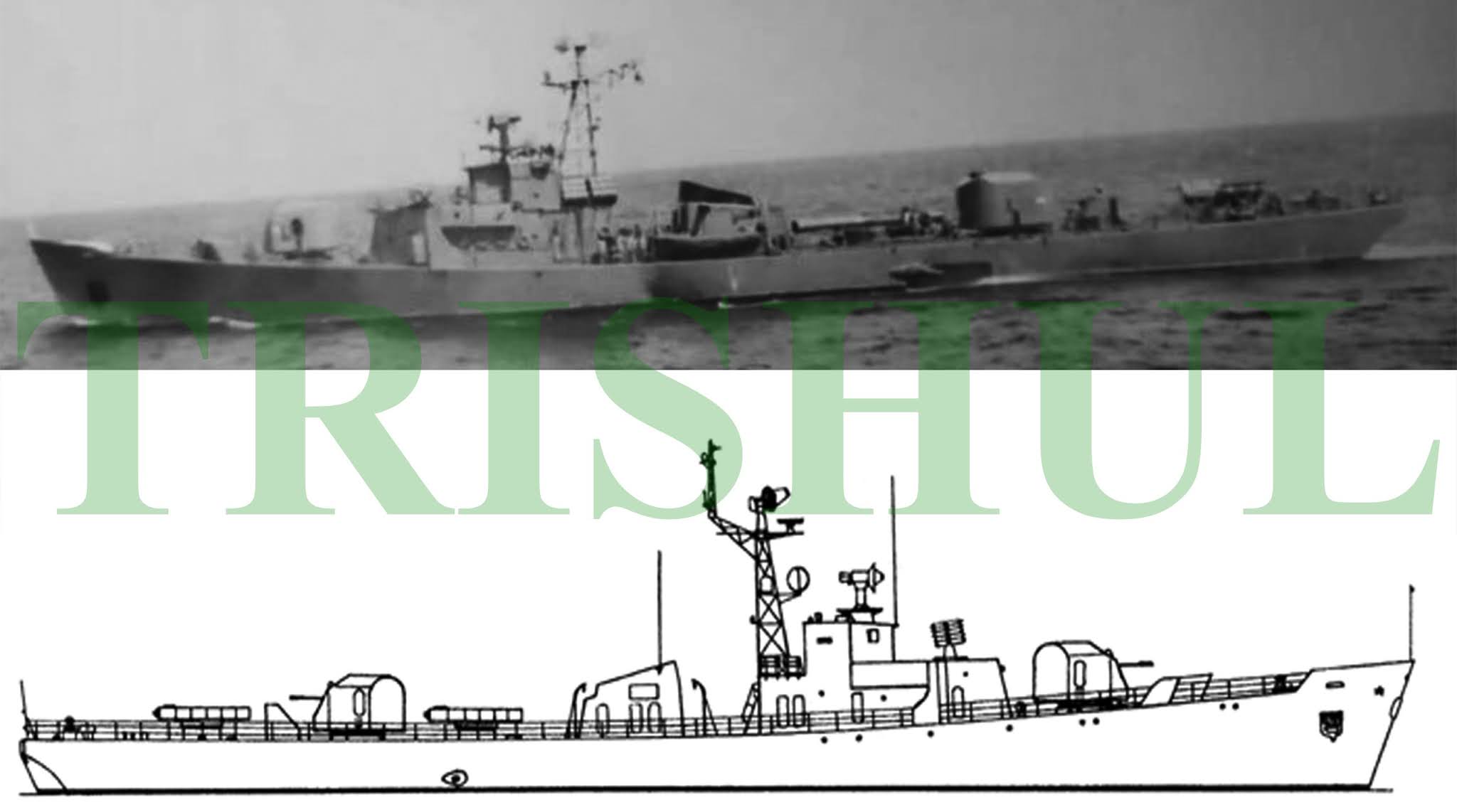
The IN’s previous ASW-specific warships were the 10 Project 159AE Storozhevoi Korabl vessels that were built in successive tranches by the USSR’s Khabarovsky Shipyard in the Far East between 1968 and 1974 and equipped with IN’s 31 Patrol Vessel Squadron of the Eastern Naval Command and the 32 Patrol Vessel Squadron of the Western Naval Command. The first tranche comprised the INS Kamorta P-77 (commissioned on November 21, 1968 and decommissioned on October 31, 1991), INS Kadmatt P-78 (commissioned on December 23, 1968 and decommissioned on November 30, 1992), INS Kiltan P-79 (commissioned on October 30, 1969 and decommissioned on June 30, 1987), INS Katchall P-81 (commissioned on December 23, 1969 and decommissioned on December 31, 1988), and INS Kavaratti P-80 (commissioned on December 23, 1969 and decommissioned on July 31, 1986). The second tranche was built at Shipyard No.820 in Kaliningrad (Baltisky Zavod, now Yantar Shipyard) and comprised the INS Arnala P-68 (commissioned on June 29, 1972 and decommissioned on April 9, 1999), INS Androth P-69 (commissioned on June 30, 1972 and decommissioned on April 9, 1999), INS Anjadip P-73 (commissioned on December 23, 1972 and decommissioned on December 13, 2003, INS Amini P-75 (commissioned on December 12, 1974 and decommissioned on September 16, 2002) and INS Andaman P-74 (commissioned on December 28, 1973, and was lost at sea in storm conditions 230km east of Visakhapatnam on August 21, 1990).

Crew: 106.

Standard Displacement: 970 tonnes.

Full-Load Displacement: 1,110 tonnes.

Length: 82.3 metres.

Beamwidth: 9.2 metres.

Draught: 2.89 metres.

Maximum Speed: 32 Knots.

Range: 2,000nm at 14 Knots cruise speed, 1,500nm at 16,5 Knots, 800nm at 18 Knots.

Endurance at Sea: 10 days.

Propulsion: 2 x 15,000hp M-2B gas-turbines, 1 x 6,000hp Type-61B diesel engine, 1 x diesel-generator rated at 400kW, 1 x diesel-generator rated at 200kW, 1 x diesel-generator rated at 100kW.

Armament: 2 x 2 AK-726 76mm turret-mounted naval guns using the Fut-B fire-control system, 2 x 5 PTA-40-159 400mm torpedo tubes (10 SET-40 torpedoes carried on-board), 2 x 12 RBU-6000 Smerch-2 (RGB-60) ASW mortar launchers using the Burya fire-control system, and 22 mines.

Electronics: MR-302 Rubka radar, Bizan-4B ESM suite, Don navigation radar, MG-312 Titan and MG-311 Vychegda sonar suites.