


Posted below is a photo of the full-scale model of the X-band active radar seeker for the PAD exo-atmospheric interceptor vehicle developed by the DRDO. The more advanced PDV interceptor vehicle's R & D process has not yet ended since it was decided back in 2010 to develop a dual-mode terminal seeker for the PDV by employing sensor-fusion techniques. Consequently, the PDV interceptor will be equipped with both the active radar seeker, plus an imaging infra-red seeker that is already being developed for the AAD-1/2 endo-atmospheric interceptors.

Posted below is the first available artist's conception of the naval AOPV that is now being built by Pipavav Shipyards for the Indian navy. This AOPV was designed by Russia's Severnoye Design Bureau.

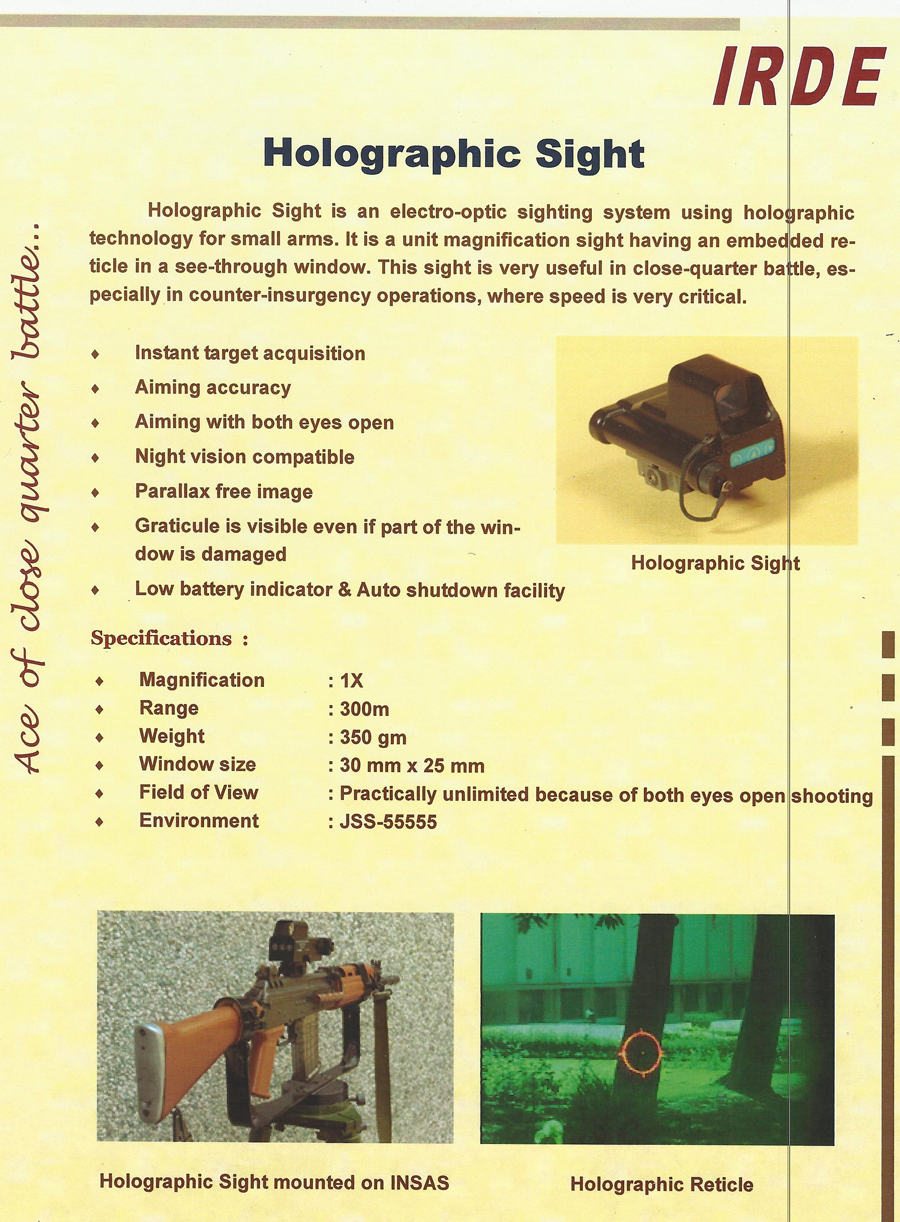
Posted below are images of BEML's involvement with the Arjun MBT programme.


Details of IMI's involvement with the Arjun MBT programme are posted below. Apart from the Iron Fist APS, IMI is also supplying the WAVE-300 RCWS.


The good news is that it is almost a done deal for the Indian Navy to procure up to six Shin Maywa-built SS-3 amphibians for maritime patrol and search-and-rescue. This deal enjoys the political blessings from both India and Japan, and is most likely to be fast-tracked.


As for the P-75I submarine construction project, just as I had expected and speculated earlier, the Indian Navy is far more interested in acquiring up to nine SSNs instead of a second type of SSK of imported design. To this end, the only candidate left on the plate is the Barracuda SSN from DCNS, which was showcased at the expo as well. Meanwhile, for acquiring replacements for its existing nine Type 877EKM Kilo-class SSKs, a follow-on batch of four Scorpenes will be ordered to add to the six already on order. In a related development, the Indian Navy has undertaken an exhaustive evaluation of all AIP suite contenders and has concluded that the Stirling AIP pack from Kockums AB (now owned by Germany's Thyssenkrupp Marine Systems, or TMS) is the best and most cost-effectove solution, especially since fuel cell-based AIP suites will require the creation of extensive shore-based support infrastructure facilities (at all three existing submarine bases and two new projected ones), this indeed being a cost-prohibitive proposition. Therefore, the first SSKs to be equipped with Stirling AIP packs will be the four existing Class 209/Type 1500 SSKs and the four to-be-ordered Scorpenes.
By the way, here’s what really happened with the original Scorpene contracting process. The story goes back to the period of the NDA government between 2001 and 2004, when the requirement for a SSK like the Scorpene first arose. At that time, a Rajya Sabha MP was reportedly acting as the go-between and consultant and had allegedly received some commissions in order to facilitate the Scorpene’s choice. However, when the UPA-1 government came into power, it wanted a bigger share of the commissions pie (reportedly running up to US$1.5 billion), for which the services of Abhishek Verma were allegedly sought and obtained. At that time, it was perceived and reported by some ‘desi’ journalists that due to a contracting blunder, stemming from the MoD’s propagation of a myth that significant parts of the Scorpene SSK were to be built from Indian OEM-built components, the acquisition costs of the Scorpene were to be far higher than originally envisaged. But this was not the case at all. For all along, the idea was to acquire the Scorpenes at an inflated price-level, so that elements within the UPA-1 government too would become financial beneficiaries from follow-on commissions. Therefore, under an elaborate scheme, when the contract for the Scorpenes was inked in October 2005, the contractual value was based on REM pricing values, as opposed to being a fixed-price contract. To implement this, the MoD deliberately created a special category called Mazagon Procured Materials, or MPM, agsinst the advice of the Indian Navy. Of the total project cost of Rs18,798 crores, some Rs4,700 crores (700 million Euros) were set aside for MDL to contract directly for Scorpene-related materials. But the impression created--by giving MDL a budget for locally procuring materials and systems from multiple vendors--was false, since at Naval HQ, everyone from the Directorate of Warship Building & Construction to the Directorate of Materials knew that no India-based OEM at that time was capable of supplying such materials and components and consequently, everyone in Naval HQ knew that the bulk of the MPM budget (representing the fixed-price component of the Scorpene contract) would ultimately (by 2007) have to go straight to both DCNS and THALES and it was from there that the commissions were reportedly paid to elements of the UPA-1 government. This then clearly explains why the MoD originally preferred the REM pricing route over the fixed-price contract—an ingenious scam aimed at obtaining a greater share of commissions years after the original procurement contract for the SSks had been inked! And our ‘desi’ journalists along with the CAG and CVC are still groping in the dark and have yet to make such an elementary and logical discovery!!!
By the way, two of the DRDO's low-frequency sonar development projects involving the Nagan active/passive towed-array sonar and the Mihir dunking sonar have been terminated and instead, the MoD has authorised BEL to team up with L-3 Ocean Systems to offer the LFATS ultra low-frequency active/passive towed-array sonar (which was shown at the BEL pavilion) and the HELRAS ultra low-frequency active/passive dunking sonar (shown at the L-3 booth). This is indeed very good news.


For field artillery modernisation programmes, foreign OEMs have resorted to a novel way of bypassing all kinds of blacklistings: do not take the lead; rather, team up with an Indian OEM to offer solutions so that only the Indian OEM's name figures. Consequently, Bharat Forge, owned by the Kalyani Group, has teamed up with SOLTAM Systems (owned by ELBIT Systems) to offer the 100% Made-in-India M-46 155mm/45-cal towed howitzer. The Kalyani Group has also acquired the entire howitzer manufacturing plant of Austria-based NORICUM (formerly known as Voest Alpine), which had developed the GHN-45 155mm/45-cal howitzer and had subsequently exported the GHN-45 to Thailand, and had also developed a composite upgrade kit with the help of the late Dr Gerald Bull aimed at upgrading China's NORINCO-built M-46 clones to 155mm/45-cal standard. This highly successful programme, done in partnership with NORINCO, was last year introduced for Pakistan's NORINCO-built M-46 clones as well. Punj Lloyd has similarly teamed up with Serbia's Yugoimport SPDR to offer a similar package for the M-46 upgrade. All indications are that the Indian Army's stalled M-46 upgrade programme will be restarted, with both the Kalyani Group and Punj Lloyd being the two principal contenders. The Larsen & Toubro/Nexter Systems proposal is just a paper design, while those from the Kalyani Group and Punj Lloyd are already proven solutions.
TATA Power SED & TATA Motors have teamed up with DENEL Land Systems to offer a motorised 155mm/52-cal howitzer and I'm told this system is most likely to be sold in the very near future to Indonesia. L & T has teamed up with NEXTER Systems to offer the Caesar 155mm/52-cal howitzer in various versions: a motorised version, as well as a M-46 upgrade proposal that makes use of the M-46's existing gun cradles. But this towed howitzer will be a 52-cal system. It is believed that motorised howitzers will eventuallty prevail over the tracked SPH proposition (being promoted by both BEML and a partnership of L & T and South Korea's Samsung Techwin), and up to 1,800 155mm/52-cal motorised howitzers could eventually be acquired.

TATA Power SED & TATA Motors have teamed up with DENEL Land Systems to offer a motorised 155mm/52-cal howitzer and I'm told this system is most likely to be sold in the very near future to Indonesia. L & T has teamed up with NEXTER Systems to offer the Caesar 155mm/52-cal howitzer in various versions: a motorised version, as well as a M-46 upgrade proposal that makes use of the M-46's existing gun cradles. But this towed howitzer will be a 52-cal system. It is believed that motorised howitzers will eventuallty prevail over the tracked SPH proposition (being promoted by both BEML and a partnership of L & T and South Korea's Samsung Techwin), and up to 1,800 155mm/52-cal motorised howitzers could eventually be acquired.

In a related development, in response to a global RFP issued in August 2008 by Army HQ for upgradation of an initial 100 of the existing 360 155mm/39-calibre FH-77Bs, the Jabalpur-based GCF has proposed a modification package under which a new-design 155mm/45-cal barrel (which was originally developed for the OFB’s in-house developed M-46 Metamorphosis variant), breach mechanism, muzzle-break, loading trough, recoil system, and elevating and traversing cylinders will be developed and offered for series-production. The competing proposal has come from the $21.25 million joint venture between Mahindra & Mahindra Ltd and BAE Systems (which was created in December 2009 as a land systems-focussed, joint venture defence company, based in Faridabad, with the company’s equity split being 74% Mahindra and 26% BAE Systems), which has proposed its FH-77B05L52 package that includes BEL-built components, along with a ToT offer that will enable GCF to receive via ToT all drawings and production-engineering data required for locally producing the 155mm/52-cal barrel, breach mechanism, muzzle-break, loading trough, recoil system along with the elevating and traversing cylinders, with the redesigned gun-trails and gun-carriages being built by the Mahindra-BAE Systems JV at Faridabad and being supplied to GCF for final assembly and systems integration. India’s Minister of State for Defence M M Pallam Raju confirmed on March 1, 2012 that the Indian Army has already placed orders for an initial 100 new-build FH-77B05L52s with OFB, for which the Mahindra-BAE Systems JV at Faridabad will supply the gun barrels and gun cradles, both of which were shown at DEFEXPO 2012. Consequently, what is eventuially likely to happen is that while the Indian Army will in future receive 100 FH-77Bs featuring 45-cal barrels, while the remaining 260 FH-77Bs will be upgraded to FH-77B05L52 standard, and another 400 new-build FH-77B05L52s will be supplied by GCF with the help of the Mahindra-BAE Systems JV.


TATA has designed with the help of Rheinmetal DeTec both a tracked FICV as well as a wheeled AIFV.


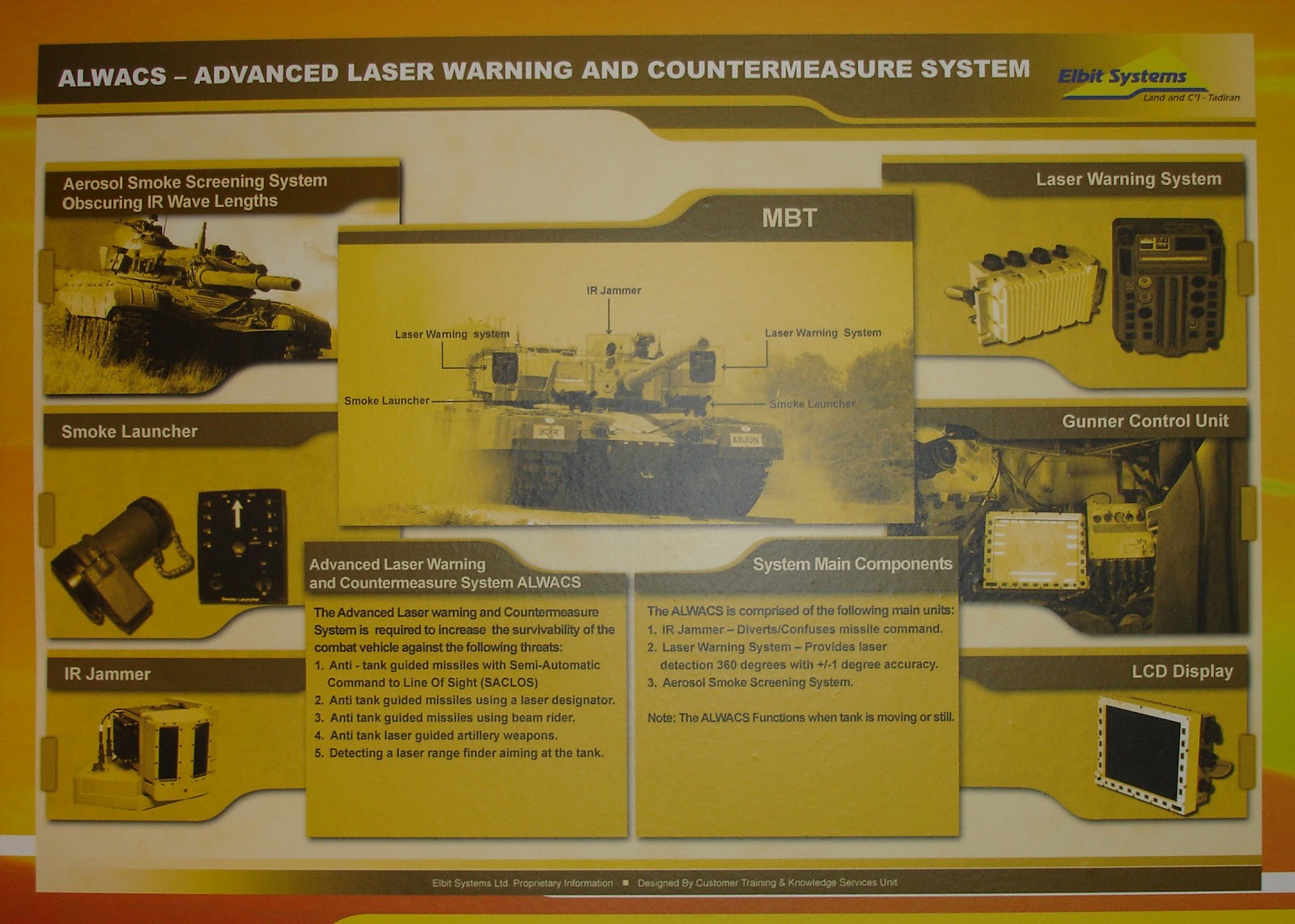

For the Arjun Mk1A and Arjun Mk2 MBTs, ELBIT Systems' solutions on offer in the above poster. TATA Power SED has developed the new digital hunter-killer FCS for both the Arjun and T-90S MBTs, while OIP of Belgium (a subsidiary of SAGEM of France) will be supplying the Arjun's new-design panoramic commander's sight, which can also handle fire-control functions for the LAHAT ATGM.
The poster below depicts what kind of ammunition Israel's IMI is supplying for the Arjun Mk1/Mk1A, T-72CIA and T-90S MBTs.
 And here's what Ukraine is proposing for the Arjun MBT.

The poster below depicts what kind of ammunition Israel's IMI is supplying for the Arjun Mk1/Mk1A, T-72CIA and T-90S MBTs.


As expected, DCNS was showcasing its Barracuda SSN (above), while ThyssenKrupp Marine Systems (which also owns Kockums AB) displayed a conceptual derivative of the VISBY corvette as a prospective replacement for the Indian Navy's existing Veer-class and P-25/P-25A-class corvettes.

MDL for the very first time showed both the accurate silhouettes of both the Project 15B DDG and Project 17A FFG. Note that just like the Project 15B DDG, the Project 17A FFG hosts the EL/M-2248 MF-STAR radar, and both will also have bow-mounted panoramic sonars, as opposed to hull-mounted sonars. For these two projects, MDL has already appointed Fincantieri of Italy as its 'technology provider' under which both new-design warships will be designed. While MDL will build the first four Project 17A FFGs, GRSE will supply the remaining three FFGs.


For the Prahaar NLOS-BSM, the TEL is now coming from TATA Motors, and not from BEML/TATRA. Posted below are posters pertaining to the Agni family of 'strategic' ballistic missiles.


My prayers for storm/sun shelters for aircraft like the Su-30MKI have at last been answered, as a private company in India has at last come up with innovative solutions that are now in great demand from the IAF for the Su-30MKI, MiG-29UPG and Mi-17V-5, to begin with.

Lastly, the DRDO for the very first time showed off its DISHA passive surveillance system, developed originally as part of the Samyukta project. However, the IAF has now placed orders for DISHA, while the naval variant is called VARUNA. Do take note of the increased signals acquisition sensitivities of the new ESM sensors, which have now increased by a factor of two (or 200%) over what was originally available for the Samyukta.

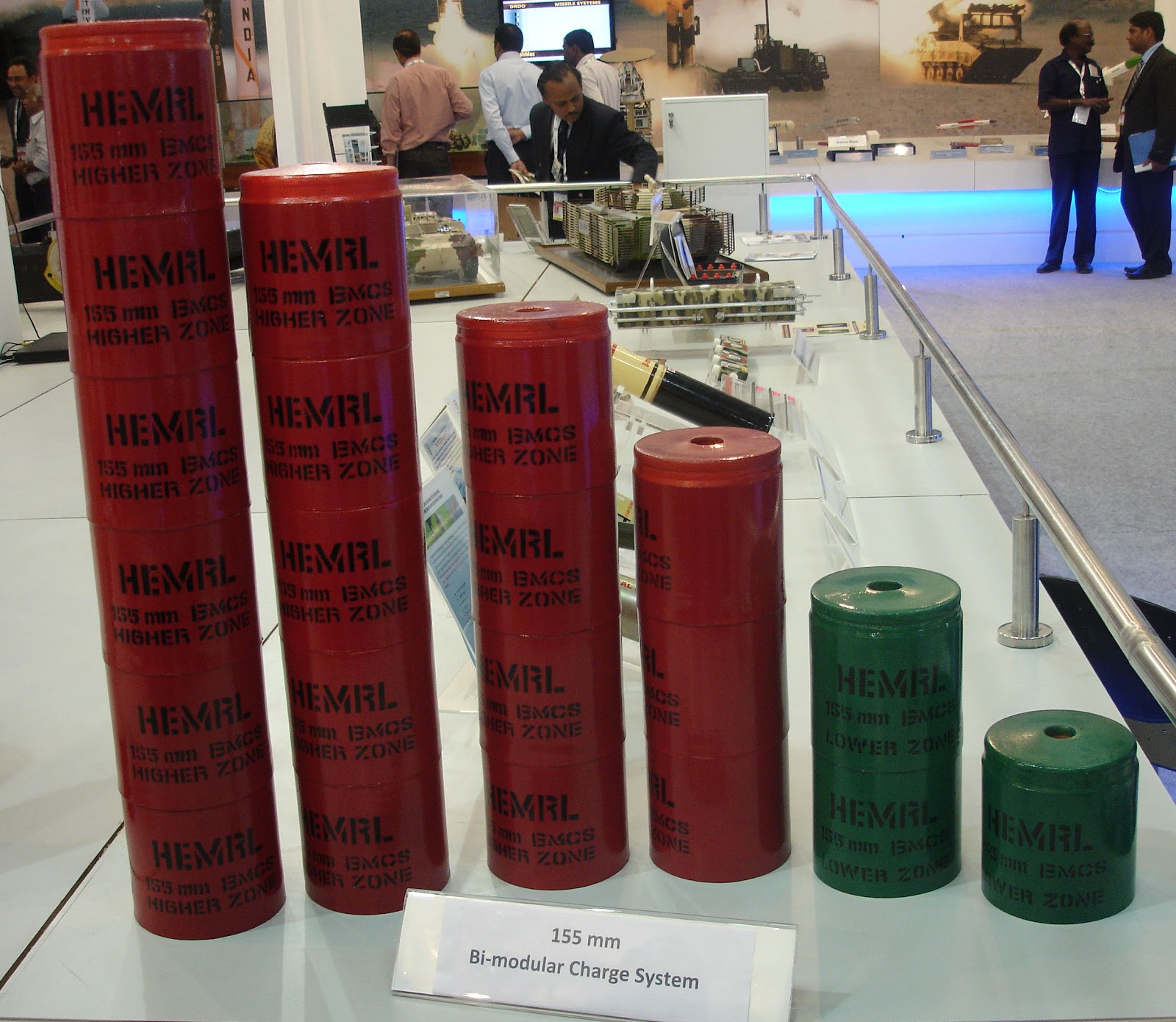


INS Kamorta will commence her wet-basin trials next March, while INS Kavaratti will be launched this May. INS Kolkata is ready for her wet-basin trials at MDL, but this will get underway only this September, as the Indian Navy has not yet finalised the DDG's crew complement, this being due to the fact that the Navy is presently facing shortages of skilled and trained manpower.
Below are posters concerning the integrated EW system being jointly proposed by TATA and L & T. The sub-systems are all imported from Germany (Rohde & Schwarz) and the UK (Ultra Electronics).



 Plenty more to follow later. Only God therefore knows why some folks have described this DEFEXPO as being the dullest ever!!!
Below are posters concerning the integrated EW system being jointly proposed by TATA and L & T. The sub-systems are all imported from Germany (Rohde & Schwarz) and the UK (Ultra Electronics).

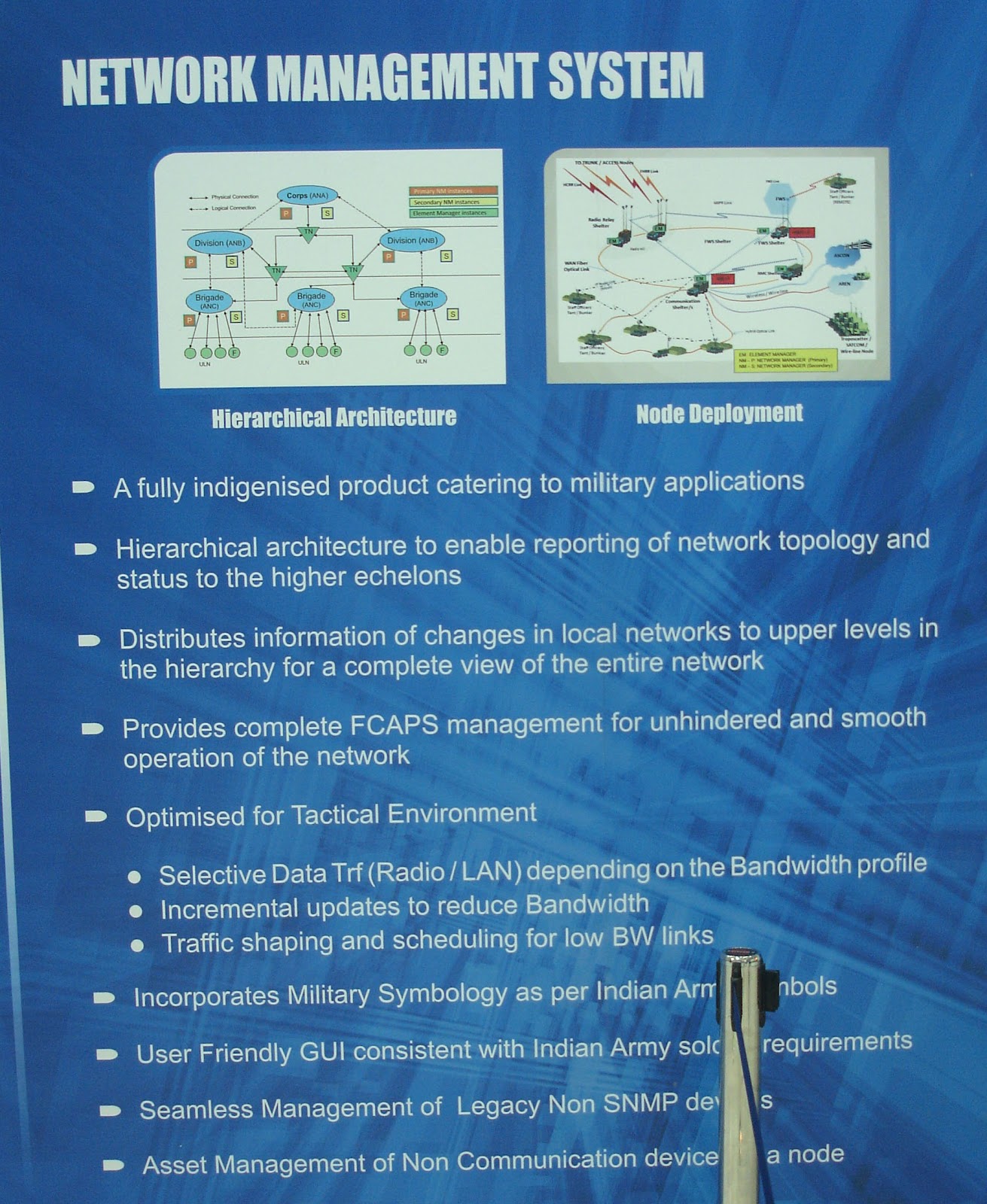


Posted below are two rather interesting exhibits.


