First and foremost, China and the ruling
Communist Party of China (CPC) are looking to become what they call a “Great
Power,” as they were centuries ago. We can trace much of this back to 1979,
when Deng Xiaoping implemented a massive reform effort in the wake of Mao’s
death a few years earlier. He set the goal to become a “moderately developed”
country by the mid-21st century, which is usually interpreted as the centennial
anniversary of the PRC, or 2049. When this goal was first established, China
was very literally dirt-poor by global standards. It had to make major changes
to their economy and society at large in order to build the foundation for
achieving what they now call the “China Dream.” Officially, the CPC does not
use language that suggests that it is looking to supplant any existing world
power; it does not discuss spreading the communist political ideology; it does
not discuss having the most powerful military, or the most political influence,
or the greatest scientific or industrial base. Instead, it talks about being a
leader in each of these areas—one of many leaders. That being said, it still
faces significant challenges in achieving its goals. The most important aspect
of this from the military’s perspective is understanding the path that China
adopted following Deng Xiaoping’s ascent. In the early 1980s, Deng stated that
he did not think a large-scale war was likely. At the time, this meant that
China could essentially postpone building a strong military, and instead, focus
China’s limited resources on building its economy, science and technology base,
and a variety of other social, non-military issues. This was a significant
contrast compared to the massive investments in the military one saw in other
one-party states, such as the Soviet Union or North Korea. The military’s
development essentially was subordinated to national economic development, and
for much of the first 20 years after Mao’s death, the military was relegated to
a background role from a budgetary perspective. The defence spending in this
era was in the single-digit billions, for a force numbering 4 million soldiers.
Compare this to the US spending of around $400 billion for a force roughly half
that size.

In the mid to late 1990s, with its
economy growing at a rapid rate, China started spending more money directly on
the military. In the mid-1990s, China’s defence spending hit $10 billion, and
grew consistently after that, roughly in step with the growth of the GDP.
Growth varied year to year, averaging over 10% annually, but the upward trend
was consistent. Today, the spending is around one-third of the US. This has
given the PLA far more resources to throw at new equipment and training.
However, it should be noted that the growth of the military budget remains
subordinate to, but coordinated with, national economic development and the
communist party controls the allocation of resources. China’s military
development goals were first quietly announced in the late 1990s, then
announced more publicly in 2006. They all described a three-step development
process for military modernisation: placing benchmarks at 2010, 2020 and
mid-century, meaning 2049, indicating a very long-term outlook for military
modernisation. Specific objectives have been adjusted slightly over the years
and President Xi Jinping recently added a new milestone in 2035, acknowledging
that the 2010 date had passed. By 2020, the PLA expects its current set of
reforms to be complete, and will have achieved mechanisation of the PLAGF. By
the time of Xi’s new benchmark, the PLA seeks to have fully modernised
equipment, training, personnel structure, and doctrine. By 2049, the PLA looks
to be a “world-class military.” Officially, the CPC consistently uses the
wording A world-class military, not THE world-class military. But, the CPC does
not define what a world-class military is, a lesson learned from previous
rounds of reform, where certain goals were set out, and then adjusted.

It was in the
spring of 2014 that a task force was formed in Beijing to draw up an
over-arching reform blueprint for the entire PLAGF. It involved more 690
civilian and military departments, 900 serving and retired commanders and
experts, 2,165 Brigade-level and above officers, and ultimately resulted in
excess of 800 meetings and took into account more than 3,400 comments and
recommendations from the rank-and-file. The blueprint was revised more than 150
times and was finalised in November 2015. Subsequently, the PLAGF underwent
thorough reforms, demobilising 300,000 personnel, constituting almost half of
non-combat positions and 30% of the officer corps. It is the most comprehensive
of all PLAGF reforms in recent memory and has radically changed the way the
PLAGF operates. A new training syllabus also went into effect in January 2018,
having been in the works since April 2013. The overriding priority of the new
syllabus is to have a high degree of realism with emphasis on new modes of
warfare such as jointness and network-centric manoeuvre warfare.

One important
thing about these developmental objectives is that while some Western analysts
and governments suggest that China is attempting to achieve hegemony in the
Indo-Pacific region in the near term—and global hegemony in the long term—the
CPC does not use the term hegemony to describe its own objectives. In fact, it
uses the term “hegemony” to describe other powers—currently, like the US, and
historically, like the USSR—in a pejorative sense. It also does not use the
term Indo-Pacific as we understand it—its focus is on China-claimed territories
and the near seas. As for more specific objectives, one can see China’s
securing its perceived borders and territory, deterring attacks on the
mainland, peaceful reunification of Taiwan, and maintaining claims in the near
seas as the primary political objectives. Most other international objectives
focus more on economic and commercial development, such as the Belt-Road
Initiative. While these efforts are widely publicised, they likely are not as well-planned
and organised as we’re led to think they are. They will, however, eventually
necessitate a greater PLA military presence overseas that likely will require
an improved naval and expeditionary capability. We are seeing this effort drive
the expansion of the PLA Navy and Marine Corps—the Marine Corps, for example,
has more than tripled its size over the last few years, increasing from two
Brigades of 6,000 personnel each, to six Brigades, plus new SOF and aviation
units. In short, the PLA’s primary focus will remain maintaining its deterrence
and defensive posture in China’s own territory and in the near seas, while
gradually expanding its expeditionary capability, all done in concert with
national economic development.
Reforms are always a learning process.
The PLAGF is certainly moving in the direction it wants to go, but the more it
tries to implement some of these initiatives, the more it discovers that these
things are harder to do in real-life than it is to write about them in books.
In fact, the PLAGF in particular has already begun to reform some of its
earlier reforms. One good example is standardising the structure of the Group
Army (GA), the Corps-level organisation. Three years ago, GAs were standardised
with six Combined-Arms Brigades and six supporting Brigades, one each
artillery, air-defence, SOF, army aviation (helicopter), engineer and CBRN
defence, and a Service Support Brigade. A recent change the PLA made has been
to break up the engineer and CBRN Defence Brigade into two separate Brigades:
an Engineer Brigade and a CBRN Defence Brigade. This change is not universal
yet,—at least one GA has retained the old structure. This series of rapid
changes illustrates that the PLA will decide on something, experiment and train
with it, and discover what does and does not work. It then must go back and
revise based on the lessons learned. Many of these new adjustments are not
announced officially. When the 2020 “deadline” rolls around that the PLA will
announce successful completion of reforms, but experimentation and modification
will continue. Every time a PLAGF unit goes on a field exercise, new equipment,
unit structure, tactics, and doctrine are tested. The results of these tests
get sent up the chain of command, and then drives change throughout the
institution. Running up to the 2035 “deadline”, one can anticipate many more
significant changes in the PLA, but fewer public announcements. Regarding that
2035 date, it is very likely that the complete overhaul of the PLA’s
equipment—begun under Deng Xiaoping back in the early 1980s—will finally be
complete. All of the early Cold-War era material will finally be gone, replaced
by mostly China-designed equipment dating from the 1990s or 2000s. For example,
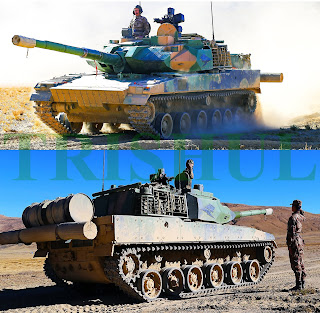
about three years ago more than half of the MBT force of the PLAGF was composed
of Type-59 and Type-69 MBTs, a USSR-derived design dating from the 1950s.
Today, newer Type-96 and Type-99 MBTs, designed in the 1990s, slightly
outnumber the Type-59s. It took some 20 years to move to a majority modern
MBT-types, so it is reasonable to think that it may take another decade at
least to finally purge all of the legacy MBTs from the inventory. Ironically
enough, by that time, some of the early Type-96 and 99 MBTs may themselves be
obsolete and ready for replacement. The same process is underway for every
category of equipment—modernised APCs, IFVs, artillery, helicopters, and so
on—with many of the same challenges and similar timelines. One of the huge upgrades seen to PLAGF capability
in this time period is a series of new systems significantly increasing the
range at which ground
commanders can strike.

Legacy 122mm and 152mm
artillery pieces are being rapidly replaced by modernised, longer-range 155mm systems, older 106mm and 122mm MBRLs are being augmented by highly capable 300mm
and 370mm MBRLs, and attack helicopters and UAVs have
significantly increased the PLAGF’s operating
radii. While longer range is a valuable, it has several second- and third-
order effects that must be considered. Intelligence, surveillance and targetting must now extend to the maximum range of their capabilities to
support the new systems; coordination and communications with other units and
with the joint force are now necessary to deconflict airspace, and so on. All
of these supporting efforts are ongoing, but it all results in increasingly
complex operations that the PLA will have learn on the training field.

Prior to 1998, PLAGF squad leaders were
simply 3rd or 4th year conscripts; NCO leaders weren’t a part of the PLAGF’s personnel
system. That year, however, the PLA established its first cohort of
professional NCOs, along with the educational and training support necessary to
develop them into military leaders and technicians. The first cohort was chosen
from the conscript pool and given additional training. Some jobs that
previously were assigned to officers were handed off to NCOs, including many
billets that we traditionally associate with NCOs, such as supply sergeants.
Professional NCOs became squad leaders. Developing an NCO corps was a huge
effort, requiring a number of major reforms and significant resources. The
relationship between officers and NCOs had to be established; the duties and
responsibilities of NCOs had to be built from scratch; the ranks of NCOs had to
be filled by competent soldiers. One of the most significant changes undertaken
was the training and education of NCOs. Today, several stand-alone NCO schools
exist in which NCO cadets may attend two-or three-year degree programmes. Many
PLA officer academies have subordinate NCO departments, where NCOs receive both
academic instruction and military leadership training. Some NCO positions
require significant functional, job-focussed technical training as well, which
may be done formally or at the NCO’s unit. Figuring out the relationship
between NCOs and officers has been a challenge. Higher level NCO leadership
positions, such as Company First Sergeants or Sergeants Major, have been
established only in the last few years. Many of the leadership duties that we
typically associate with senior NCOs, such as supervising soldier welfare,
morale, and discipline, were traditionally handled by the unit’s Political
Officer. The PLA recently added a 7th NCO rank in order to allow more senior
NCOs to finish their careers and retire from the military. In 2018, the first
cohort of PLAGF NCOs hit the 20-year mark, which means we are only now seeing
the first NCOs who have gone through the new system from the beginning to the
end of their careers. One of the major benefits from the development of the NCO
corps is that NCOs now can work in staff positions at Battalion and
higher-level HQs. The newer PLAGF unit structures and approach to operations
and planning requires far more staff than previously—a Battalion Staff used to
consist only of a commander, political officer, and deputy commander, for
example, which was sufficient when all they had to do was pass higher echelon
orders down to their Company commanders. Now, Combined-Arms Battalions are
tasked to conduct independent operations, requiring a full range of staff work
at that level. The PLAGF discovered that staff NCOs can both provide assistance
to officers and fill key staff roles. A significant amount of PLAGF
experimentation over the last few years focussed on how the future Battalion
Staff should be structured—getting the right mix of officers, NCOs, and trained
specialists, in the right jobs, with the right relationships. At this time, it
appears that the PLAGF has landed on a formal structure employing a Chief-of-Staff,
a unit “Master Sergeant,” and four principal staff officers or NCOs. Of note,
while this Staff is now probably capable of fighting independently for short
periods of time, it does not look to be large enough to be capable of
conducting both current operations and planning on a 24-hour, high intensity
cycle over an extended period of time.

It is clear
that the PLAGF has studied the US military carefully and has adopted some of the
latter’s best practices in its own reform efforts, but the PLAGF is not attempting
to become “just like the US Army” because of China’s social, political,
economic, and geographic circumstances. The PLAGF has also studied Russian and
European militaries; how they have performed both in hot wars and peacekeeping
operations. The PLAGF has tried to learn from each country that it has studed
and has come up with a unique solution. There are many reasons for this—China’s
size, geographic position and terrain diversity—and the political system—are
all important factors in the PLAGF’s strategy and policy choices. So, though it
may mirror what other countries do in some ways, there are a number of
important differences in the PLAGF’s approach to foreign and military policy.
PLAGF’s Organisational Composition Today
The
Brigade-isation of the world’s armies dovetailed nicely with the PLAGF’s
ongoing drawdown in size and desire to upgrade the training and equipment of
its forces. Three different primary formation-types were established: the light
(motorised) CA-BDE, which comprised truck-mobile or armoured personnel
carrier-mounted infantry; the medium (mechanised) CA-BDE, built around the
infantry fighting vehicle (IFV) and IFV-mounted infantry; and the heavy
(armoured) CA-BDE, built around the main battle tank (MBT). Initially, CA-BDEs
were built with “pure” Battalions, meaning that the Manoeuvre Battalions of
each were homogenous—only infantry, mechanised infantry, or armour. After a
period of experimentation and revision, the traditional homogenous Battalion
was replaced with the combined arms battalion—the CAB. Major changes occurred
at echelons above the CA-BDE as well. First, the Corps as it had existed
throughout the history of the PLAGF was done away with, replaced by a new
formation called the Group Army (GA). The GA was not a Field Army in the
traditional sense, but rather, was a Corps-sized formation that mixed six
CA-BDEs with six supporting Brigades: artillery, air-defence, rotary-winged
aviation, SOF, engineer and CBRN defence, and service support. The GA was built
specifically to support the new PLAGF’s concept of systems warfare: elements of
the GA are used to build the various specialised combat groups that comprise an
overall operational system—the task-organised unit that conducts operations.
The Division echelon was virtually done away with: only a handful of Division
structures remain extant, and it is unclear how these legacy organisations
integrate within the GA/CA-BDE structure.

The
operational system is the complete set of capabilities assembled to conduct a
particular mission. At the GA-level, an operational system can be thought of as
similar to a Joint Task Force (JTF). On a smaller scale, operational systems
are assembled to conduct specific tactical missions such as an assault, defence
of a key position, or wide-area security. Combat Groups are sub-units of the
operational system, and are built to perform specified tasks in support of the
operational system’s mission. Combat Groups are typically named for their task:
command group, assault group, firepower group, and so on. These names are not
standardised, and different variations appear throughout different PLAGF
publications. While the CA-BDE can be thought of as the tactical-level force
provider for the various Combat Groups, the CAB is meant to be employed either
in its organic form, or augmented by attached capabilities. The PLAGF describes
the CAB as the lowest echelon capable of independent operations, and for many
tactical-level Combat Groups, a CAB serves as the group’s manpower backbone and
bulk of its combat power. The PLAA describes the differences between motorised
and mechanised infantry in how supporting vehicles are employed: motorised
units are only transported by their assigned vehicles, while mechanised forces
employ their vehicles as combat platforms that support the infantry. The PLAGF
employs a variety of APCs and IFVs that feature a broad range of firepower and
protection. Some are tracked, some are wheeled, and there is considerable
overlap. As such, one must look at how the unit intends to fight, rather than
its composition and equipment, when assessing a unit as motorised versus
mechanised. Airborne, Mountain, and Amphibious CA-BDEs are described as light.
The three basic types of CA-BDE are configured as follows:

Light
Combined-Arms Brigade
4
Motorised Combined-Arms Battalions
1
Reconnaissance Battalion
1
Artillery Battalion
1
Air-Defence Battalion
1
Headquarters Unit
1
Operational Support Battalion
1
Service Support Battalion
Medium
Combined-Arms Brigade
4 Mechanised Combined-Arms Battalions
1 Reconnaissance Battalion
1 Artillery Battalion
1 Air-Defence Battalion
1 Headquarters Unit
1 Operational Support Battalion
1 Service Support Battalion
Heavy
Combined-Arms Brigade
4 Armoured
Combined-Arms Battalions
1
Reconnaissance Battalion
1 Artillery
Battalion
1 Air-Defence
Battalion
1
Headquarters Unit
1 Operational
Support Battalion
1 Service
Support Battalion
The CAB takes
the basic combined-arms approach used to build the CAB and applies it to the
Battalion echelon. CABs only combine different manoeuvre elements along with
organic short-range fires elements (assault guns and mortars), with the
provision that other headquarters can attach elements from other Brigade
organisations as required. Each CAB also houses an organic short-range air-defence
capability in the form of manportable air-defence systems (MANPADS). Of note,
the CAB has only limited staff, which may affect its ability to function as the
PLAGF intends—as an independent unit. CAB structures are as follows:
Light
Combined-Arms Battalion
3 Motorised Infantry Companies (10 light wheeled
vehicles or APCs per Company)
1 Firepower Company (6–9 rapid-fire 81mm mortars,
MANPADS, crew-served weapons)
1 Headquarters Unit
1 Service Support Company
Medium
Combined-Arms Battalion
3 Mechanised Infantry Companies (10 wheeled or
tracked IFVs per Company)
1 Assault Gun Company (14 wheeled 105mm assault
guns)
1 Firepower Company (6–9 rapid-fire 120mm
self-propelled mortars, MANPADS, crew-served weapons)
1 Headquarters Unit
1 Service Support Company
Heavy
Combined-Arms Battalion
2 MBT Companies (10–14 MBTs per Company)
2 Mechanised Infantry Companies (10 IFVs per
Company)
1 Firepower Company (9 rapid-fire 120mm
self-propelled mortars, MANPADS, crew-served weapons)
1 Headquarters Unit
1 Service Support Company
Undertaking Offensive Land Campaigns


