Total Pageviews

Tuesday, October 13, 2015

The IAF’s Perception Management Disconnect & Its Plans For TMD Network

The customary press conference given by the Chief of the Air Staff (CAS) of the Indian Air Force (IAF) every year prior to Air Force Day (which falls on October 8) by and large targets contemporary issues on the balance-of-airpower in the subcontinent and the more glamorous and glitzy issues regarding the IAF’s on-going force modernisation efforts and future plans. However, issues regarded as ‘esoteric’ by the mainstream media in India are very rarely raised and explored. This was exactly the case on October 3, when not a single question was asked, for instance, about the IAF’s thinking and desired forcer posture regarding theatre missile defence (TMD), or about the fate of the An-32RE tactical transport aircraft upgrade, or about the IAF’s roadmap for the large-scale induction of various types of simulation systems and part-task trainers for both frontline combat/transport aircraft and helicopters, as well as those related to standoff precision-guided munitions (PGM). Nor did the CAS, Air Chief Marshal Arup Raha, bother to throw any light on such issues through his prepared narrative that was read out by him prior to the question-and-answer session.  
Therefore, this is a honest effort by your’s truly to throw some light into the issues concerning the IAF’s desired TMD force posture, and future prospects for inducting into service an IAF-specific version of the LCA (Navy) Mk1 MRCA, along with the Rafale M-MRCA. But first, a few words about how the IAF failed on October 8 to undertake a successful perception management exercise. While the IAF has rightly touted its Su-30MKI heavy-MRCAs as being air-dominance platforms, this fact-of-life was totally missing in the IAF’s giant billboard that was displayed on the parade ground at Hindon on October 8. What was shown through an illustration was a Su-30MKI armed only with R-27R and R-77 BVRAAMs—no R-73Es, no Litening-2 LDP, and no PGMs.
This is inexplicable, given the fact that in successive Aero India and DEFEXPO expos since the previous decade, both HAL and BrahMos Aerospace have repeatedly displayed scale-models of the Su-30MKI armed with both AAMs and PGMs! So what prevents the IAF from showcasing similar exhibits? Your guess is as good as mine.

TMD Developments
Though the IAF had decided to acquire TMD assets way back in 1996, it was the MoD-owned DRDO that first got into the act of proposing a homegrown solution, for which it initiated the development of the PAD/PDV family of exo-atmospheric interceptor missiles and AAD family of endo-atmospheric interceptor missiles. For target acquisition-cum-engagement, two EL/M-2080 ‘Green Pine’ active phased-array L-band long-range tracking radars (LRTR) were ordered in late 1998 from Israel Aerospace Industries (IAI), along with two THALES-built Master-A MFCRs, and a TMD simulation testbed from Israel’s Tadiran Electronic Systems.
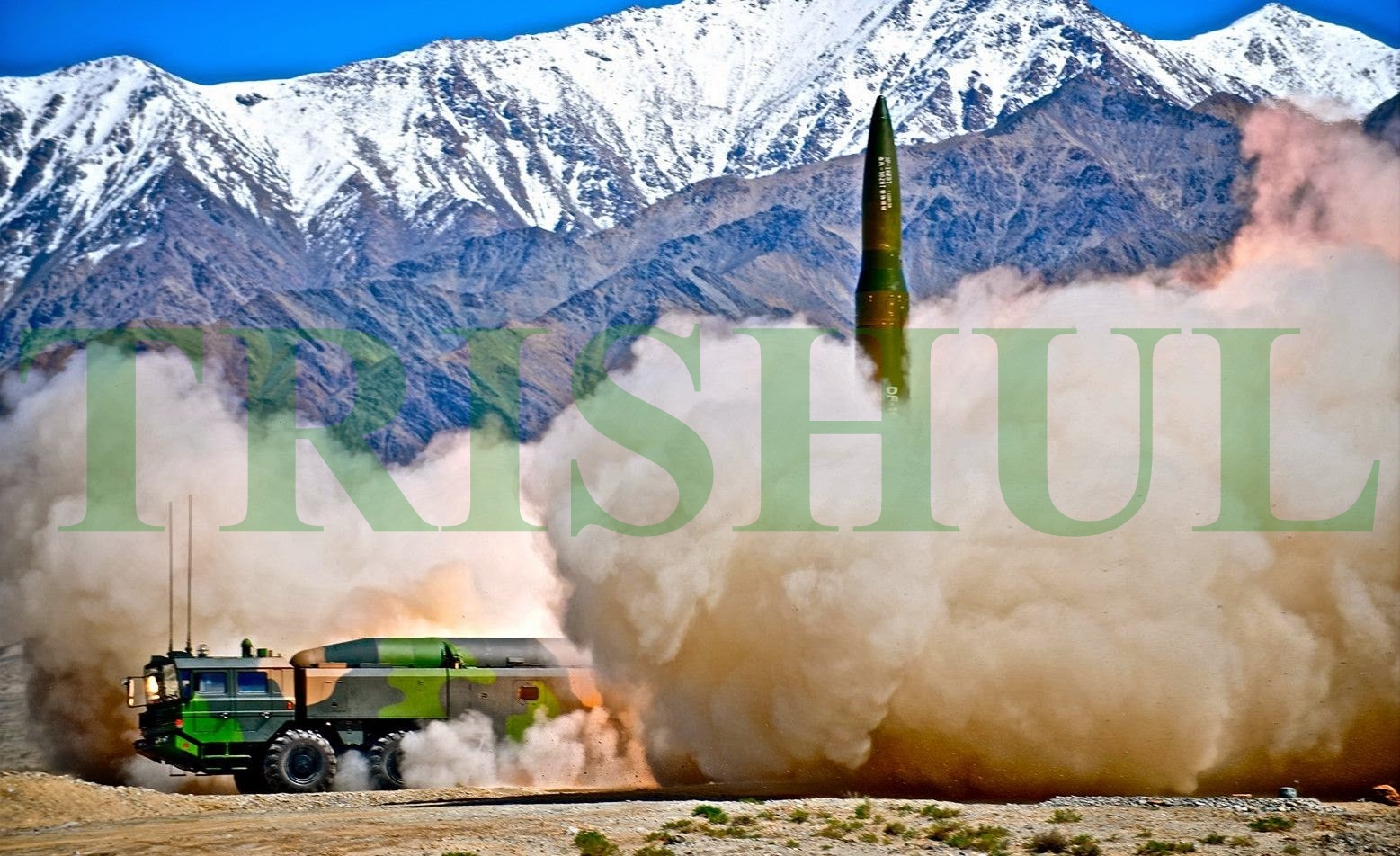
The primary threats—both then and now—stemmed from the Pakistan Army’s 80 solid-fuelled single-stage M-11 (Hatf-3/Ghaznavi/CSS-7 Mod 1/DF-11) 280km-range TBMs that were inducted into service on February 22, 2004, and 60 liquid-fuelled single-stage Hatf-5/Ghauri-1/Nodong-1 IRBMs of North Korean origin, was inducted into service on January 8, 2003 under the 47 Missile Group of the Pakistan Army’s Strategic Forces Command (SFC). Presently, the Pakistan Army deploys two Missile Groups each of the Ghauri-1 and Ghaznavi (grouped under two separate Artillery Brigades, these being the Hyderabad-based Missile Brigade South comprising Missile Groups 25, 35 and 40; and the Sargodha-based Missile Brigade North comprising the 14, 28 and 47 Missile Groups).
During hostilities with India, all these missiles will be armed with conventional HE or FAE-based warheads. Each such Missile Group comprises 18 Ghaznavi TELs each with one ready-to-fire missile and two reloads, and 18 Ghauri-1 TELs each with two ready-to-fire missiles and two reloads. A Group can also be divided into three Batteries (with six Ghaznavi TELs and six missiles plus two reloads and six Ghauri-1 TELs with 12 missiles and 24 reloads). Presently, Batteries of the Ghauri-1 and Ghaznavi are deployed at Gujranwala, Okara, Mangla Multan, Jhang, Sonmiani, Quetta and Dera Nawab Shah.
Unfortunately, despite 19 years of R & D effort, the DRDO has to date been unable to even offer a fully functional TMD system, leave alone a networked TMD network. The main problem has been the DRDO’s inability to develop hypersonic interceptor missiles and their internally-mounted Ka-band active phased-array radars for terminal guidance. Only homegrown X-band and Ku-band radar seekers have been designed and tested without demonstrable success.  
And that is precisely the reason why, two years ago, when a combined team from IAI and Russia’s JSC Almaz-Antey MSDB made an unsolicited presentation to the IAF on an improved version of the S-400 ‘Triumph’ LR-SAM (a generation ahead of what has been sold to China) that would make use of IAI’s latest EL/M-2090U UHF-band active phased-array LRTR, the IAF began making hectic plans for procuring such a system for TMD within the foreseeable future.  
Presently, the S-400 makes use of four different types of supersonic endo-atmospheric interceptor missiles (top speed of 4.8km/second): the 40N6E, the 9M96E2, the 48N6E3 and the 48N6E2, all of which are armed with HE-fragmentation warheads. What Russia has proposed for the IAF are two HYPERSONIC missiles, the exo-atmospheric 77N6-N and the endo-atmospheric 77N6-NI, having top speeds of 7km/second and also being the first SAMs of Russian origin to possess INERT warheads, i.e. warheads that do not contain any explosives and instead, are ‘hittile’, meaning they will destroy inbound TBMs, IRBMs or MRBMs by sheer force of impact.  
The most revolutionary element of the 77N6-N and the 77N6-NI hypersonic LR-SAMs will be their on-board nose-mounted, Ka-band millimeter-wave active phased-array radar seekers and their real-time discrimination algorithms required for fire-control and guidance of hit-to-kill interceptors. To this end, the radar seekers have been designed with a rigid mount and narrow beam to provide precise angle metric accuracy. The combination of metric accuracy, wide bandwidth, and high Doppler-resolution capabilities makes them excellent sensors for real-time discrimination, for they can provide extremely accurate identification-processing estimates of motion differences caused by mass imbalances on real and threat-like targets.
The 300-tonne EL/M-2090U ULTRA C-22 LRTR features an array of 22 UHF-band transmit-receive modules (TRM) in a single clustered unit that has been designed so that modules can be easily swapped. Using UHF, rather than the higher frequency bands, has particular application at long ranges since it suffers from less signal loss in the atmosphere. A discriminating innovation of the ELM-2090U is the digitisation of the signals at the TRM-level, which allows more flexibility in beam-forming and shaping. For TMD along a sectoral footprint, IAI has developed the EL/M-2090U’s ULTRA C-6 version, which has six TRM clusters. Each cluster can electronically steer its beam through +/-60 degrees in azimuth and across a 40-degree sector in elevation. In all cases, the array can be mechanically tilted through 30 degrees in elevation to provide a total elevation coverage of 70 degrees. The larger C-22 version comes mounted on a rail assembly that can be mechanically slewed through +/100 degrees to give 320-degree coverage.
As per the IAF’s projections, there exists a requirement for 12 Batteries of the S-400 (each Battery using four TELs each housing four cannister-encased LR-SAMs), plus 12 C-6 LRTRs and two C-22 LRTRs. In other words, as per the IAF’s appreciation, a total of 11 strategic sectors are required to be protected against inbound TBMs, IRBMs and MRBMs.
But does this all mean that the procurement of S-400 LR-SAMs is a foregone conclusion? Absolutely not. Significant questions still remain over the yet-to-be-demonstrated effectiveness of the hypersonic 77N6-N and the 77N6-NI missiles. In addition, a lot will depend on Russia’s ability/inability to ramp up series-production of such missiles over the next five years. Also, exercising the Russian option means that India will have to invest cost-prohibitive financial resources on deploying a network of space-based early-warning satellites, since Russia has diminished capacities in this arena. But most importantly, the US is not sitting by and let Russia and Israel have the cake and eat it as well. Since 2012, the US has been taking keen interest in India’s plans for acquiring exo-atmospheric/endo-atmospheric interceptor missiles, especially after the latter officially decided not to field a new generation of solid-fuelled tactical ballistic missiles—be they conventionally armed or nuclear-capable—for replacing the liquid-fuelled Prithvi-1 NLOS-BSMs of 1990s vintage. What this essentially meant, was that unlike Pakistan, India will not use ballistic missiles of any type that are conventionally armed, since such weapons have zero counter-force/counter-strike value. Pakistan, on the other hand, views conventionally armed ballistic missiles as weapons that can be employed as ‘terror weapons’ against civilian targets like large Indian cities as part of an effort to demoralise the civilian population residing in cities that are either India’s financial hubs, or technological hubs.     
Therefore, if Pakistan wants to secure the deterrent value of its strategic WMD arsenals against an Indian TMD shield, it can only do so if it formally adopts a ‘no first-use’ doctrine with universal applicability, at least for its strategic WMD inventory, if not for the short-range TNWs that are presently intended for use only in battlefields within Pakistan. Whether Pakistan will be willing to, or forced into adopting such a posture following the forthcoming meeting between US President Barack Obama and Pakistani Prime Minister Mian Mohd Nawaz Sharif (slated for October 22), remains to be seen. Prior to this meeting, however, there will be a series of meetings held in Washington DC between the Pakistan Army’s COAS, Gen Raheel Sharif and his SPD Director-General on one hand, and their counterparts from the Pentagon.
If Pakistan decides against adopting the a ‘no first-use’ doctrine, then the US will have two policy options to act upon: firstly, degrade and diminish the credibility of Pakistan’s nuclear WMD assets by offering to supply India with the hypersonic (Mach 8.2) Theater High-Altitude Air-Defence (THAAD) TMD system that has been jointly developed by Lockheed Martin and Raytheon; and secondly, initiate contingency planning along with India, the UK, Afghanistan and possibly Iran, for physically confiscating or destroying Pakistan’s entire arsenal of nuclear WMDs.   
It is in this light that one ought to view the symbolism of Indian Prime Minister Narendra Modi’s meeting with the Chairperson of Lockheed Martin, Ms Marillyn Hewson, in New York on September 24, 2015. That India’s national security decision-makers will favour the THAAD over the S-400 is hardly in doubt, since they are already convinced about the superior performance parameters of the US-origin TMD solution. At the military-industrial level too, both Lockheed Martin and Raytheon have already established their reputations in India as worthy industrial offsets partners and leading network-centric solutions providers. For instance, the systems integration software for the Indian Navy’s Gurgaon-based, Rs.452 crore state-of-the-art Information Management and Analysis Centre (IMAC), which was commissioned on November 23, was provided entirely by Raytheon, with the computing servers coming from CISCO. In future, the IMAC will morphe into the ‘nodal fusion centre’ of the Navy’s Rs.1,003 crore National Command Control Communications and Intelligence Network (NC3I).
For the IAF’s countrywide, quick-reaction TMD network too would such a ‘nodal fusion centre’ be required, along with the requirement for networking with the vast array of space-based early warning satellites that the US presently deploys. Therefore, if the IAF opts for the optimum TMD solution that makes use of THAAD, then India for sure will be required to ink the Basic Exchange and Cooperation Agreement for Geo-Spatial Cooperation (BECA), which is the key to securing access to ballistic missile early warning alerts from the US Air Force Space Command’s satellite networks.
Next Thread: How & Why The IAF’s Force Structure Planning Process Went Awry 30 Years Ago

Tuesday, September 1, 2015

MAKS 2015 Show Report-1: Russia Is Stuck Between A Rock And A Hard Case

Moscow today is trying to deal with several crises at the same time. Firstly, there is the severe economic crisis brought on by the collapse in the price of crude oil and the continuing bite of Western economic sanctions brought on by the Russian annexation of Crimea and Russia’s support of the civil war in eastern Ukraine. With the Iran nuclear deal moving forward, it is highly likely that large amounts of Iranian crude oil will come on the market in the coming years. This in turn has caused futures contracts for crude oil to plunge, damaging Russia's ability to meet spending targets for its ambitious military goals. Moscow’s refusal to diversify its economy in the heady days of US$100 per barrel of crude oil is now coming back to haunt it. The war in eastern Ukraine shows no signs of stabilising anytime soon, either. In fact, the NATO alliance is claiming that upwards of 50,000 Russian troops are mobilised along the border with Ukraine. The Kremlin will face tough decisions in the near-term as social spending has already been cut dramatically and the threat of social unrest due to high military spending ($18 billion in 2015, or 4.2% of Russia’s GDP) in the face of further social security cutbacks is very real.  
Secondly, Russia’s population is declining in quantitative terms, which in turn is posing a severe strain on the availability of skilled human resources. And this is happening at a time when the Kremlin may well be required to launch low-intensity military operations against Estonia and Latvia in order to secure the interests of the Russian-speaking disenfranchised citizens of these two countries. Russia’s previous National Security Doctrine, which was signed into law in 2009 by then-President Dmitry Medvedev, has been superceded by the current military doctrine that President Vladimir Putin signed into law in December 26, 2014, which cited “NATO’s military buildup” as a key driver for the changes.
The new doctrine, beyond explicitly stating that NATO’s expansion is the main external threat facing Moscow, calls for reinforcing three geopolitical fronts that Russia sees as part of its existential security. In the coming years Russia will focus considerable resources in developing and maintaining a strong military presence in the Arctic, the recently annexed Crimean peninsula, and the Russian exclave of Kaliningrad on the Baltic Sea. Each of these three regions is vital for Russia’s goal of checking NATO expansion, while simultaneously maintaining access to potential natural resources, as in the case of the Arctic, and warm water shipping routes. Russia’s military expansion in the Arctic has been a major goal for Putin for much of the past decade. The new military doctrine officially puts special focus on the region and advocates a greater Russian role in the region to help ensure access to potential energy resources on the Arctic seabed against possible Danish, Norwegian, Canadian, and US claims. The US estimates that upwards of 15% of the world’s remaining oil, 30% of its natural gas, and 20% of its liquefied natural gas are stored in the Arctic sea bed. Moscow has undertaken a construction blitz across the Arctic in a bid to ensure that it remains the unchallenged military power in the region. It is presently building 10 Arctic search-and-rescue stations, 16 deepwater ports, 13 airfields, and ten airspace surveillance radar stations across its Arctic coast. Simultaneously, Moscow has created a Joint Strategic Command North (JSCN) from components of the Russian Navy’s Northern Fleet in order to maintain a permanent military presence in the region. It is likely that this command will ultimately become a fifth military district. Bottomline: Russia’s strategic focus in the years ahead will continue to be Euro-centric, and not not Eurasia-centric.
 
Thirdly, even though Russia is already the world’s second-biggest arms exporter (accounting for 27% of the global export market, with the US staying ahead with 31% market-share, and being followed by China with 5%, Germany with 5%, France with 5% and the UK with 4%), it is facing increasingly tough competition from the People’s Republic of China (PRC) with each passing day—especially in South Asia, the Middle East and Central America.
Fourthly, the PRC’s weapons manufacturers have succeeded to a large extent in back-engineering several weapons, sensors and fire-control systems that were on the drawing boards during the last years of the Soviet era, and whose production-engineering data were easily available from various countries of the Commonwealth of Independent States (CIS). Since 1991, the PRC had struck several military-industrial partnerships with several CIS-based original equipment manufacturers (OEM), especially in Ukraine, Belarus and Kyrgyzstan, for the purpose of obtaining critical research and development (R & D) inputs that are required for developing and producing new-generation weapon systems for the People’s Liberation Army (PLA). Consequently, Ukraine’s total arms exports grew steadily, from $20 million in 1994 to $600 million in 1997 and $1.5 billion in 2001. In 2002 the Industrial Policy Ministry of Ukraine and the PRC’s Commission for Science, Technology and Industry for National Defense (COSTIND) signed a protocol on cooperation in the military-industrial arena.  In that same year, Ukraine became the world’s fourth-largest weapons exporter and sold weapons and military technologies to Beijing worth $700 million, which accounted for 31% of Ukrainian exports that year. In 2011, 43% of Ukraine-built weapons were sold to the PRC, while in 2013 Ukraine became the PRC’s second-largest trade partner in the CIS, while the PLA became Ukraine’s biggest military customer in Asia.
Since 2002, the following Ukraine-based firms/enterprises/R & D institutes have had military-industrial partnerships with the PRC: Aerotechnica-MLT Ltd, ARSENAL Central Design Bureau State Enterprise, ARSENAL State Enterprise Plant, AVIAKONTROL Joint Stock Company (JSC), AVIONIKA  Ltd, BURAN State Enterprise Research Institute, CHERNOMOSUDOPROEKT, Chernomorsky Shipbuilding (formerly the   Nikolayev South Shipyard Soviet Shipyard No. 444), Engine Design Bureau of Kharkiv (EDBK), FEODOSYA State-Owned Optic Plant, ISKRA Ltd, Ivchenko-Progress OKB, Kharkiv Morozov Machine Building Design Bureau, KVANT Research Institute, Kyiv Plant Radar JSC, LUCH KYIV State Design Bureau, LVIV State Plant, Motor Sich JSC, MORYE Feodosya Shipbuilding Company, ORDZHONIKIDZE Sevastopol Marine Plant, PROGRESS Zaporozhye Machine-Building Design Bureau, RADIONIX Ltd, Radioizmeritel Plant, Scientific Research Institute for Aeroelastic Systems, Scientific and Technical Enterprise Electronprylad JSC, State Enterprise Malyshev Plant, Ukroboronprom JSC, Ukrspetsexport JSC, Ukrspetstechnika JSC, YUZHMASH Southern Machine Building Plant Association, VIZAR ZHULIANY Machine-Building Plant, and Zorya–Mashproekt  State Enterprise.
Ukrainian officials in August 2001 had conspired in the illegal sale of 12 Ukraine-owned Kh-55 strategic cruise missiles—six each to China and Iran (known locally as the Soumar GLCM), plus four Kolchuga passive surveillance systems to the PRC. Also smuggled out of Kiev by August 2001 were detailed production engineering data packages of a long-range land-attack cruise missile (LACM) called Korshun, which had by then been developed by Ukraine’s Dnipropetrovsk-based Yuzhnoye State Design Bureau, with production tooling being built by the Yuzhnoye Machine-Building Production Association, or Yuzhmash. The Korshun’s powerplant was a redesigned RD95-300 turbofan that bore a strong resemblance to the 36MT engine developed by Russia’s NPO Saturn. This turbofan was subsequently re-engineered in the PRC by its 624 Engine Design Institute, or the China Gas Turbine Establishment (GTE), and its related Chengdu Engine Group. Dimensions of the Korshun, which was identical to the Raduga-developed Kh-65SE LACM (first displayed in August 1992), included a wingspan of 3.1 metres, length of 6.3 metres, diameter of 0.514 metres, and a mass of 1,090kg. 
Range of the LACM was then claimed to be 600km when carrying a 500kg warhead. By late 2003, the General Armaments Dept of COSTIND, the China Aerospace Science and Technology Corp’s (CASC) 3rd Aerospace Academy (also known as China Haiying Electro-Mechanical Technology Academy or CHETA, or the 066 Base in Hubei) and 8359 Research Institute had, along with the Beijing University for Aeronautics & Astronautics, Shanghai Jiaotong University, China State Electronics Systems Engineering Corp, Sichuan Aerospace Industry Corp and the Tianjin Institute for Power Sources had completed fabrication of the first six prototypes of the 800km-range Chang Jian CJ-10 LACM (a direct copy of the Korshun), and on August 10, 2004 the first test-firings were conducted at an instrumented offshore range in the Bohai Sea. Its configuration features a cylindrical body with two retractable wings, four non-retractable tailfins as well as a retractable engine inlet. The CJ-10 made its first public appearance during the October 1 military parade in 2009. In early 2005, flight-tests of another variant of the CJ-10, having a range of 1,200km, were carried out. The CJ-10 has since been deployed by China with both conventional HE/FAE and tactical low-yield nuclear warheads, with the latter developed by a consortium of China’s 7th Research and Design Institute, owned by the China National Nuclear Corp, China Metallurgical Equipment Corp (CMEC) and China Southwest Institute for Nuclear & Fluid Physics.
CASC’s 3rd Academy’s Beijing Xinghang Electromechanical Equipment Factory (159 Factory) is the final assembly facility for the CJ-10, while Beijing Hangxing Machine Building Factory (239 Factory) and the Xinxin Factory in Shanghai produce the various on-board components of the CJ-10. The LACM and its ALCM variant carries a range of different 770lb or 1,100lb warheads. The GLCM variant of the CJ-10 has a length of 7.0 metres, launch mass of 1,350kg,  warhead mass of 300kg,  cruise speed of 0.9 Mach. Thus far, the PLAAF has operationalised 20 H-6K bombers capable of launching the CJ-10’s ALCM variant. There are presently three operational, road-mobile, CJ-10 Brigades: the 821 Brigade, 96215 Unit in Liuzhou, Guangxi Province; the 824 Brigade, 96317 Unit in Dongkou, Hunan Province; and a third Brigade in Jianshui, Yunnan Province
Another highly successful military-industrial partnership between the PRC and Ukraine concerns the PLA Navy’s Type 052C Luyang-class guided-missile destroyers (DDG). Each of these DDGs come equipped with six forward vertical launch stations (VLS) each containing six revolving long-range surface-to-air missile (LR-SAM) launchers (for 36 Hong Qi-16 LR-SAMs) located below the bridge and behind the main gun; and a rear VLS station equipped with 12 Hong Qi-16 LR-SAMs forward of the helicopter hangar. Thus, a total of 48 Hong Qi-16 LR-SAMs are carried on board. The two-stage HQ-16 LR-SAM is ‘cold-launched’ vertically from a tubular launcher. The missile’s first stage has a diameter of 700mm while the second stage has a diameter of 560mm. The total launch mass is 2 tonnes, while the missile’s length is 9 metres. It is armed with a 180kg HE fragmentation warhead and has a maximum speed of Mach 4.2. The HQ-16 has a slant range of 125km and a service ceiling of 30km. The missile’s proximity fuze has an effective range of 35 metres, which goes active when the missile is 35 metres away from its target. The HQ-16’s guidance mechanism comprises initial inertial navigation, radio command mid-course correction, and active terminal guidance. When in range for an effective lock-on with the on-board X-band monopulse radar, the terminal guidance phase, lasting 20km, gets underway. The HQ-16 has been developed to specifically counter incoming intermediate-range/tactical ballistic missiles and supersonic anti-ship cruise missiles, and is therefore not cost-effective if deployed to counter only manned combat aircraft. For naval target tracking and engagement, the Jiangsu Province-based Nanjing Research Institute of Electronic Technology (NRIET, but also more commonly known as the 14th Institute) has co-developed with Ukraine’s the KVANT Research Institute, the shipborne Type 346 S-band multi-function active phased-array radar with four antenna arrays, each of which has a maximum range of 150km, a maximum resolution of 0.5 metres, and can  scan a 0-120-degree arc in azimuth and 0-90 degrees in elevation, with a peak power output of 1mWe. The HQ-16 LR-SAM itself is a re-engineered version of the Soviet-era 5V55R LR-SAM and Ukrainian companies that were consultants to the PRC for developing the HQ-16 and its land-based HQ-9 LR-SAM variant (the FD-2000 being its export variant and already sold to Uzbekistan and Turkmenistan) were YUZHMASH and the VIZAR ZHULIANY Machine-Building Plant.
Other naval products that have been co-developed by the PRC with Ukraine’s assistance include the Type 382 radar (originally the Fregat-M2EM), Type 344 radar (originally the Mineral-ME), Type 345 radar (originally MR-90)—all of which were re-engineered by the Nanjing Marine Radar Research Institute/No 724 Institute; the SUR-17/Type 517B air surveillance radar with Yagi antenna that was re-engineered by the Yangzhou Marine Electronic Instruments Research Institute/ No. 723 Institute; and the Type 344 multifunctional fire-control radar that was re-engineered by the Xi’an Research Institute of Navigation Technology (XRINT) No 20 Research Institute. The Type 344 (Mineral-ME) and Type 382 (Fregat-M2EM) radars are installed on board the PLA Navy’s Type 054A Jiankai-class guided-missile frigates, while the Type 346s are on the PLAN's Type 052C/D Luyang-class DDGs and on the aircraft carrier Liao Ning. In addition, a seabed-based SOSUS network, developed jointly by Ukraine and China, has been under installation along China's territorial waters since 2012. 
The PLAN’s sole aircraft carrier Liao Ning too has been refitted and upgraded with Ukraine’s military-industrial help. In another development, the PRC’s Nanchang-based Hongdu Industrial Aviation Group (HAIG) inked a contract in 2009 with Ukrainian engine manufacturer Motor Sich for the supply AI-222-25F turbofans—each valued at $2 million—for its production-standard L-15 ‘Hunting Eagle’ lead-in fighter trainer (LIFT). The first tranche of 12 engines was delivered in 2011. The tandem-seat, twin-engined L-15, co-developed by HAIG and Russia’s Yakovlev OKB, made its maiden flight on March 13, 2006. The first L-15 prototype, powered by twin non-afterburning ZMKB-Progress (Lotarev) DV-2 engines, was rolled out on September 29, 2005. The third prototype, powered by twin DV-2F afterburning turbofans, first flew on May 10, 2008, and was powered by twin non-afterburning AI-222-25 turbofans. The fourth prototype first flew on June 8, 2009, and was powered by two afterburner-equipped AI-222K-25F turbofans. The sixth L-15 prototype, which was rolled out on August 15, 2010,  features a stretched nose that can house a multi-mode fire-control radar, HOTAS controls, and improved glass cockpit avionics with three AMLCD-based multifunction displays. Powered by two AI-222K-25F turbofans delivering enough thrust for sustained supersonic flight, its maiden flight took place on October 26, 2010. It features a three-axis quadruplex fly-by-wire flight control system. The L-15 has a maximum takeoff weight of 9,500kg, maximum speed of Mach 1.4, maximum climb rate of 150 metres/second, load sustenance of +8g/-3g, service ceiling of 16,000 metres, loitering time of two hours, and a structural airframe life of 10,000 flight hours. Unit price quoted for the L-15 is US$16 million. The L-15 is likely to be procured in future by the air forces of China, Myanmar and Pakistan.
Ukraine has also sold the PRC four Project 1232.2 Zubr hovercraft at a cost of US$315 million. While the first two were built (and delivered on April 12, 2013) by the Crimea-based MORYE Feodosya Shipbuilding Company in Feodosiya (now in Russia-annexed Crimea), the latter two are now being licence-assembled at the China State Shipbuilding Corp-owned Huangpu Shipyard in Guangzhou under the supervision of Ukrainian technicians. Ukraine has also helped the PRC upgrade its fleet of Su-27SK heavy multi-role combat (H-MRCA) aircraft by supplying kits for upgraded N-001 mlti-mode airborne radars (from RADIONIX Ltd), OMUT internalu jammers for Shenyang J-11B H-MRCAs, as well as  upgraded ZSh-7APN Sura-K helmet-mounted display systems (HMDS) and upgrade kits for the OEPS-27 infra-red search-and-track (IRST) sensors. 
In addition, Ukraine has also helped the Sichuan Changhong Electric Appliance Corp and its Luoyang Optical-Electronic Technology Development Centre (LOEC) to develop both an indigenous HMDS as well as the Hongguang-1 IRST sensor for the Shenyang J-11B, Chengdu J-10B and Shenyang J-15 MRCAs.
Lastly, Ukraine in 2001 supplied the PRC’s 601 Research Institute at Shenyang with one Su-33 carrier-based H-MRCA prototype (the T-10K-3) along with related production-engineering data as well as the source-codes (crypto-keys) for the aircraft’s fly-by-wire flight-control systems and its digital databus. The T-10K-3 aircraft had made its maiden flight on February 17, 1990 in the former USSR. Also sold by Ukraine were the production-licences for the LIMAN ground-radio jammers, mobile GPS jamming systems, and road-mobile troposcatter-based communications relay systems like the TS-504 and multi-point TS-510/GS-510 systems, which are re-engineered versions of Ukraine’s R-423-1 Brig-1 troposcatter system.
When it comes to military-industrial cooperation with Belarus, in 1998, in the Chinese city of Hubei in Siogan Province a joint assembly plant called ‘Sanjiang Volat Co Ltd’ for the production of multi-wheeled tractors and chassis for various purposes with capacity from 20 to 75 tonnes was established. The founders of the joint venture with a capital of 52.2 million Yuan were Minsk Wheel Tractor Plant (MWTP), with an authorised capital share of 30% and Sanjiang Aerospace Corp with the 70 % share. MWTP contributed technologies and accessories for building multi-wheeled heavy-duty vehicles. In accordance with the agreed-upon business statutes, in the first five years of operation 70 % of all components for the plant should have been delivered by MWTP. Subsequently, the share of Belarusian components was intended to be reduced to 30%. But the PRC, known for its outstanding talent for re-engineering, exceeded the plan, and now MWTP provides only the wheel-hubs. The production facilities of Sanjiang Volat Co Ltd are designed to produce 300 multi-axle vehicles per year to meet the needs of the defence, oil, construction, mining and forestry industries. The industrial partners have since September 2009 also created a joint production facility for hydro-mechanical transmission (HMT) of heavy-duty vehicles and wheeled tractors. This facility is known as the Wuhan Sanjiang Import & Export Company Ltd (WSIEC), a subsidiary of China Sanjiang Space Group (CSSG).
With Kyrgyzstan, the PRC has joined forces to develop an indigenous version of the VA-111 Shkval supercavitating rocket-propelled torpedo, which achieves a high velocity of 230mph (386kph). The Shkval is fired from the standard 533mm torpedo tube at a depth of up to 328 feet (100 metres). The torpedo exits the tube at 50 Knots (93kph) and then ignites the rocket motor, propelling the weapon to speeds four to five times faster than other conventional torpedoes. The weapon has an 80% kill probability at a range of 7,655 yards (7,000 metres). The torpedo is guided by an autopilot rather than by a homing head as on most torpedoes. Manufacturing know-how for the torpedo’s cruise-control sub-systems has been procured from Ukraine, while Kyrgyzstan’s Dastan Engineering JSC has supplied the autopilot’s manufacturing know-how to the PRC. 
To Be Concluded

Sunday, August 9, 2015

PLAAF's BMD Network Takes Shape, As Do New Nuclear WMD Delivery Missiles

China’s People’s Liberation Army Air Force (PLAAF) has taken the first concrete step towards the establishment of a national ballistic missile defence (BMD) system with the construction of an initial two long-range C-band active phased-array radar systems (LPAR). The first such LPAR is already operational north of Huian in Fujian Province, facing Taiwan, while the second LPAR is now being built in Sichuan province, meaning it will be India-specific. 
The LPAR north of Huian is made up of a single octagonal antenna-array of a CEIEC-developed C-band active phased-array radar that is located at Dongjing Shan, which is close to the PLAAF’s Huian-based electronic warfare (EW) facility in Fujian Province. This EW facility has been optimised to cause electronic degradation of Taiwan’s UHF-band Raytheon-supplied FPS-115 LPAR system at Leshan Mountain in Hsinchu County.
Construction of the PLAAF’s first new-generation LPAR commenced in 2008, and its hilltop-mounted octagonal fixed-array is boresighted along an azimuth of approximately 144 degrees. With an assumed coverage of +/-60 degrees in azimuth, this LPAR is theoretically capable of monitoring the entire Taiwan Strait region, as well as the southern approaches to the South China Sea. This LPAR can thus be used for providing long-range coverage extending north to Japan and to The Philippines.
So far, China has not yet revealed the design of the LR-SAM that will be used for BMD, but it is estimated that the final end-product, still undergoing development, will bear a close resemblance to Russia’s 9M82 and 9M83 family of hyper-velocity LR-SAMs.
Taiwan’s FPS-115 LPAR has been fully operational since February 2013. Its procurements origins date back to 2000 when its sale was approved by the Clinton Administration under the Surveillance Radar Programme (SRP). Competing against Lockheed martin, Raytheon won the $800 million contract in 2004 and began sub-systems deliveries in 2009. Construction delays due to landslides and technical issues forced Taiwan to agree to pay an additional $397 million in charges to finish the SRP, which has been described as being one of the most unique long-range airspace surveillance systems ever built. Japan is now attempting to catch up with the fielding of Raytheon-built AN/TPY-2 long-range, X-Band air-defence radars, which were originally designed as ground-based mobile target acquisition-cum-engagement radars for the Terminal High Altitude Area Defense (THAAD) system.
This LPAR is reported to have a range of 5,000km (3,100nm), and it is able to track a golf ball-sized target out to 3,000km. Taiwan can see almost all of China’s significant combat aircraft sorties and exercises from this radar. The requirement for such a powerful surveillance platform came about at China’s instigation. During the 1995-1996 Taiwan Strait missile crisis, China had launched ten DF-15 short-range ballistic missiles (SRBM) into the waters north and south of Taiwan. The intent was to discourage Taiwan from conducting its first democratic elections, but it failed. The US had then responded by sending two aircraft carrier battle groups to the area as a show of support. At that time, the PLA’s 2nd Artillery Corps had approximately 350 DF-11/DF-15 SRBMs, but today that number is about 1,100. Taiwan responded to the threat by procuring three Batteries of Raytheon MIM-104 Patriot Advanced Capability-2 (PAC-2) LR-SAMs for $1.3 billion. These were stationed around the capital city of Taipei, leaving much of the central and southern part of the island unprotected, except for a US-supplied air-defence missile system (supplied by GTE-Sylvania) in the late 1980s and using Taiwan-developed LR-SAMs, with the entire system being known as the Tien Kung 2 (Sky Bow-2). 
Though Taiwan’s military and the US Pentagon pushed Taiwan to proceed with the procurement of the MIM-104 Patriot PAC-3 systems, domestic politics in Taiwan slowed progress on the deal until 2007, when the US released a ‘Patriot Configuration 2 Ground Systems Upgrade’ for the older PAC-2s for $939 million. In 2008, the US released 330 PAC-3 missiles, and in 2010, the US released an additional 114 PAC-3 missiles.
The US Air Force’s Defense Security Program (DSP) reportedly has real-time access to the data collected by Taiwan’s FPS-115 LPAR. The DSP monitors ballistic missile launches and nuclear detonations worldwide. The US in turn has reportedly given Taiwan free real-time access to early warning alerts generated by the DSP’s SBIRS satellite constellation since the last 10 years as quid pro quo.

Genesis of China’s R & D on BMD
It was on December 15, 1963 that Chairman Mao Zedong said that China’s military strategy was defensive in nature, and therefore China should develop defensive (strategic) weapons as well as offensive weapons such as nuclear weapons and their delivery platforms. On February 6, 1964, during his meeting with Dr Qian Xuesen (the Father of Chinese Rocketry), Mao again expressed his views on the importance of ballistic missile defence (BMD) capabilities. This conversation, later known as ‘640 Directive’, cascaded to China’s military-industrial and R & D infrastructure as Mao’s order to develop a BMD system. On March 23, 1964, more than 30 top scientists of China attended a meeting organised by the Commission of Science, Technology & Industry for National Defence (COSTIND) in Beijing to discuss the feasibility of a BMD system. On May 10, 1965, the Central Special Committee issued a notice to the 4th, 5th, 6th and 7th Ministry of Machinery Industry, China Academy of Science, PLA’s 2nd Artillery Corps, and Base 20, asking them to list BMD in their annual and long-term plans. A plan BMD development submitted by COSTIND was approved by the Central Special Committee in August 1965. On February 23, 1966, COSTIND organised another conference to outline detailed R & D plans for the proposed BMD system, which was given a codename ‘Project 640’.The plan called for the total R & D endeavour to be divided into five key sub-areas. Key elements of the project included the ‘FanJi’ (Counterattack) family of interceptor missiles, the Xian Feng (Pioneer) anti-missile super gun, and a land-based ballistic missile early warning network. The meeting also decided to speed up the building of a dedicated BMD test-range and the development of the nuclear warhead for the ‘Fanji’ missile. Full-scale development work commenced in the early 1970s. Under the instruction of the then Chinese Premier Zhou Enlai, the 2nd Academy of the 7th Ministry of Machinery Industry (later the Ministry of Aerospace Industry) was officially renamed as the Academy of Anti-Ballistic Missile & Anti-Satellite in 1969, and became the nodal institution for developing a functional BMD system. Its subordinated 210 Institute was charged with developing of the anti-missile super gun. Shanghai Institute of Optics & Fine Mechanics was responsible for the development of a high-power anti-missile laser. The 2nd Academy also began to develop the anti-satellite (ASAT) weapon technology in the early 1970s. Project 640, however, faced enormous technical and financial difficulties from the very beginning. China, troubled by its financial hardships and internal political turmoil due to the ‘Cultural Revolution’, was simply unable to support an expensive R & D endeavour like this. Additionally, the 1972 Anti-Ballistic Missile Treaty between the US and the USSR and later the scrapping of the US Safeguard ABM system made a Chinese BMD network seemingly unnecessary. After Mao’s death in 1976, all related R & D work began to slow down. In March 1980, China’s paramount leader Deng Xiaoping decided to terminate the entire project.

The FanJi-1 was a two-stage, semi-active radar-homing, hypersonic interceptor missile designed to intercept ballistic missile warheads at low- to medium-altitudes. The first-stage of the missile used liquid propellant and the second-stage used solid propellant. The missile was 14 metres in length. Flight tests of two dummy missiles were carried out successfully in August and September 1979. Between October 1971 and April 1972, the 2nd Academy conducted six flight-tests of a 1:5 scale-model of the FanJi-2 low-altitude interceptor missile, with five of them being successful. R & D work on this missile was terminated in 1973. The FanJi-3 high-altitude interceptor missile was proposed by the 2nd Academy in 1974, but all R & D activity ceased in 1977.

The ‘XianFeng’ super gun developed by the 210 Institute was given the codename ‘Project 640-2’. Initial research was carried out on a 140mm smoothbore cannon, which fired a 18kg projectiles to a maximum distance of 74km. First proposed in January 1967, the ‘Xianfeng’ was 26 metres in length and weighed 155 tonnes. Mounted on a fixed gun-rack, the 420mm-calibre super gun was designed to fire 160kg unguided rocket-propelled projectiles to intercept incoming nuclear warheads. Various test-firings were carried out in the early 1970s, but the design proved to be impractical. All R & D work was put on hold in 1977, and was followed by project termination in March 1980.


R & D work on a ground-based ballistic missile early warning radar network was much more productive. Phase-1 of this project included six early warning stations located in Khashi, Nanning, Kunming, Hainan, Jiaodong, and Xiangxi; and a command-and-control centre in Weinan (No.28 Station). Later, the network also included a data-processing station codenamed ‘Qin Ling’, a tracking station codenamed ‘Chang Jiang’, a land-mobile tracking station codenamed ‘Qian Shao’, a second land-mobile tracking station codenamed ‘Huang He’, and an additional early warning station codenamed ‘Chang Cheng’, located in Changchun. Key elements of the early warning network included a Type 7010 passive phased-array early radar and a Type 110 monopulse missile tracking radar. The Type 7010 radar was developed by the Nanjing-based 14th Electronic Institute between 1970 and 1976,. The 40-metre by 20-metre radar antenna was built on the Huangyang Mountain slope 1,600 metres above sea level in Xuanhua, Hebei Province, about 140km northwest of Beijing. A second site was built in Henan Province. These radar sites were abandoned in the early 1990s. The Type 110 radar was developed jointly by 14th Electronic Institute and the Electronic Institute of the China Academy of Science in the 1970s. The radar antenna was 25 metres in diameter, weighed 400 tonnes, and was housed in a large radome measuring 36.5 metres in height and 44 metres in diameter. The radar became fully operational in 1977, with only one station built at the Zhanyi Space/Missile Tracking Station in southern Yunnan Province. Following the cancellation of Project 640, this radar became part of China’s space tracking, telemetry and command (TT & C) network in the 1980s.


New Delivery Systems On The Anvil
The older conventionally-armed DF-21 and nuclear-armed DF-21A MRBMs are now being replaced by newer conventionally-armed DF-21Cs and nuclear-armed DF-21Ds. The PLA’s 2nd Artillery Corps is presently estimated to possess some 78 TELs of DF-21As, 39 TELs of DF-21Cs, and 16 TELs of 16 DF-21Ds, with two reload missiles for each TEL. 
The DF-21Cs are now deployed 230km west of Delingha in Qinghai Province. The DF-21Ds are deployed in Yunnan Province.
Now entering series-production is the 1,000km-range road-mobile DF-16 nuclear-armed tactical ballistic missile (TBM), which will eventually replace the solid-fuelled single-stage 600km-range road-mobile DF-15 and solid-fuelled single-stage 280km-range DF-11 TBMs. 
In addition, a new-generation road-mobile 4,000km-range MRBM is now under development and its maiden test-flight is due for later this year.
Lastly, an extended-range (1,800km-range) version of the CJ-10 GLCM is now being flight-tested. Mounted on a 12 x 12 TEL that also has a built-in SATCOM system, this new cruise missile (two missiles per TEL) will supercede the existing 1,000km-range CJ-10 GLCMs that are fired from 8 x 8 TELs each of which carry three cannister-encased CJ-10s.
 
All the above-mentioned strategic weapons have been/are being developed by a consortium of R & D institutions led by the China Aerospace Science & Technology Corp’s (CASC) 3rd Aerospace Academy (also known as China Haiying Electro-Mechanical Technology Academy or CHETA, or the 066 Base in Hubei), and including the 8359 Research Institute, the Beijing University for Aeronautics & Astronautics, Shanghai Jiaotong University, China State Electronics Systems Engineering Corp, Sichuan Aerospace Industry Corp, Tianjin Institute for Power Sources, 624 Engine Design Institute (or the China Gas Turbine Establishment, GTE), and the Sanjiang Aerospace Group in Yuanan, 210km west of Beijing in Hubei province.