The 124 Arjun Mk.1s were
delivered to the Indian Army between 2004 and 2012 at a rate of 15 MBTs per
annum and each MBT had 63% imported content.
They will be upgraded in phases
that will include the incorporation of 14 major upgrades (that are on the Mk.1A
variant), plus the installation of multi-aperture and multi-spectral real-time
panoramic imaging systems designed to increase 360-degree situational
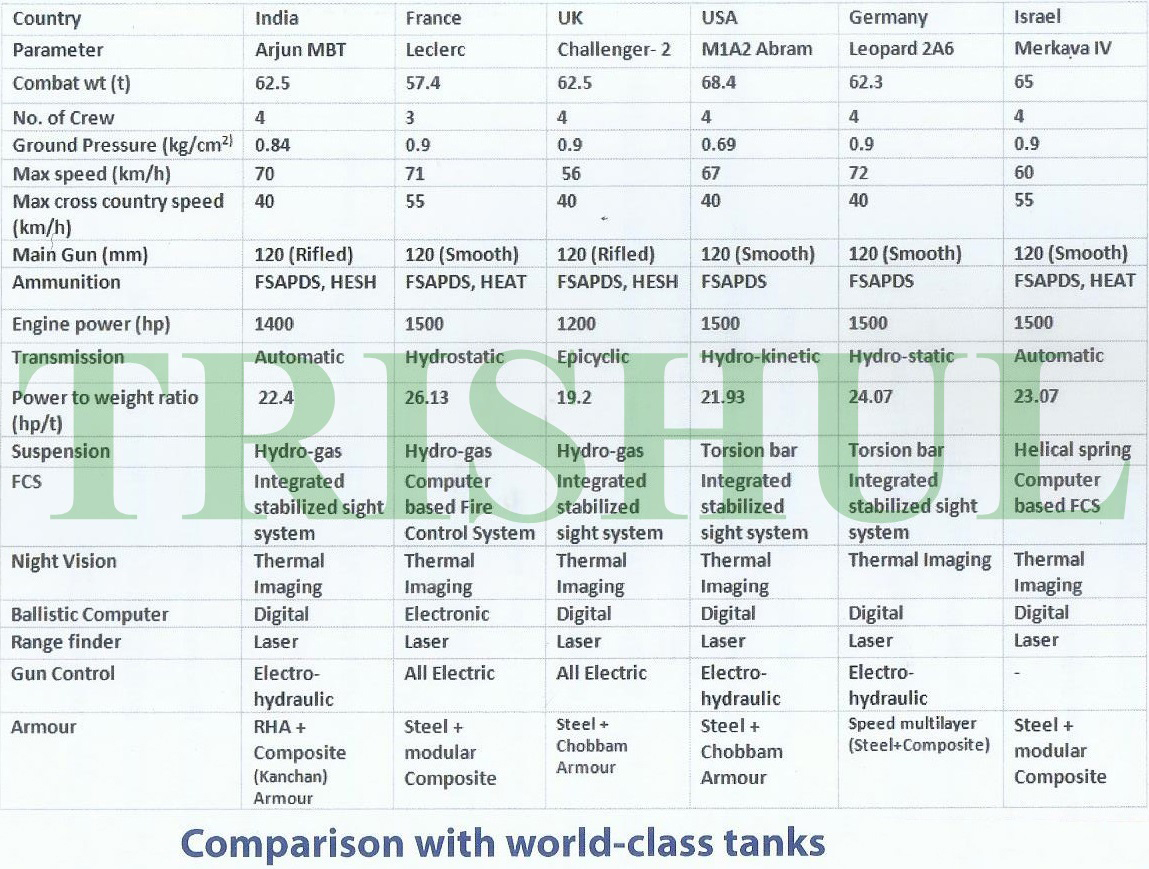
awareness. Arjun Mk.1 weighs 62 tonnes when equipped with a track-width mine
plough (TWMP) and has a power-to-weight ratio of 22.4hp/tonne, while the Mk.1A,
with 59% imported content, weighs 68 tonnes when fitted with TWMPs, and has a
power-to-weight ratio of 20.5hp/tonne.
The Arjun Mk.1A MBT, under
development since 2010, features 71 improvements (14 of them being major
upgrades) over the Mk.1 variant. User-trials commenced in 2012. The 118 Arjun
Mk.1As to be ordered before the end of 2021 will be valued at Rs.8,400 crore,
with first deliveries (of five MBTs) taking place within 30 months after
contract signature. In addition, orders for support-vehicles like Arjun BLTs
and Arjun ARRVs will also be ordered.
Since the prevalence of a
nuclear overhang prevents either India or Pakistan from engaging in offensive
mechanised manoeuvre warfare inside each other’s territory all along the
International Boundary (IB), manoeuvre warfare conducted by both Arjun Mk.1 and
Mk.1A MBTs during the next round of military hostilities will be confined to
those areas that straddle the Working Boundary (WB) in Jammu, and the Line of
Control (LoC) in Kashmir.
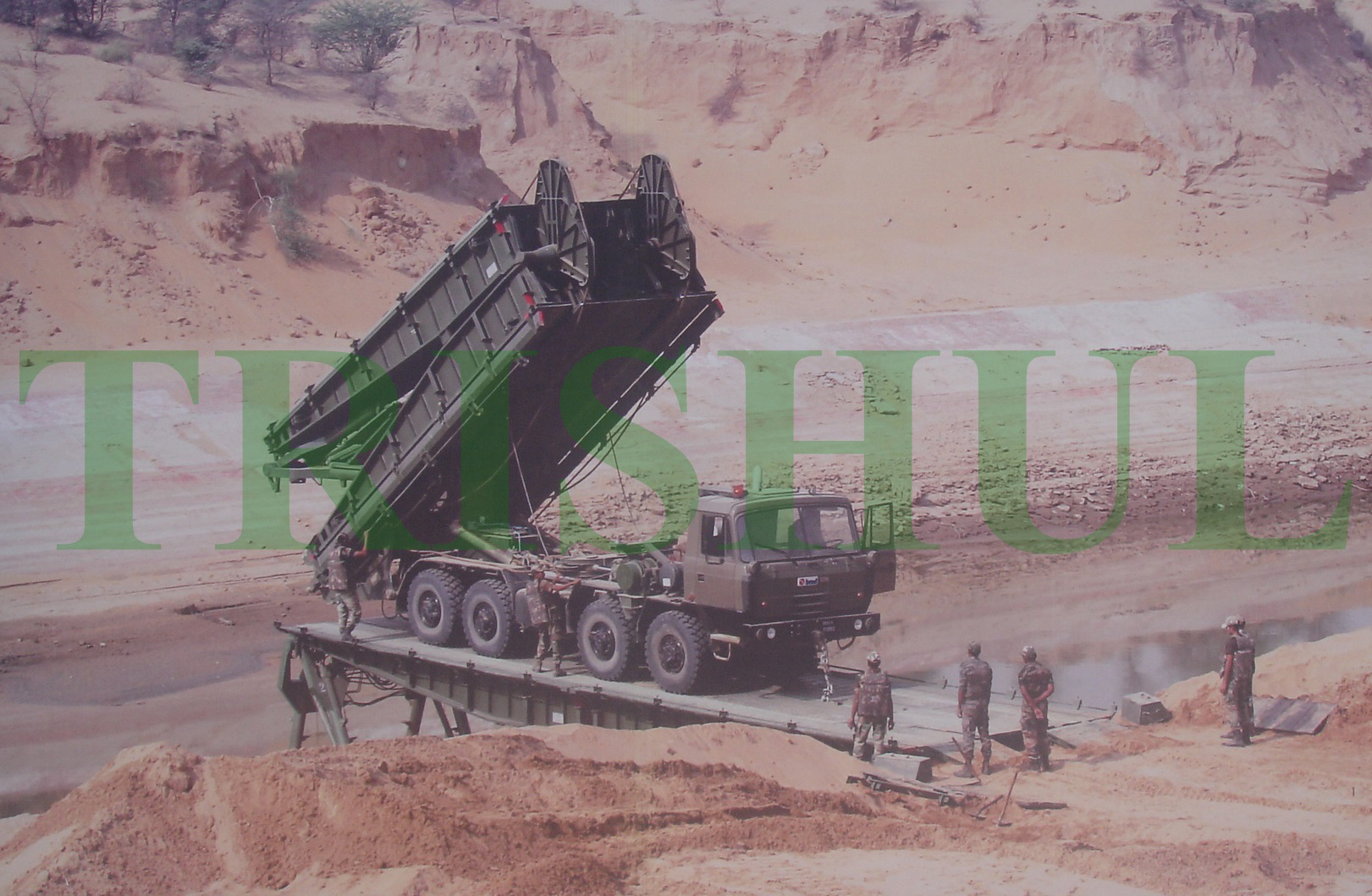
To this end, the Integrated
Battle Groups (IBG) employing such MBTs will also contain Sarvatra multi-span
bridging systems (when operating within the riverine terrain of both the
Chicken’s Neck area and the Chhamb-Jaurian-Akhnoor sector of operations) and
Rudra WSI helicopter-gunships that will be tasked with the provision of
immediate air-support.
The Arjun’s Mk.2 variant will
be ordered as its seven pre-production units have already commenced developmental
mobility-cum-firepower trials. The Mk.2s will each be built with High Nitrogen
Steel (HNS), which will reduce their weight from 67.5 tonnes to 62 tonnes.
The earlier imported COAPS panoramic sight (below) on the Mk.1A variant has now been replaced with an indigenously developed panoramic device (above).
In
addition, the powerpack will include a 1,500hp Cummins diesel engine.
Consequently, the Mk.2’s power-to-weight ratio will increase from the existing
18hp/tonne to a healthy 25hp/tonne, thereby providing excellent mobility
parameters over all kinds of terrain at all altitudes. The cannon will be a
smoothbore 120mm one, fed by an autoloader. Hence, up to 250 Arjun Mk2s will be
ordered in future. The 464 T-90S MBTs to be licence-built at HVF Avadi too will
have an uprated 1,300hp diesel engine from Russia, which too will increase the
power-to-weight ratio of the T-90S to 25hp/tonne.
The 37-tonne T-72Ms (Ob’yekt 172M-E4) are each powered by a V46-6 780hp
diesel engine that offer a power-to-weight ratio of 20hp/tonne. The 41.5-tonne
T-72CIA has a power-to-weight ratio of 18hp/tonne. T-72U’s power-to-weight
ratio will go up to 21.7hp/tonne when equipped with the turbocharged 1,000hp V46-6 engine.
The 46-tonne T-90S (Ob’yekt 188S) are each powered by a 1,000hp V-92S2
diesel engine that deliver a power-to-weight ratio of 21.5hp/tonne. A85-3AX-diesel engine capable
of producing up to 1,500hp (although it is presently down-rated at 1,350hp) is
likely to be ordered from Russia’s Chelyabinsk Tractor Plant, located about
350km south of Nizhny Tagil. This in turn will result in the T-90S’
power-to-weight ratio being hiked to 24 hp/tonne.


The Pakistan Army’s 47-tonne Al Khalid MBT is powered by a 1,200hp 6TD-2
diesel engine that delivers a power-to-weight ratio is 25hp/tonne. The 46-tonne
Ob’yekt 478BE T-80UD MBTs, each powered by a 1,000hp 6TD-1 diesel engine, has a
power-to-weight ratio is 21.7hp/tonne. The 42.7-tonne Al Zarrar, powered by a
730hp diesel engine, has a power-to-weight ratio is 17.1hp/tonne. The
41.5-tonne Type 85IIAP comes powered by a 730hp diesel engine that offers a
power-to-weight ratio is 17.8hp/tonne. The 36.7-tonne Type 69IIAP, powered by a
580hp diesel engine, has a power-to-weight ratio is 15.8hp/tonne.
The PLA Army’s 42.8-tonne Type 96A MBTs are each powered by a 800hp
engine that deliver a power-to-weight ratio of 18.7hp/tonne, while the 52-tonne
Type 96Bs are each powered by a 1,100hp engine that deliver a power-to-weight
ratio of 25hp/tonne.