


Although Israel Aerospace Industries (IAI) had been offering its Super Heron HF MALE-UAV to India since 2015 (it even brought this UAV to the Aero India 2015 and 2017 expos in Bengaluru), both the Indian Army (IA) and Indian Air Force (IAF) opted for the less capable Heron-2 MALE-UAS in January 2021, when IAI announced on 25 January that it had inked two contracts comprising one lease and one sale of its Heron-2s. The systems included four Heron-2s and their related ground-control stations purchased by the IAF and four Heron-2s and related ground-control stations leased by the IA.

The Heron-2 retains the same dimensions and general performance specifications as the earlier Heron-1, with improvements including SATCOM data-linking that allows beyond-line-of-sight command-n-control of the MALE-UAV out to a distance of 1,000km, and a widened fuselage pod for a greater number of sensors and/or more powerful mission avionics and small-diameter precision-guided munitions (SD-PGM).


It also boasts a new
propulsion configuration comprising the fully certified Rotax-915iS 1,352cc
turbocharged four-stroke engine, which has a time-before-overhaul (TBO) rating
of 1,200 hours and which produces up to 135hp at maximum continuous power (offering
a cruise speed of 277kph) while coupled to a three-bladed variable-pitch pusher
propeller, compared to 115hp of the Rotax-914 engine on the older Heron-1.


The Super Heron HF, on the other hand, is powered by an Austro-330EP 177hp engine that allows the MALE-UAV to attain a service ceiling of more than 30,000 feet and reach a speed of 150 Knots. The most important update, however, and the main driver behind development of the Super Heron HF, is the adoption of a heavy-fuel (diesel) engine. Heavy-fuel engines offer a number of benefits to the user. Maintenance requirements are reduced, and the fuel offers significant commonality with many other battlefield systems. Primarily, though, it is a much safer liquid to transport in the support of field deployments.
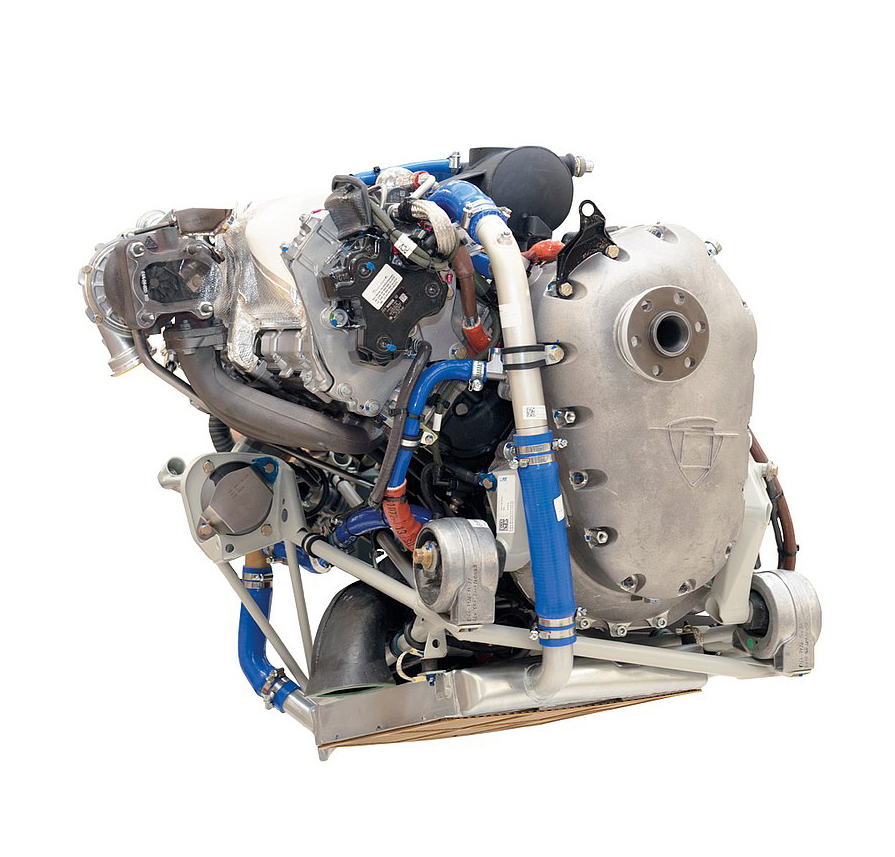
IAI evaluated four different heavy-fuel engine types for the Super Heron HF before adopting a DieselJet FIAT engine from Italy that develops 200hp. The extra power compared to the original engine not only helps to overcome a rise in maximum takeoff weight from 1,250kg to 1,450kg, as well as improving rate of climb. At 30,000 feet and 45 hours, service ceiling and endurance are the same as for the Heron-1. The Super Heron HF has triple-redundant avionics installed, and greatly expanded flexibility for new payloads and smarter interfaces. The aircraft comes with an impressive array of sensors, including the MOSP-3000-HD optronics turret with laser rangefinder/designator and ELM-2055D SAR/GMTI radar. Antennae and pods for various electronic warfare and intelligence-gathering systems are also available.

In late September 2022, as part of its ISR capability enhancement in Arunachal Pradesh beyond the Tawang sector, the IA began deploying two of its leased Heron-2s at the IAF’s Missamari AFS, and at Leh AFS in Ladakh.

In a separate tri-services endeavour, known as ‘Project Cheetah’, about 70 existing Heron-1s belonging to the IA, IAF and Indian Navy (IN) will be jointly upgraded to Heron-2 configuration by IAI and the MoD-owned Hindustan Aeronautics Ltd (HAL) and will be known as the Archer-NG.

However, this MALE-UAV variant will be powered by a 177hp Austro-330EP diesel engine and will contain flight and mission avionics that were originally developed by the DRDO’s LRDE and DARE laboratories for the ADE-developed Tapas-BH MALE-UAV.


IDEF’23, the 16th International Defence Industry Fair held between July 25 and 28, 2023 at Istanbul, Turkiye, saw Pakistan’s state-owned Global Industrial & Defence Solutions (GIDS) exhibiting several of its products that were clearly of China-origin. This should not come as a surprise, as such a practice has been in existence since the mid-1990s. For instance, the Hatf-9/Nasr MBRL is in essence the WS-32 400mm, 4-tube MBRL, while the Fatah-1 MBRL is the eight-tube WS-35 302mm MBRL.


These MBRLs were developed by China’s Chengdu-based Sichuan Aerospace Industry Corp, but were marketed by China’s state-owned ALIT and China Precision Machinery Import-Export Corp (CPMIEC).

China’s cruise missile design, research, development, and manufacturing are now concentrated in a single business division within one of two state aerospace conglomerates, the China Aerospace Science & Industry Corporation (CASIC) Third Academy. One of seven design academies under CASIC—which has more than 100,000 employees—the Third Academy—is China’s principal R & D and manufacturing entity for all types of cruise missiles. Established in 1961, the Third Academy has been involved in the design and development of 20 types of cruise missiles, including the indigenous Haiying- and Yingji-series and their export versions. Today, it boasts of 10 research institutes and two factories, with 13,000+ employees, including 2,000 researchers and around 6,000 technicians.

Hongdu Aviation Industry Group (formerly Nanchang Aircraft Manufacturing Co), under Aviation Industry Corporation of China, produces FL- and TL-series of anti-ship cruise missiles for export. Finally, for three decades China has marketed a wide range of indigenously produced cruise missiles (and other weapons systems) through the China Precision Machinery Import & Export Corp (CPMIEC), the CASIC Third Academy’s export management branch. Established in 1980, CPMIEC is a member of the Xinshidai Group and jointly owned by CASIC and the Chinese Aerospace Science & Technology Corp (CAST).

It was CASIC that in August 2001 succeeded in smuggling out of Kiev all relevant production engineering data packages of a LACM called Korshun, which had by then been developed by Ukraine’s Dnipropetrovsk-based Yuzhnoye State Design Bureau, with production tooling being built by the Yuzhnoye Machine-Building Production Association, or Yuzhmash. The Korshun’s powerplant was a redesigned RD95-300 turbofan that bore a strong resemblance to the 36MT engine developed by Russia’s NPO Saturn.

Dimensions of the Korshun included a wingspan of 3.1 metres, length of 6.3 metres, diameter of 0.514 metres, and a mass of 1,090kg. Range of the LACM was then claimed to be 600km when carrying a 500kg warhead. in 2002, China created a consortium of state-owned R & D institutes and companies (called the Xi’an Sicong Group) that included the Shanghai Institute for Optics & Fine Mechanics, China North Opto‑Electro Industries Corporation (OEC), Changchun Institute of Optics & Fine Mechanics, and Luoyang Opto-Electro Technology Development Centre.

CASC’s Beijing Xinghang Electromechanical Equipment Factory (159 Factory) is the final assembly facility for the DH-10A, while Beijing Hangxing Machine Building Factory (239 Factory) and the Xinxin Factory in Shanghai produce the various on-board components.

The LACM and its AKD-20
ALCM variant carries a range of different 770lb or 1,100lb warheads. The GLCM
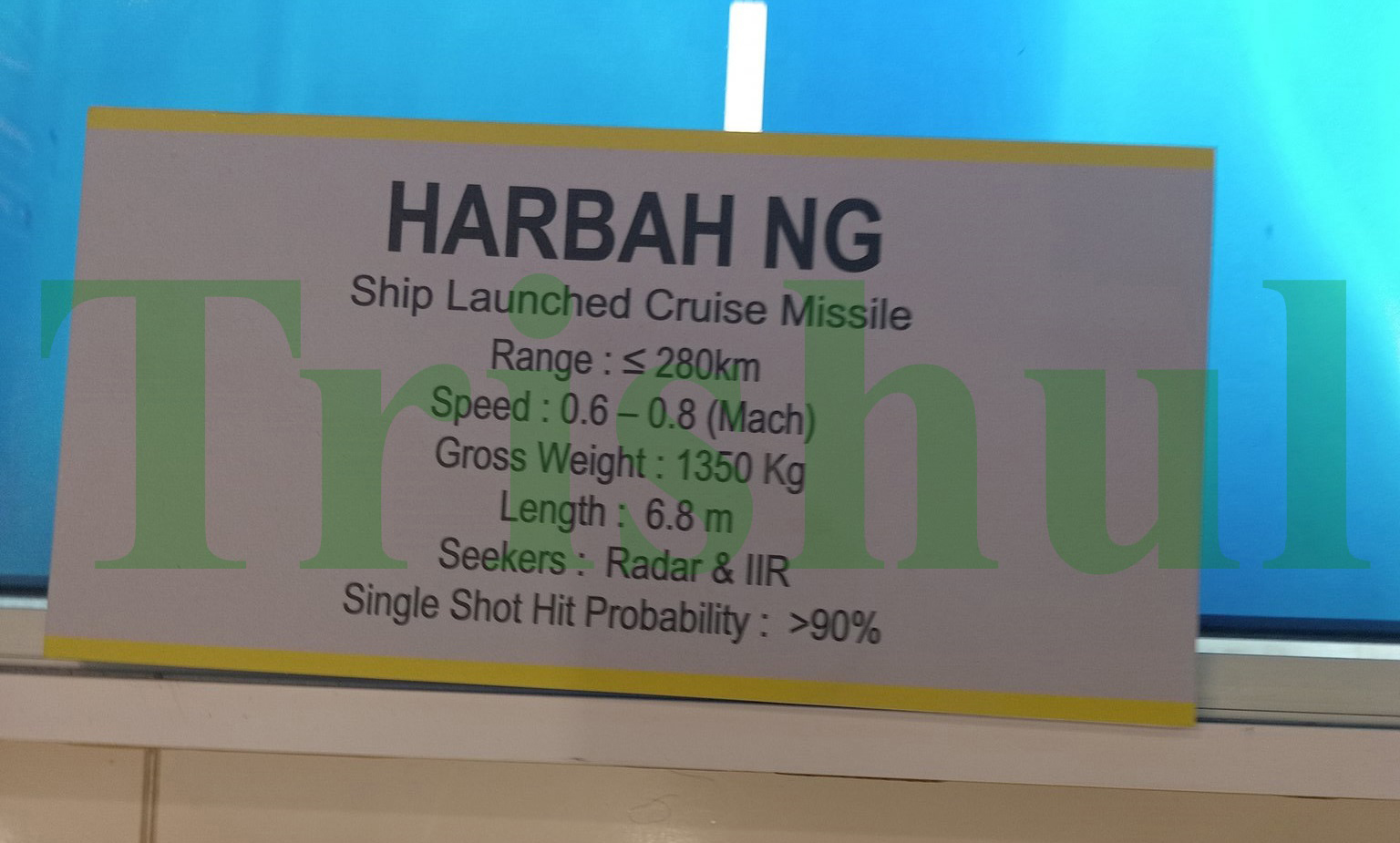
variant has a length of 7 metres, launch mass of 1,350kg, warhead mass of
300kg, and cruise speed of 0.9 Mach. The GLCM variant has since been sold to
Pakistn as the Babur and Harbah cruise missiles.

China’s PL-12 BVRAAM is equipped with active radar-homing seeker developed by Ukraine’s Radionix. It uses a dual-thrust solid rocket motor and can exceed Mach 4 and endure 38 G. The missile’s omnidirectional sensors are accurate to within 1 metre. Its active radar seeker is the Ka-band ‘Onix’ from Radionix, which has a range of 25km, search area of +/-40 degrees in azimuth and elevation and offers “fire-and-forget” capabilities. It has a 24kg warhead and uses a radio proximity fuse. Initial versions of the PL-12 had used the Russia-origin Agat/Istok 9B-1350E Ku-band seekers.


A ground-launched variant of the PL-12 is the Faaz BVRAAM and its Faaz-SL variant from GIDS.


China’s latest PL-15 BVRAAM, under development since 2009, was first test-fired on September 15, 2015. The missile, which too uses the Onix seeker, weighs 210kg, has a range of 145km and uses a dual-pulse, smokeless solid-propellant rocket motor for extended range (two fuel chambers and one exhaust nozzle) that was originally developed by South Africa’s DENEL Dynamics for the ‘Marlin’ BVRAAM. For long-range engagements the first pulse fires and the missile glides towards its target before the second pulse fires at a later point in time. For shorter engagements, both pulses can be fired almost simultaneously. Top speed is close to Mach 4. Flight control is by servo motor controlled fins. The PL-15’s airframe can sustain 30 G and its leading edges can function in temperatures of both -50 degrees Celsius and + 900 degrees Celsius once launched.


The Faaz family of BVRAAMs shown by GIDS at IDEF’23 is, in reality, the Umkhonto family of BVRAAMs developed by South Africa’s Dynamics.


The Shahpar-3 UAV from GIDS is, in reality, the FH-95 UAV from the China Aerospace Science & Technology Corporation. Its MTOW is 1,000kg, maximum payload weight is 250kg, service ceiling of 42,000 feet and a flight endurance of 24 hours.


The Tipu 155mm GPS-guided projectile is, in reality, NORINCO of China’s GP-155B projectile.


Finally, the Taimur ALCM showcased by GIDS is, in reality, a souped-up variant of the TS-20 PGM developed by Tengden of China, which will be powered by China-origin turbojets.


